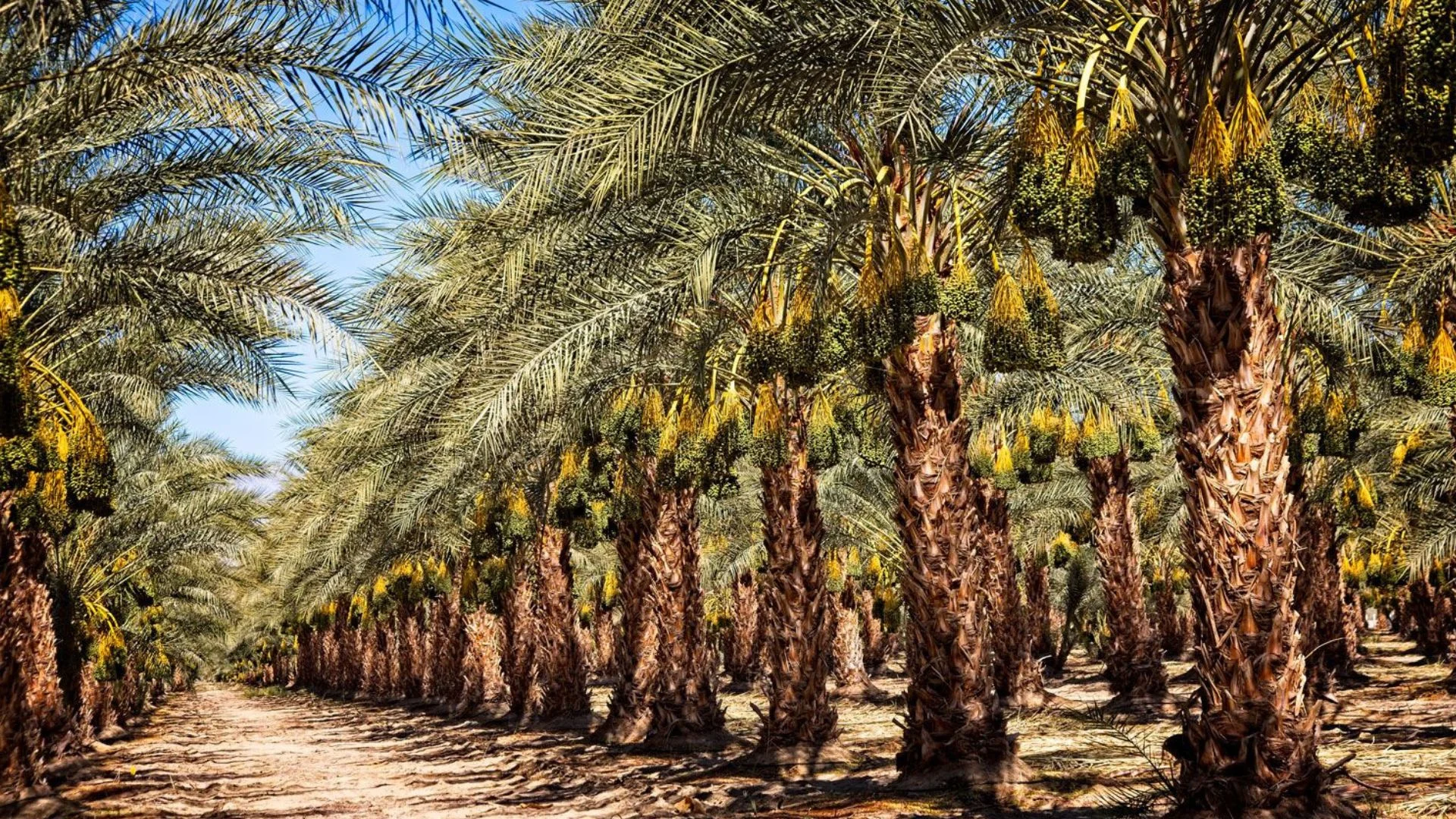
Researchers have found a way to convert the surface fibers of date palm trees into bio-oil, opening new possibilities for clean, sustainable energy.
The findings, published in the journal ACS Omega, highlight how a low-value waste material can be transformed into a valuable energy resource. With nearly 150 million date palm trees worldwide, the scale of this opportunity is enormous.
Turning Date Palm Waste into Energy
Date palm trees produce a significant amount of waste every year. This includes seeds, leaves, fronds, and surface fibers. Among these, the surface fibers, also called Date Palm Surface Fibers (DPSFs), are usually discarded or burned.
Now, scientists have demonstrated that these fibers can be converted into bio-oil via pyrolysis. This method involves heating the material at high temperatures in the absence of oxygen.
READ ALSO: Rolls-Royce Lands £599m Boost as Secret Nuclear Push Begins in UK
The research team, led by experts from institutions including the University of Sharjah and the United Arab Emirates University, focused on understanding how these fibers break down under heat and how efficiently they can produce energy.
They studied the thermal behavior of DPSFs using thermogravimetric analysis. The material was heated from 20°C to 750°C at different rates. This helped them observe how the fibers degrade and release energy.
Why These Fibers Matter
DPSFs are rich in lignocellulosic material. This means they contain cellulose, hemicellulose, and lignin, three key components that make them ideal for energy conversion.
These compounds break down at high temperatures and form useful products such as bio-oil and biochar. Because of this composition, the fibers show strong potential as a bioenergy feedstock.
To better understand the process, researchers used advanced kinetic models, including the Ozawa–Flynn–Wall (OFW), Kissinger–Akahira–Sunose (KAS), and Starink (STK) methods. These helped them calculate activation energy and study how the material decomposes at different stages.
WATCH ALSO: From Ice to Innovation: US Coast Guard Deploys Drones in Antarctic Mission
The team explained that this analysis reveals how cellulose, hemicellulose, and lignin degrade during heating. It also shows how these changes affect the final energy output.
What Bio-oil Contains
The bio-oil produced from DPSFs contains a mix of useful chemical compounds. Researchers found that the oil consists mainly of aliphatics (42.28%), aromatics (38.68%), and furans along with other oxygen-based compounds (13.47%).
These components are important because they are commonly found in fuels and industrial chemicals. The high aromatic content is especially valuable.
The researchers said, “The aromatic-rich nature allows targeted recovery of BTX and phenolic compounds along with energy applications.”
This means the bio-oil can be used not only as fuel but also as a source of industrial chemicals.
One of the key advantages of this method is its environmental impact. The process is considered carbon-neutral.
This is because the carbon released during the conversion process is the same carbon that the tree absorbed from the atmosphere during its growth. By using waste material instead of fossil fuels, this approach reduces greenhouse gas emissions and supports cleaner energy systems.
The researchers emphasized that converting agricultural waste into energy aligns with sustainable practices and reduces environmental harm. The study also highlights the scale of the waste problem linked to date palm trees.
Each tree produces around 20 kilograms of biomass waste every year. With 150 million trees worldwide, this adds up to billions of kilograms annually.
READ ALSO: Mystery Launcher Spotted on US Navy Destroyer Raises New Weapon Questions
Countries in the Middle East produce a large share of this waste. The United Arab Emirates alone has about 45 million date palm trees. Saudi Arabia has around 32 million, Iraq 22 million, and Egypt 15 million.
This creates a huge challenge for waste management systems. Much of this waste is currently burned in open fields. This releases harmful gases, such as carbon dioxide (CO₂) and nitrogen oxides (NOₓ), as well as particulate matter.
These emissions contribute to air pollution, smog, and respiratory health issues. The researchers noted improper handling leads to environmental dangers and health risks.
While the technology shows promise, scaling it up comes with challenges. The study identifies key cost factors, including labor, nitrogen consumption, and feedstock availability. These elements influence the overall cost of producing bio-oil.
To make the process commercially viable, these factors need to be optimized. The researchers stressed that building the required infrastructure will require investment, advanced technology, and coordinated efforts.
Despite these challenges, the potential benefits are significant. The findings present a strong case for using agricultural waste as a renewable energy source.
Instead of treating DPSFs as waste, they can be used as a valuable input for energy production. This approach also supports the circular economy, where waste is reused to create new products.
WATCH ALSO: US firm successfully demonstrates ship-based Sea Launcher for autonomous underwater vehicle ops
The researchers connected this idea to permaculture principles. They explained that in such systems, nothing is treated as waste; everything becomes a resource. The study offers a practical solution to two major problems: waste management and clean energy production.
By converting billions of kilograms of discarded palm fibers into bio-oil, the method addresses environmental concerns while creating economic value. It also provides an alternative to burning waste, which harms both the environment and human health.
As countries look for sustainable energy solutions, this approach could play an important role, especially in regions with large numbers of date palm trees. The research shows that sometimes, the most powerful energy solutions are hidden in plain sight, waiting to be discovered in what we once called waste.