Modern sails are making a return to the shipping industry, but with a high-tech twist. Designed to work alongside traditional engines, these systems help large vessels cut fuel consumption and lower emissions.
Scientists are now investigating how to maximize their effectiveness at sea. The research could play an important role in making global shipping more sustainable.
Researchers at SINTEF are leading a project called reSail to improve the effectiveness of these technologies. The project, led by researcher Yannick Jooss, focuses on understanding how wind-assisted propulsion systems can deliver greater fuel and emissions savings.
Modern sail systems come in several forms. Among the most widely used are rotor sails, wing sails, and suction sails. Each design uses wind energy differently but shares the same goal of helping propel ships more efficiently.
Rotor sails look like large vertical cylinders mounted on a ship’s deck. Small motors rotate the cylinders while wind passes around them. This creates a pressure difference that generates forward thrust via the Magnus effect.
Wing sails operate in a different way. They resemble aircraft wings standing upright on a ship. Their shape causes air to move faster on one side than the other, creating a pressure difference that pushes the vessel forward.
Suction sails are built on the wing sail concept. They use fans to pull air through the structure and increase the pressure difference across the sail. This process generates additional thrust and improves performance in suitable wind conditions.
Interest in these technologies has grown rapidly in recent years. At the beginning of 2020, only nine large ships worldwide were equipped with modern sail systems. Today, that number has increased to 64, and many more vessels are preparing for installation projects.
One reason for the growing interest is the potential for immediate reductions in emissions. Unlike some future fuels that require major infrastructure investments, sail systems can often be added to existing ships. This allows operators to improve efficiency without replacing entire fleets.
Current estimates show fuel and emissions reductions ranging from 2% to 25%. Such a wide range indicates that some vessels benefit far more than others. Researchers believe the differences are linked to how ships interact with changing wind conditions at sea.
The reSail project aims to close this gap between theory and real-world performance. Researchers want to understand how wind behaves around large vessels and how sail systems respond to those conditions. Their goal is to help operators consistently achieve higher savings.
According to the research team, many current calculations rely on simplified wind models. These models often assume stable and predictable airflow around ships. However, actual conditions at sea are far more complex.
Wind patterns constantly change due to weather, ship movement, and the vessel’s design. Structures on deck can alter airflow before it reaches the sails. As a result, sail performance can vary significantly during a voyage.
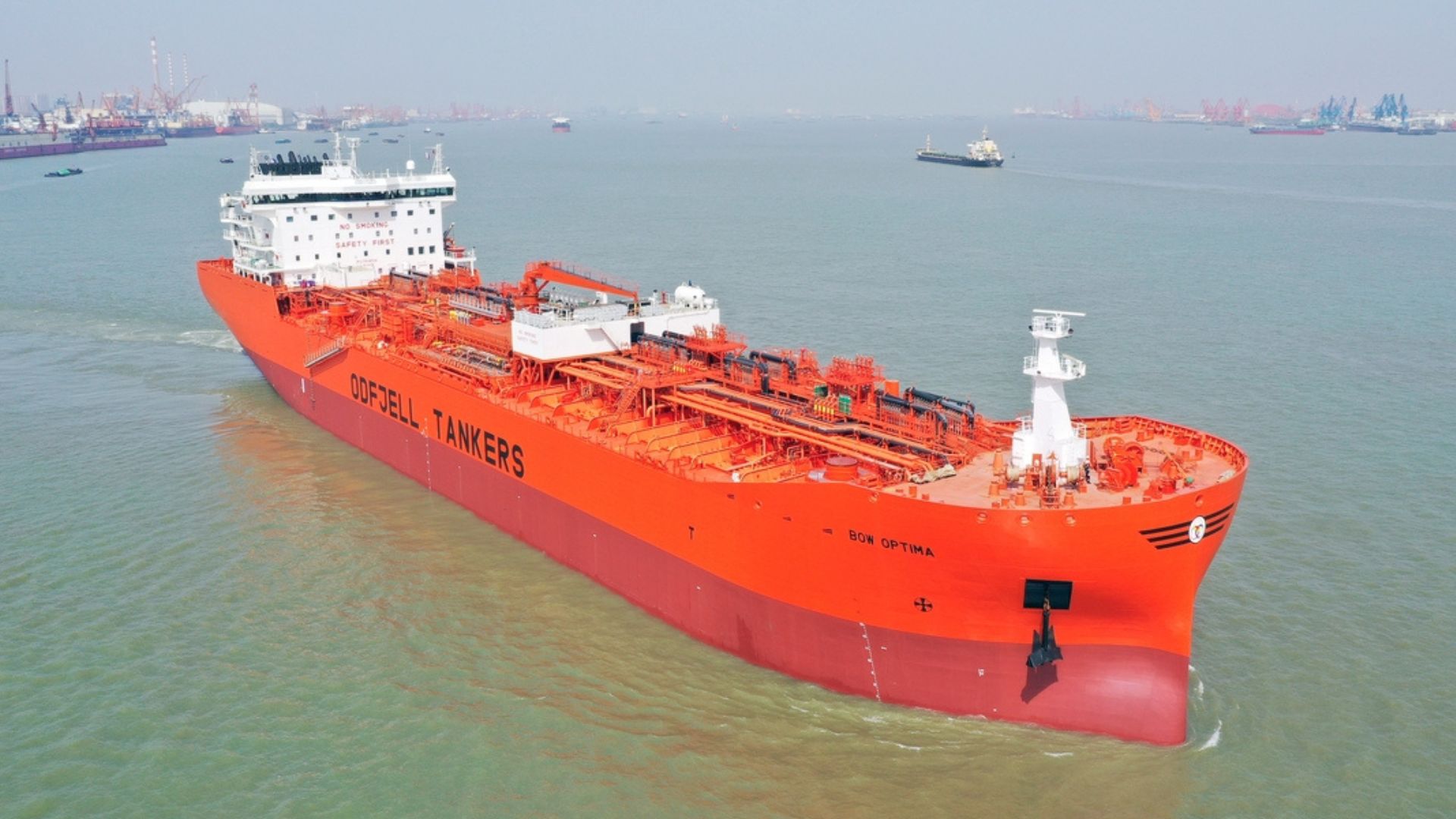
To investigate these effects, researchers conducted measurements aboard the Bow Olympus, a vessel operated by the shipping company Odfjell. The ship was recently fitted with sails supplied by Bound4Blue. Measurements were collected both before and after installation.
READ ALSO: Scientists Harness Graphene to Mature Brain Organoids Faster, Aiding Neurodegenerative Studies
The team used a LiDAR system provided by Fugro to monitor wind conditions. LiDAR works by sending laser beams into the air and measuring the reflected light. Tiny particles and dust in the atmosphere reflect the light, allowing researchers to calculate wind speed and direction.
The system uses the Doppler effect to make these measurements. This is the same scientific principle used in many weather monitoring technologies. Changes in the frequency of reflected light reveal how fast the air is moving relative to the ship.
The results provided important new insights. Researchers discovered that wind conditions around ships vary much more than earlier models suggested. They also found that both the vessel and the sail systems themselves influence airflow in significant ways.
These findings indicate that traditional assumptions are often too simple. Standard wind profiles used in many simulations do not fully capture the conditions experienced during real operations. This can lead to inaccurate predictions of sail performance.
The research team has experience studying complex wind behavior around wind turbines. They are now applying that knowledge to shipping. Similar airflow challenges exist in both industries, making previous expertise highly valuable.
The next phase of the project will focus on optimizing sail placement. Researchers plan to use model ships in wind tunnel experiments at the Norwegian University of Science and Technology. Controlled testing will allow them to study how different sail positions affect performance.
Another objective is improving sail control systems. If incoming wind conditions can be measured before they reach the vessel, sails can be adjusted automatically for maximum efficiency. This approach could significantly increase fuel savings during voyages.
Researchers are also taking a broader view of ship operations. Instead of examining sails alone, they plan to analyze how routing decisions, vessel speed, weather conditions, and sail performance work together. This integrated approach may reveal additional opportunities to reduce emissions.
The timing of the research is important for the shipping industry. Large ships above 5,000 gross tonnage account for roughly 90% of carbon dioxide emissions from maritime transport. Regulations are becoming stricter as governments and industry groups push for cleaner operations.
WATCH ALSO: This robot that you see mimicking meditation is a Chinese company’s new humanoid
Under FuelEU Maritime targets, shipping emissions are expected to fall substantially in the coming decades. Meeting those goals will require a combination of technologies rather than a single solution. Modern sails are viewed as one of the practical tools available today.
Researchers believe improved understanding of wind behavior can help vessels achieve fuel savings at the upper end of current estimates. Better sail design, positioning, and operation could unlock even greater reductions in fuel consumption and emissions.
As more shipping companies invest in wind-assisted propulsion systems, the lessons from projects such as reSail are expected to play an important role. The research is helping transform wind power from a supplementary feature into a more effective component of future maritime transport, supporting cleaner and more efficient global shipping in the years ahead.