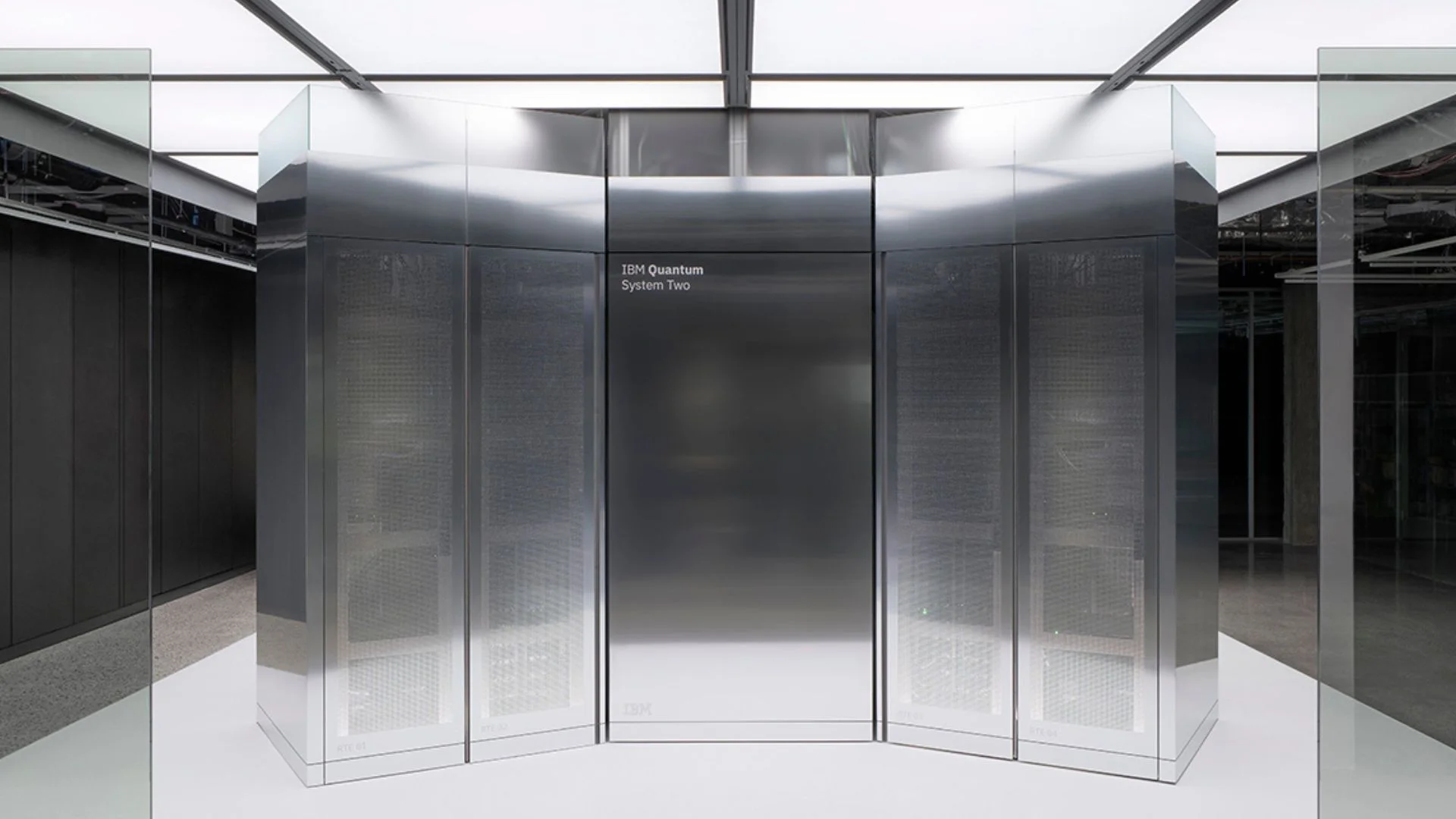
IBM has announced a major $10 billion investment in quantum computing over the next five years. The funding will support research, manufacturing, software development, partnerships, and acquisitions.
The move strengthens IBM’s effort to build the world’s first large-scale fault-tolerant quantum computer and expand its leadership in the fast-growing quantum technology sector.
The announcement comes as governments and technology companies worldwide increase their focus on quantum computing. The technology is expected to solve certain complex problems much faster than traditional computers. These capabilities could impact industries including healthcare, finance, materials science, logistics, and energy.
IBM Chairman and Chief Executive Officer Arvind Krishna said the quantum era has already begun.
He noted that organizations worldwide are using IBM quantum computers for tasks that were not possible just a few years ago. According to Krishna, the new investment will help IBM develop the next generation of quantum hardware, software, and manufacturing capabilities.
Quantum computers operate differently from conventional machines. Instead of using bits that represent either 0 or 1, they use quantum bits, or qubits. This allows them to process large numbers of possibilities simultaneously and tackle highly complex calculations.
READ ALSO: Microsoft Majorana 2 Extends Qubit Lifetimes 1,000x and Accelerates Quantum Timeline
Roadmap Toward Fault-Tolerant Quantum Systems
A key focus of IBM’s investment is the development of fault-tolerant quantum computers. Fault tolerance refers to a system’s ability to detect and correct errors during calculations. This capability is considered essential for building reliable, large-scale quantum machines.
IBM plans to launch IBM Quantum Starling in 2029. The company describes Starling as the world’s first large-scale fault-tolerant quantum computer. It is expected to perform up to 20,000 times as many operations as current quantum systems.
The company also outlined plans for a future system called IBM Quantum Blue Jay. Blue Jay is expected to operate across 2,000 qubits and perform up to one billion quantum operations. IBM believes this level of scale will allow quantum computers to address some of the most difficult scientific and industrial challenges.
Building fault-tolerant systems remains one of the biggest challenges in the quantum industry. Current quantum computers are powerful but still prone to errors. Researchers across the sector are working to improve stability, reliability, and performance before large-scale commercial deployment becomes possible.
IBM said its roadmap is designed to move beyond today’s quantum computers and toward systems capable of delivering practical advantages in real-world applications. Such advancements are expected to expand the commercial use of quantum technology across multiple sectors. The company views fault tolerance as the foundation for future growth in quantum computing.
Global Network, Software Leadership and Industry Impact
IBM already operates one of the largest quantum computing infrastructures in the world. The company has deployed more than 90 quantum systems through cloud services and dedicated installations. These systems are located across North America, Europe, and Asia.
READ ALSO: New Study Reveals Faster Oxygen Redox in Sodium Batteries with P2-Type Oxides
IBM’s quantum centers currently operate in New York and Germany. Additional systems are installed at institutions including the Cleveland Clinic, Rensselaer Polytechnic Institute, PINQ in Quebec, The University of Tokyo, RIKEN, Yonsei University, and BasQ in Spain. New installations are also planned for Chicago and for Quantum Valley in India’s Amaravati.
The company has built a large customer and partner ecosystem around its quantum technology. Since 2017, IBM has signed more than $1.1 billion in contracts related to quantum computing. More than 340 organizations are currently part of the IBM Quantum Network.
These members come from industries such as healthcare, banking, government, higher education, and advanced materials research. They use IBM’s systems to explore new algorithms and practical quantum applications. The network helps organizations test how quantum computing can solve industry-specific problems.
IBM also highlighted progress toward demonstrating quantum advantage. Quantum advantage occurs when a quantum computer performs a useful task better than a classical computer. The company expects its partners to demonstrate this milestone during 2026.
Recent projects have shown growing progress in the field. IBM worked with the Cleveland Clinic and RIKEN to model a protein containing 12,635 atoms. Other collaborations have focused on simulating magnetic materials and studying molecular structures that were previously difficult to analyze.
Software remains another important part of IBM’s strategy. The company’s Qiskit platform has become one of the most widely used software frameworks for quantum computing. IBM said nearly 70 percent of quantum developers use Qiskit, and that more than 4 trillion quantum circuits have been executed on the platform.
The investment also supports IBM’s plans for Anderon, described as the world’s first pure-play quantum wafer foundry. The project recently received support from the US Department of Commerce. IBM plans to contribute $1 billion in cash along with intellectual property, assets, and technical expertise.
WATCH ALSO: This US supersonic aircraft could slash flight times and silence the sonic boom
The latest investment highlights the growing importance of quantum computing in the global technology race. As countries and companies compete to build more powerful quantum systems, IBM is positioning itself to remain at the center of the industry’s next phase. The company’s progress over the coming years will help shape how quickly quantum computing moves from research laboratories into widespread commercial use.