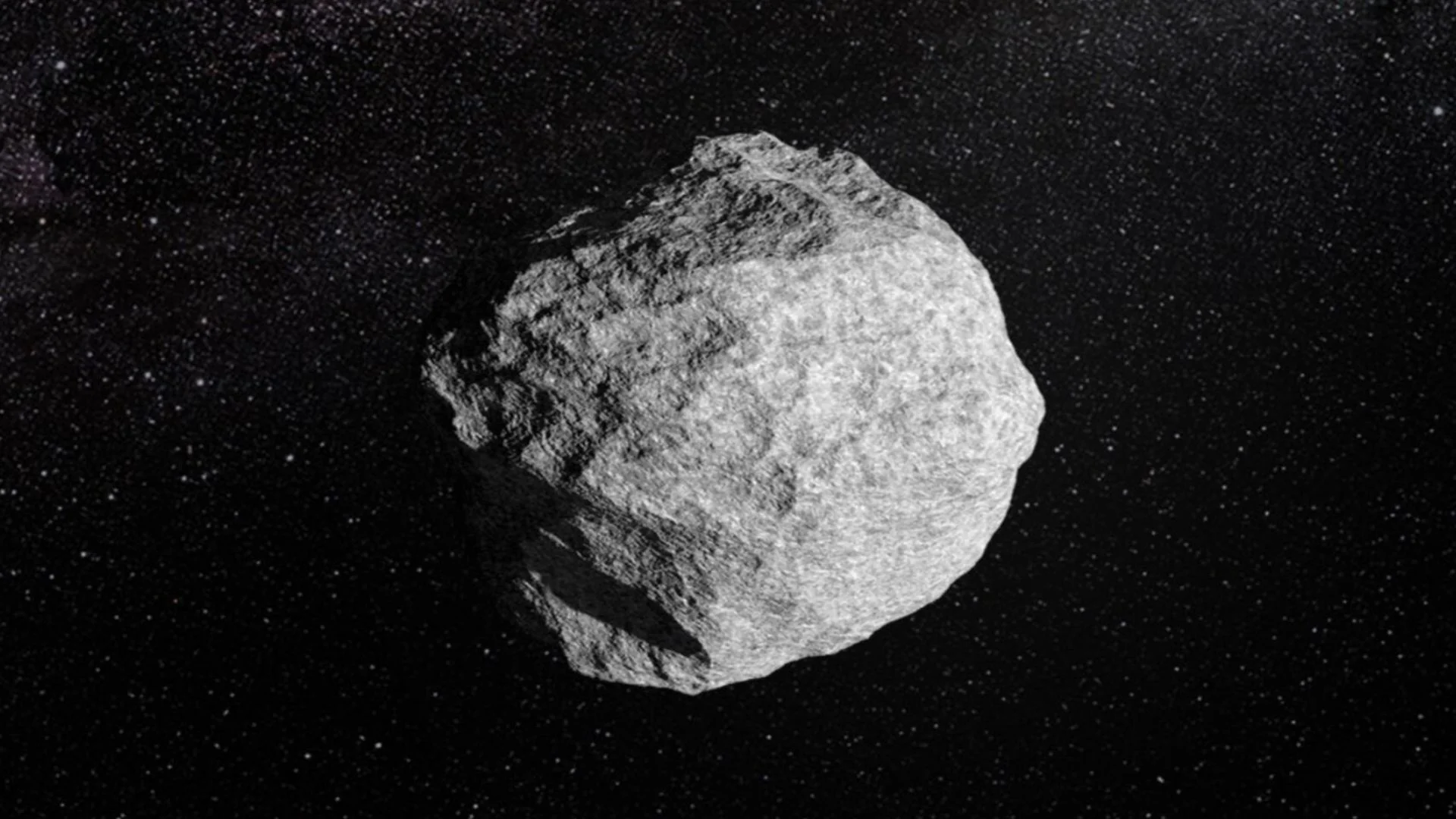
China is building a national early warning system to detect asteroids that may threaten Earth in the future.
The project will combine powerful ground-based telescopes with orbiting satellites to improve the detection of near-Earth objects. The initiative reflects growing global efforts to strengthen planetary defense against potential asteroid impacts.
The plan was outlined by Li Mingtao, chief scientist at the asteroid monitoring and early-warning research centre under the China National Space Administration.
According to China’s state-run Science and Technology Daily, the system will monitor space rocks, calculate their paths, and assess whether they pose a danger to Earth. If an object presents a serious and immediate threat, the system will alert the relevant authorities.
Finding Hidden Asteroids
Scientists have already identified more than 95 percent of near-Earth asteroids larger than one kilometre in diameter. These massive objects are large enough to cause worldwide damage if they were ever to strike Earth. However, experts say none of the known asteroids in this size range are currently on a confirmed collision path.
Smaller asteroids remain a greater concern because many have not yet been discovered. Researchers estimate that only about 45 percent of asteroids measuring around 140 metres across have been identified so far. An asteroid of this size may not trigger a global disaster, but it can still cause severe destruction across a region or even a small country.
READ ALSO: MIT AI System Turns 2D Designs Into Accurate 3D CAD Models Faster for Rapid Prototyping
Li explained that many undiscovered asteroids remain difficult to detect before they approach Earth. Some travel from the direction of the Sun, making them almost invisible to ground-based telescopes until they are very close. Others are simply too faint to observe during most of their journey through space.
Combining Space And Ground
China plans to build several large optical telescopes at carefully selected locations. These observatories will work together to cover large sections of the sky and collect accurate measurements of moving objects. Their combined observations will improve the ability to track asteroid movements over time.
The satellite network will complement the ground-based observatories by solving some of their biggest limitations. Unlike telescopes on Earth, satellites are not affected by daylight, cloudy weather, or atmospheric conditions. They can also observe areas close to the Sun that remain difficult to monitor from the ground.
This capability is important because dangerous asteroids sometimes arrive from the Sun’s direction. A well-known example occurred in 2013, when an asteroid exploded over Chelyabinsk, Russia, after remaining largely undetected as it entered Earth’s atmosphere. The event injured more than a thousand people, mainly due to shattered glass from the shockwave.
Preparing For Threats
Once the monitoring system detects a potentially hazardous asteroid, scientists will calculate its orbit and estimate the probability of an impact. These calculations help determine whether the object requires further observation or immediate attention. Authorities will receive warnings if experts identify a serious and credible risk.
China has also been strengthening its planetary defense research in recent years. The country began recruiting researchers after asteroid 2024 YR4 briefly attracted attention because early observations suggested a small chance of an impact on Earth in 2032. Later studies reduced that risk, and scientists now say the asteroid is unlikely to strike Earth.
The Science and Technology Daily reported that Chinese researchers have also improved computer algorithms that estimate asteroid impact risks. Better software allows scientists to process observations more accurately and refine predictions as new information becomes available. Faster, more reliable calculations support better decision-making in the event of any future threat.
READ ALSO: Caltech Team Cools Radioactive Radium Molecules to Unlock Physics Beyond Standard Model
Global Defense Efforts
Li said the most practical method for preventing an asteroid impact is known as kinetic impact. This approach sends a spacecraft to collide with an asteroid and gently change its path long before it reaches Earth. NASA successfully demonstrated this technique in 2022 by intentionally striking an asteroid during its DART mission.
Scientists continue to study other ideas such as lasers, particle beams, and gravity-based methods to redirect asteroids. These approaches remain under development and generally require much longer periods to produce noticeable changes in an asteroid’s course. For now, kinetic impact remains the most tested option available.
China’s new warning system highlights the increasing international focus on planetary defense as more countries invest in tracking near-Earth objects. Improved monitoring will help scientists discover hidden asteroids earlier, giving governments more time to respond if a future threat is identified. As observation technology advances, global cooperation and early detection are expected to play an important role in protecting Earth from space hazards.