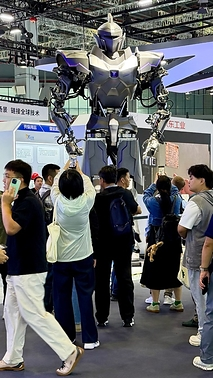
Chinese robotics company NeodraDynamics has unveiled the Neo1, a 4-meter-class heavy-duty robot built for demanding industrial work. Developed with JD Industrial and shown at the 2026 China International Industry Fair (CIIF), the robot combines hydraulic and electric drive systems. The company says it can handle loads of up to 500 kg with high positioning accuracy.
The Neo1 is designed to take on jobs that are dangerous, dirty, difficult, or repetitive. These tasks are often called “4D” work in the robotics industry.
Robot weighs around 1.2 tons
According to a press release from NeodraDynamics Robotics Technology (Beijing) Co., Ltd., the robot weighs around 1.2 tonnes and stands about four meters tall. The company presented it alongside JD Industrial at CIIF on October 14, 2026.
NeodraDynamics developed the Neo1 using its own digital hydraulic technology and robot design systems. The company says its technical team includes experts with backgrounds at Tsinghua University.
JD Industrial is working with NeodraDynamics to explore industrial uses for the robot. The partnership aims to connect the technology with real factory needs and help move it from demonstrations to practical applications.
Many humanoid robots use electric motors to power their joints. These systems can offer precise movement, but some designs may struggle with very heavy loads, strong impacts, and harsh working conditions.
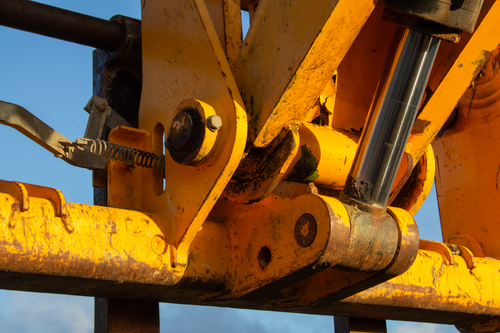
NeodraDynamics aims to address these challenges with a hydraulic-electric hybrid system. It combines the strength of hydraulic power with the controlled movement of electric drives. This could make the Neo1 useful for tasks that demand both high force and careful handling.
The Neo1 has 41 active degrees of freedom, which means it has 41 joints or movement points that can be actively controlled. According to the company, 39 joints use its custom-built digital hydraulic actuators, while two forearm rotation joints use electric drives.
NeodraDynamics claims that each actuator weighs about 1 kg and can produce continuous thrust measured in tonnes. The company also reports a two-arm combined payload capacity of 500 kg and repeat positioning accuracy of ±0.005 mm. These are manufacturer-reported specifications and have not been independently verified in this report.
Robot is designed for heavy manufacturing, port operations
The robot is designed for heavy manufacturing, port operations, mining, nuclear facilities, and disaster response. It could help move large components, handle hazardous materials, or work in areas where people face high risks.
NeodraDynamics also describes possible uses in underwater engineering and other extreme environments. These applications would depend on the robot being equipped and tested for the specific conditions, such as underwater pressure or radiation exposure.
The Neo1’s capabilities are based largely on specifications and claims shared by its manufacturer. The announcement does not provide independent test results showing how the robot performs during long shifts, in real industrial sites, or under all the extreme conditions described.
Its large size, reported weight of 1.2 tonnes, and complex hydraulic system may also make transport, maintenance, and workplace integration more challenging. Wider adoption will depend on reliability, operating costs, safety testing, and successful trials with industrial customers.
The Neo1 represents a different approach to humanoid robotics. Rather than relying only on electric motors, it uses hydraulic power to target jobs that need greater force and resistance to harsh conditions.
The partnership with JD Industrial could help NeodraDynamics test the robot in real industrial settings and identify useful applications. If its performance claims hold up in practice, the Neo1 could expand the range of heavy tasks that robots can handle while reducing workers’ exposure to dangerous environments.