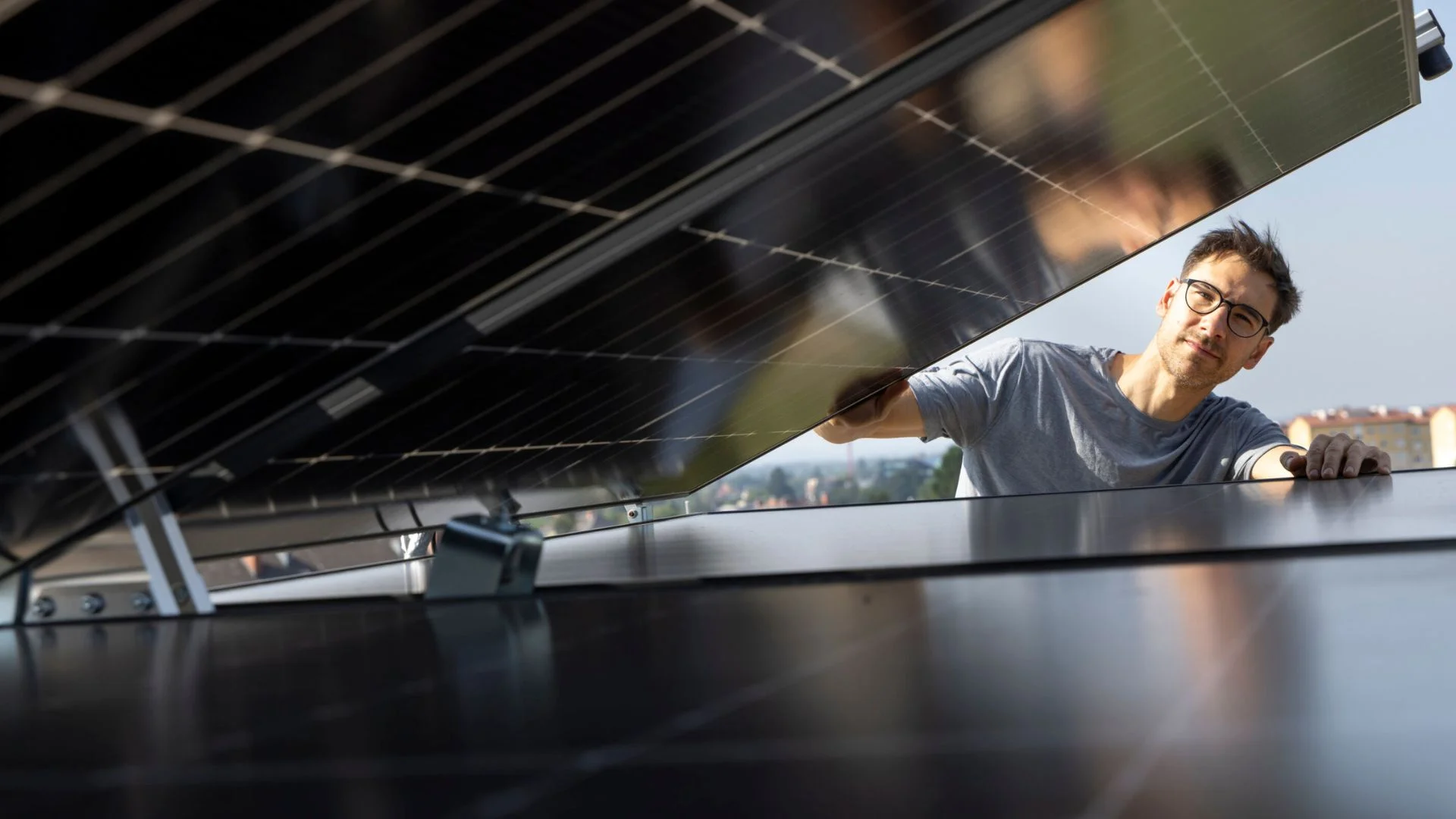
Researchers at Graz University of Technology (TU Graz) have introduced a new solar panel photovoltaic system that combines higher electricity production with built-in protection against harsh weather.
The system is called FLAPTrack, which stands for Face-to-Face Lay-Down Anti-Degradation Protection. It automatically follows the sun during the day and folds into a protected position at night or before storms arrive.
The research team is led by Armin Buchroithner from the Institute of Electrical Measurement and Sensor Systems at TU Graz. A demonstration system with a capacity of 1.8 kilowatts peak (kWp) is operating on the roof of an office building at the University’s Campus Inffeldgasse. The findings were published in the journal Renewable and Sustainable Energy Reviews.
Unlike fixed solar panels, FLAPTrack adjusts its position both horizontally and vertically throughout the day. This allows the panels to capture more sunlight from sunrise to sunset. The design also reduces the impact of snow and dust by automatically adjusting the panel position.
Higher Energy Production
A patented linear actuator forms the core of the new system and performs two important tasks. It moves the solar panels to track the sun and also folds them into a protective position when needed. The researchers say combining these functions helps lower installation and operating costs.
The system rotates horizontally via a belt drive mounted in a circular guide near the ground. This arrangement allows the panels to maintain an efficient angle throughout the day. As a result, FLAPTrack produces nearly 40% more electricity on average than traditional fixed solar panels.
READ ALSO: Defense Ship Deal: TOTE Services, Hanwha Philly Win US Missile Tracking Contract
During some testing days, the energy gain reached as high as 56%. The biggest advantage appeared during the morning and evening when electricity demand is usually higher. At those times, the system generated more than twice as much electricity as fixed solar installations.
Researchers said this improved performance can help reduce pressure on electricity grids during peak demand periods. Better energy production during these hours supports a more balanced power supply. This benefit becomes even more valuable as renewable energy contributes a larger share of electricity generation.
Weather Ready Protection
The folding mechanism also protects the solar panels from severe weather events. When linked weather stations and regional forecasting models detect storms or hail, the panels automatically fold face-to-face and rest flat on the ground. This position reduces the surface exposed to strong winds and protects the front of the panels from direct hail impacts.
The rear side of the folded panels can be covered with an inexpensive hail net for additional protection. This simple solution helps reduce repair costs after severe weather. It also limits the risk of damage that can shorten the operating life of solar equipment.
Hail can crack the silicon wafers inside conventional solar panels. These cracks may create hotspots that increase electrical resistance and reduce the performance of the entire module. The researchers say the FLAPTrack design avoids this problem by protecting the panels before hail strikes.
The folding position also prevents snow from accumulating on the panel surface during winter. Snow often blocks sunlight and reduces electricity production in fixed systems. By keeping the panels clear, FLAPTrack continues producing more energy during colder months.
READ ALSO: Grid Upgrade Crisis: Report Warns of Transformer Supply Gaps in US Hydropower
Solar Panel Storm Protection
The research team has equipped the demonstration system with multiple sensors to monitor its long-term performance. These sensors collect information on weather conditions, electricity generation, mechanical wear, and wind forces. The data will help improve the system’s design and support the development of future lightweight versions.
The researchers also plan to refine the technology’s autonomous operation using information collected over time. Better automation may improve reliability while reducing maintenance needs. Lighter components may also lower manufacturing and installation costs.
Sun-tracking systems already improve solar energy production by following the sun’s movement. FLAPTrack adds another layer of value by combining energy optimization with automatic weather protection in a single mechanism. This integrated approach addresses two common challenges faced by solar power operators.
As extreme weather events become more frequent and renewable energy installations continue to expand, systems that combine higher efficiency with stronger protection are attracting greater attention. Technologies like FLAPTrack may help improve the reliability, durability, and overall value of future solar power projects across different climates worldwide.