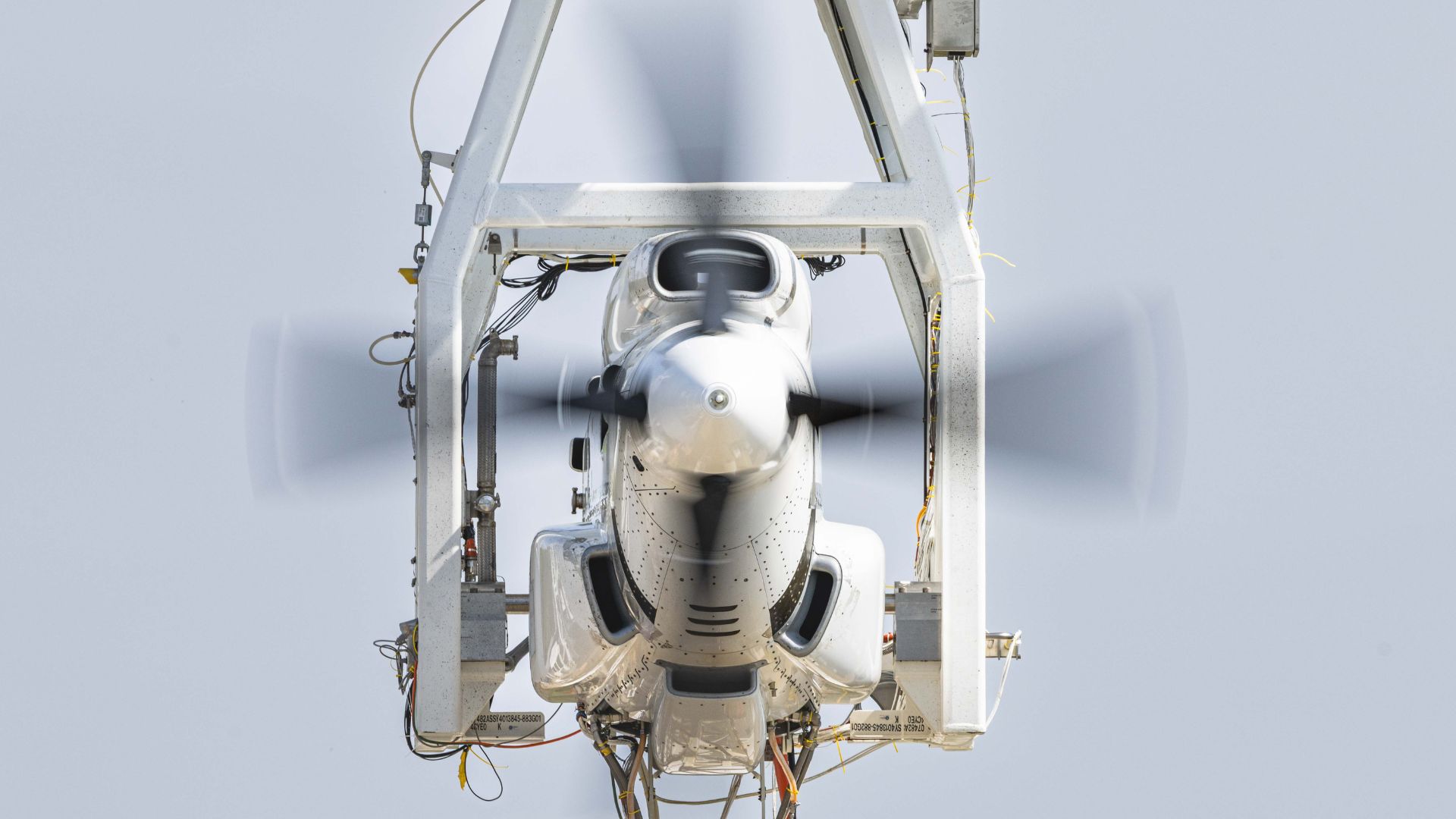
GE Aerospace has completed ground testing of a megawatt-class hybrid electric engine system, reaching a significant milestone in the development of future aircraft propulsion technology.
The tests were conducted as part of NASA’s Electrified Powertrain Flight Demonstration (EPFD) program. The successful campaign brings the company closer to planned flight demonstrations of the technology.
The tests took place at GE Aerospace’s Peebles Test Operation facility in Ohio. Engineers evaluated a fully integrated hybrid electric propulsion system under conditions designed to simulate real flight operations. The system successfully demonstrated its ability to support different flight stages while managing power between the engine and electrical components.
GE Aerospace’s Integrated Testing
The hybrid electric setup combined several advanced technologies into a single system. It included GE Aerospace-developed motor generators, power converters, inverters, control systems, Dowty propellers, Avio Aero gearboxes, and a CT7 aircraft engine.
BAE Systems supplied the batteries, while Aurora Flight Sciences, a Boeing subsidiary, provided the complete nacelle structure that houses the propulsion equipment.
During testing, teams recreated flight phases, including taxiing, takeoff, climb, and cruise. The electric powertrain successfully powered the propeller and generated electricity that was transferred back to the battery system. This allowed engineers to study how energy moves through the aircraft during different operating conditions.
According to GE Aerospace, the tests used flightworthy components designed to meet strict aviation safety and reliability standards. These are the same types of requirements expected for commercial aircraft systems. Using production-level hardware helps reduce risks and improves confidence before flight testing begins.
READ ALSO: From Birch Bark to Packaging: New Bio-Based Coating Reaches Industrial-Scale Trials
Hybrid Power Meets Efficiency
Hybrid electric propulsion combines traditional gas turbine engines with electric power systems. The technology allows power to be distributed more efficiently based on the aircraft’s flight phase. For example, electric power can assist during energy-intensive stages while the turbine provides sustained performance during longer operations.
One of the main goals of hybrid electric aviation is to reduce fuel consumption and improve efficiency. Commercial airlines are under growing pressure to lower emissions while maintaining performance and operating range. Hybrid systems are considered a possible solution because they can work alongside existing engine technologies and future sustainable aviation fuels.
The latest milestone builds on more than ten years of research and testing by GE Aerospace. The company has gradually advanced from testing individual components to validating complete integrated propulsion systems. Each stage has helped improve understanding of how electric and turbine technologies can operate together safely.
READ ALSO: Shipping Industry Cuts Fuel Use by 25% With High-Tech Modern Sail Systems
The project also supports technology development under the CFM International Revolutionary Innovation for Sustainable Engines (RISE) program.
Launched in 2021, the RISE initiative focuses on developing technologies to improve aircraft efficiency and reduce fuel burn. The program has already completed more than 350 tests and over 3,000 endurance cycles, covering open-fan engines, compact cores, hybrid-electric systems, and other advanced concepts.
The RISE program aims to achieve fuel efficiency that is more than 20 percent better than that of many commercial aircraft engines currently in service. Engineers are now preparing several of these technologies for future ground and flight testing. Work is also underway to ensure compatibility between advanced engines and future aircraft designs.
Milestones Shaping Future Aviation
GE Aerospace has achieved several important milestones in hybrid-electric propulsion over the past decade. In 2016, the company conducted a ground test of an electric-motor-driven propeller.
In 2022, it participated in the world’s first test of a megawatt-class, multi-kilovolt hybrid-electric propulsion system under simulated altitude conditions, reaching 45,000 feet, at NASA’s Electric Aircraft Testbed facility.
Another major achievement came in 2025 through NASA’s HyTEC project. Engineers demonstrated a narrowbody aircraft hybrid electric configuration using power transfer and power injection technologies in a modified high-bypass turbofan engine. Notably, the demonstration did not require onboard energy storage, showing additional pathways for future aircraft electrification.
WATCH ALSO: South Korean company showcases its multi-purpose unmanned ground vehicle for military use
The company is also expanding its partnerships in the sector. In 2025, GE Aerospace announced a strategic partnership and equity investment with BETA Technologies.
The collaboration includes plans to jointly develop a hybrid electric turbogenerator for Advanced Air Mobility applications, a growing market that includes electric and hybrid-powered aircraft for regional transportation.
The successful completion of the latest ground tests highlights steady progress toward more efficient aircraft propulsion systems. As testing moves from the ground to future flight demonstrations, the technology is expected to play an important role in shaping the next generation of commercial and advanced air mobility aircraft.