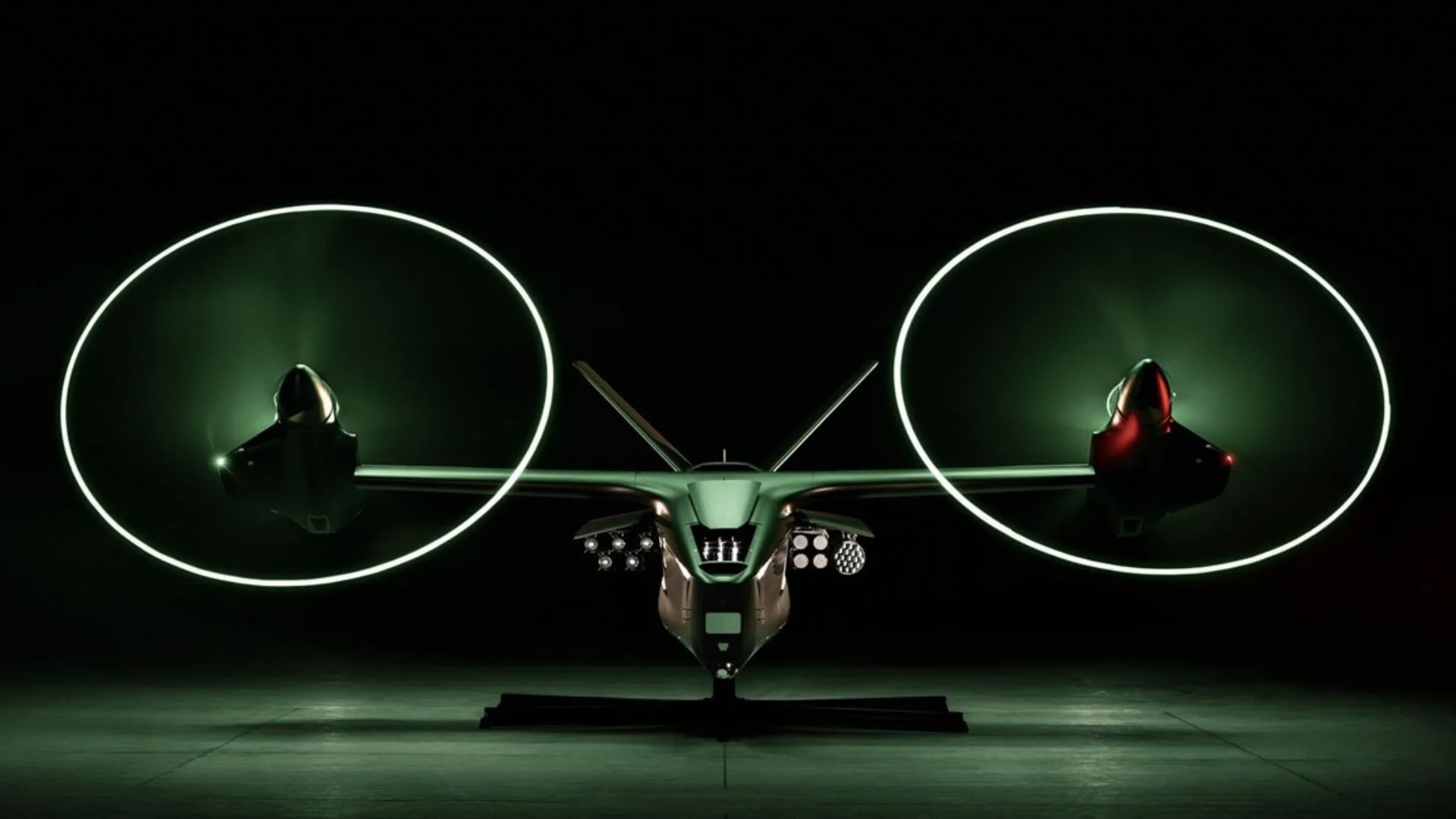
Defense technology company Anduril has introduced Thunder, a new autonomous attack rotorcraft built to work alongside crewed military helicopters in modern combat.
The aircraft is designed to improve battlefield reach, carry large weapon payloads, and perform missions with minimal direct pilot control. Thunder represents Anduril’s latest effort to expand the role of autonomous aircraft in military operations.
The company says modern battlefields have become far more dangerous for conventional helicopters than in previous conflicts. The widespread use of drones, low-cost air defense systems, loitering munitions, and continuous surveillance has increased the risks faced by pilots flying close to the ground. These changes have forced militaries to rethink how attack aviation operates during combat missions.
Instead of relying only on crewed aircraft, Thunder is designed to fly alongside them as an autonomous partner. It performs supporting tasks while allowing pilots to concentrate on tactical decisions rather than aircraft management. This approach aims to increase combat power while reducing risks to aircrews.
Battlefield Changing Fast
Military planners have observed that recent conflicts increasingly depend on drones, precision-guided weapons, and constant battlefield surveillance. These technologies make it easier to detect and engage helicopters before they reach their objectives. As a result, aircraft operating near the surface face much greater threats than in the past.
READ ALSO: China Tests World’s First 500-MW Impulse Hydropower Unit Valve in Remote Xizang Mountains
Anduril says future attack aviation must combine speed, range, flexibility, and autonomous operation to remain effective. No single capability alone is enough to overcome modern defenses. Instead, multiple systems must work together to create an advantage during operations.
Thunder has been designed specifically for this new environment. Rather than replacing crewed helicopters, it works as a force multiplier that expands their capabilities. Multiple autonomous aircraft can accompany a single helicopter during missions.
The company describes Thunder as a Group 5 autonomous rotorcraft. Group 5 refers to the largest category of military unmanned aircraft, which typically includes long-range and high-payload systems. These aircraft can support complex missions over extended distances.
Hybrid Tiltrotor Design
One of Thunder’s most notable features is its tiltrotor configuration. Its rotors rotate vertically during takeoff and landing but tilt forward during flight, allowing the aircraft to fly like an airplane. This combination provides both vertical takeoff capability and efficient long-distance cruising.
The aircraft was co-developed with Archer Aviation using a shared dual-use platform. Archer’s experience in commercial electric vertical takeoff and landing aircraft contributed to Thunder’s overall design. The defense version adapts those technologies for military missions.
Thunder also uses a series hybrid-electric propulsion system. In simple terms, the system combines traditional fuel-powered generation with electric propulsion to improve efficiency. This arrangement helps extend flight range while reducing fuel consumption.
Another important feature is its Optimum-Speed Tiltrotor technology. The system automatically adjusts rotor speed during different stages of flight to improve efficiency. Lower rotor speeds during cruise also help reduce noise, making the aircraft less noticeable during low-altitude operations.
Unlike many helicopters, Thunder does not require prepared runways. It can take off and land vertically from remote locations while still flying long distances efficiently. This allows military units to operate from temporary or austere bases closer to operational areas.
The aircraft is also designed for easier transportation between deployment locations. It can be packed into a standard shipping container for movement by truck, rail, aircraft, or ship. This flexibility simplifies logistics during large-scale military deployments.
READ ALSO: Inside StormFighter: Britain’s New Combat Drone Built to Fly With RAF Fighter Jets
Anduril’s Thunder Redefines Combat
Thunder has been designed to carry a wide range of mission equipment. Modular internal payload bays allow operators to configure the aircraft for different military tasks without extensive redesign. The system supports rapid integration of future mission technologies as requirements evolve.
Depending on mission needs, Thunder can carry precision-guided missiles, rockets, electronic warfare systems, air-launched drones, counter-drone equipment, or cargo. The modular design allows commanders to select payload combinations suitable for specific operations. This flexibility reduces the need for multiple specialized aircraft.
According to Anduril, one payload configuration includes ten air-to-ground missiles such as Hellfire, JAGM, or Barracuda-100M weapons. Another configuration carries sixteen air-launched effects like Altius-600 systems. A third option accommodates up to seventy-six 70 mm rockets together with twelve counter-drone effectors in the nose section.
The company also highlights Thunder’s ability to increase combat mass through autonomous teaming. For example, three Thunder aircraft can operate with a single AH-64 Apache attack helicopter. This arrangement significantly increases the number of available weapons without requiring additional pilots.
Such teaming allows military formations to engage more targets during a single mission. Autonomous aircraft also reduce the need to expose additional aircrews to hostile environments. This approach reflects a growing trend toward human-machine collaboration in military aviation.
The shared commercial and defense platform also supports lower production costs. Using common technologies and supply chains can simplify manufacturing while supporting larger production volumes. Greater affordability may allow military operators to field larger autonomous fleets.
Autonomy Drives Missions
Software plays a central role in Thunder’s operation. The aircraft uses Anduril’s Lattice for Mission Autonomy system to manage formation flying, navigation, and mission execution. Instead of manually controlling every movement, operators provide objectives while the aircraft handles many routine flight tasks independently.
This autonomy becomes especially valuable during complex low-altitude operations. Flying close to the ground requires constant awareness of terrain, buildings, trees, and other aircraft. Automated systems help maintain safe separation while reducing pilot workload.
Thunder uses multiple onboard sensors to understand its surroundings. Passive sensors, selective active sensors, computer vision, digital maps, and onboard computing work together to identify terrain, obstacles, and potential threats. This allows the aircraft to make rapid navigation decisions during flight.
The system is also designed to continue operating when GPS signals or communications are disrupted. By combining visual navigation with inertial positioning and terrain mapping, Thunder can remain on course even in contested electronic environments. These capabilities improve mission reliability under difficult battlefield conditions.
READ ALSO: AGIBOT Reveals Four New AI Robots at WAIC 2026 With Focus on Real-World Industrial Use
Lattice also shares information across the entire formation. Data collected by each aircraft contributes to a common tactical picture that all connected platforms can use. This improves coordination between autonomous aircraft and their crewed partners.
Rather than acting independently, Thunder continuously supports the larger formation. It can coordinate movements, exchange targeting information, and respond to pilot intent in real time. This creates closer cooperation between human operators and autonomous systems during missions.
Anduril says it has already completed several test flights using full-scale surrogate aircraft during development. These tests help validate flight performance and reduce technical risks before the final aircraft enters flight testing. The company’s current schedule targets Thunder’s first official flight in 2027.
The introduction of Thunder reflects a broader shift in military aviation toward autonomous systems that work alongside human crews instead of replacing them. As drones, advanced air defenses, and electronic warfare continue to reshape modern battlefields, many defense organizations are investing in aircraft that combine autonomy with conventional combat capabilities.
If development continues as planned, Thunder may become part of a new generation of attack aviation designed to extend operational reach, increase mission flexibility, and improve survivability in extremely contested environments.