Energy

PR Newswire

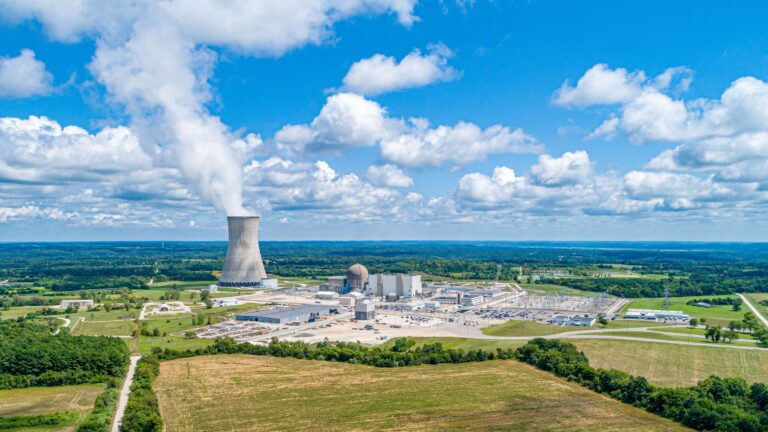
South Korea’s SeoulTech Applies Probabilistic Models to Nuclear Pipe Safety

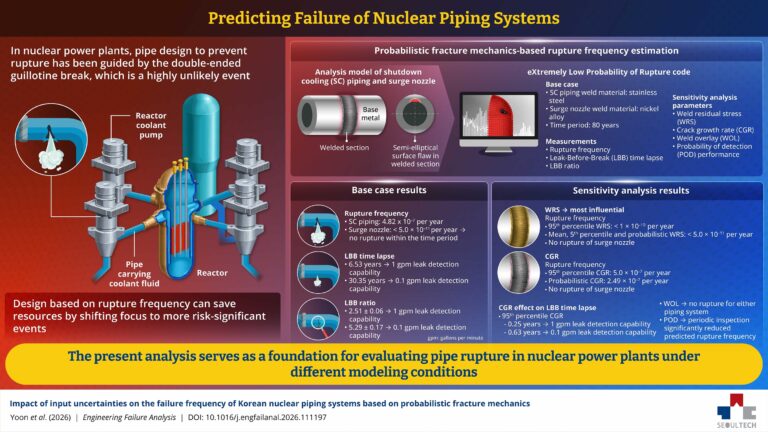
Seoul National University of Science and Technology researchers have applied probabilistic fracture mechanics to predict nuclear reactor coolant pipe failures across an 80-year operating period. Led by Professor Nam-Su Huh, the team’s model accurately evaluates real-world weld stress and corrosion to help engineers prevent critical coolant leaks, optimize maintenance schedules, and improve the structural safety of operating and future nuclear power plants.

Read More...

Ammobia Partners With Lummus Technology to Develop Low-Cost Ammonia

Ammobia and Lummus Technology are partnering to commercialize a modular ammonia production system designed to reduce project costs. Ammobia’s “Haber-Bosch 2.0” technology uses a redesigned synthesis process that the company says can cut capital costs by up to half. The companies will initially target power generation and maritime fuel projects.

Read More...
Engineers work on advanced nuclear energy technology as part of a U.S. Department of Energy research program.

U.S. DOE Selects 13 Nuclear Projects for Launch Pad Program

The U.S. Department of Energy has selected 13 projects from 12 developers for its Nuclear Energy Launch Pad initiative. Managed by NRIC at Idaho National Laboratory, the program will support advanced reactor and nuclear fuel technologies with technical expertise, research facilities and regulatory guidance. The initiative is designed to help developers move nuclear technologies from early concepts toward real-world deployment.

Read More...
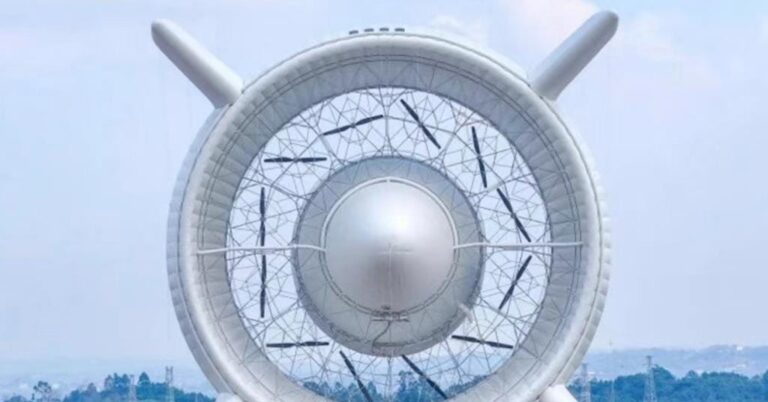
China's S4000 airborne wind energy system flying at high altitude during a wind power test.

China’s Upgraded High-Altitude Wind Power Project Completes Test, Targeting Clean Energy From the Stratosphere

China has completed a full flight test of its upgraded S4000 Stratosphere Airborne Wind Energy System. The system uses a flying device to capture high-altitude wind and generate electricity. Its maximum operating altitude reaches 4,000 meters, and it has a planned service life of 20 years. The test covered ascent, station-keeping, power generation, and recovery, bringing the technology closer to engineering deployment.

Read More...
Microreactor Sites

Utah and Deployable Energy Explore Nuclear Microreactor Sites

Deployable Energy has signed an MOU with Utah’s Office of Energy Development to explore possible sites for its Unity Nuclear Battery. The compact nuclear microreactor is designed to deliver 1 MWe of electricity and fit inside a standard 20-foot shipping container. The agreement will support information sharing and feasibility studies as Utah examines new options for reliable and flexible energy.

Read More...

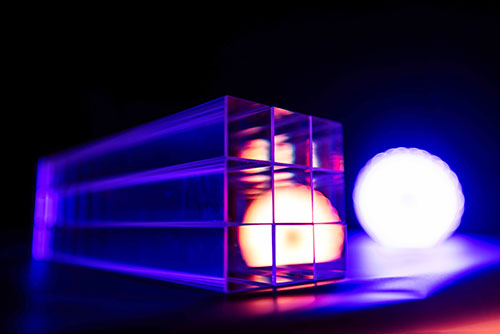
U.S. EIC Project Completes First Detector Crystal Procurement

The U.S. Electron-Ion Collider project has completed its first long-lead equipment purchase, receiving 1,069 lead-tungstate crystals for the ePIC detector. The crystals will form a key part of the EEEMCAL calorimeter, which will measure scattered electrons from collisions. The milestone moves the detector project forward as researchers prepare to use the EIC to study the structure of protons, neutrons and other matter.

Read More...

Support Our Journalism

Modern Mechanics 24 is independent. If you value our reporting, a contribution of any amount helps us keep going.

Secure payment by Razorpay. This is a voluntary contribution: it doesn't include a membership or access to premium articles.