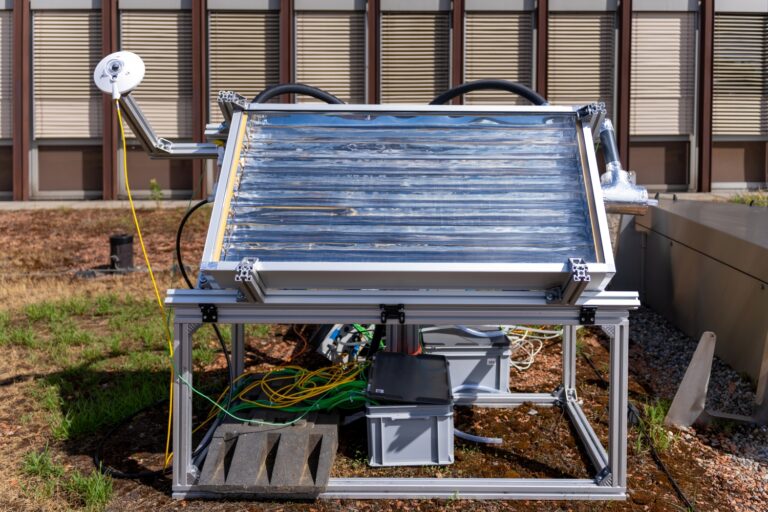
This Solar Collector Hits 150°C, Offering Factories a Cheap Way to Ditch Gas
An ETH Zurich researcher is developing a simpler and cheaper solar thermal collector designed to provide heat for industrial processes.

An ETH Zurich researcher is developing a simpler and cheaper solar thermal collector designed to provide heat for industrial processes.
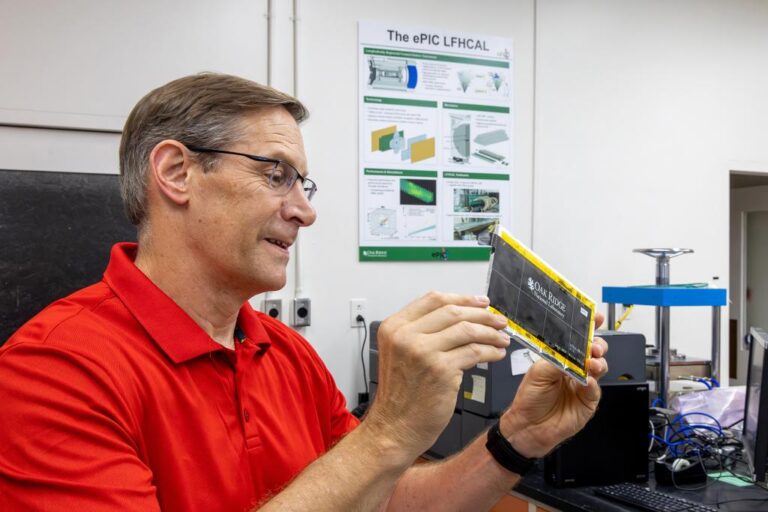
ORNL physicist John Lajoie is developing advanced detector technologies for the future Electron-Ion Collider. His work focuses on capturing and processing signals from particle collisions to help scientists study quarks, gluons and the structure of matter. The ePIC detector will use continuous data collection and may rely on AI and machine learning to process important signals in real time.
Researchers from the University of Science and Technology of China and partner institutions have demonstrated a new way to strengthen superconductivity using engineered vacuum fluctuations. By placing NbSe₂ inside a terahertz dark cavity, the team increased its critical temperature by up to 5.4%. The result could open a new approach to controlling quantum materials without directly applying an external driving signal.
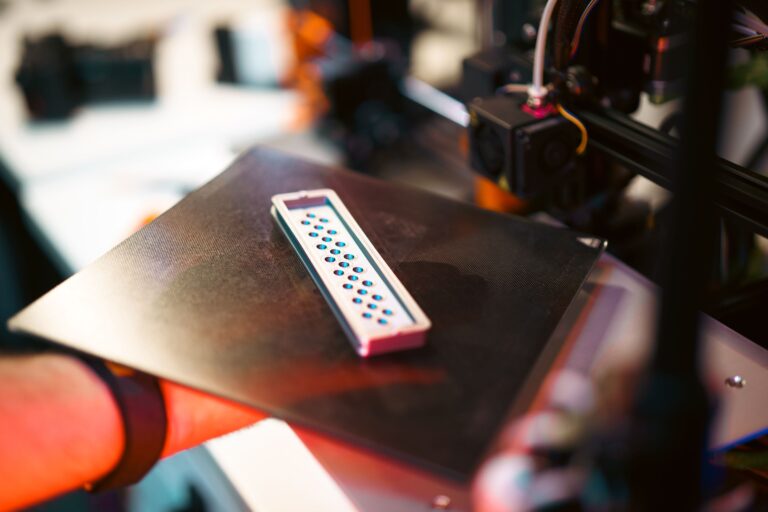
Researchers at Lawrence Livermore National Laboratory have developed a 3D-printed ceramic waveguide for high-power lasers. The new design uses a ceramic structure instead of traditional glass and has demonstrated efficient laser performance. With further development, the team believes it could eventually produce more than 10 times the output power of glass fiber lasers while remaining compact.
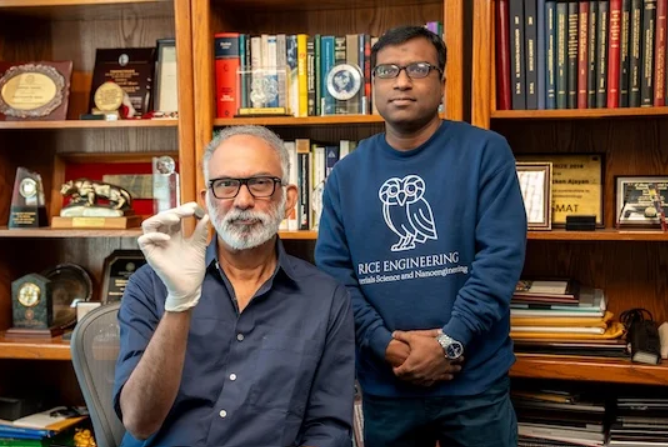
Rice University researchers have developed a new method for making bulk diamond composites at lower pressures. The material combines diamond grains with cubic boron nitride and cobalt. During high-speed impact tests, diamond inside the composite rapidly changed into graphite within microseconds, helping absorb some of the collision energy. The findings could support future materials for aerospace, defense and other demanding applications.

Next Hydrogen has completed the engineering design for a planned 10 MW hydrogen fueling station in British Columbia. The project is intended to support cleaner transportation, including medium- and heavy-duty vehicles. A final investment decision is expected by the end of 2026, with construction potentially starting in late 2027 or early 2028 if the project moves forward.
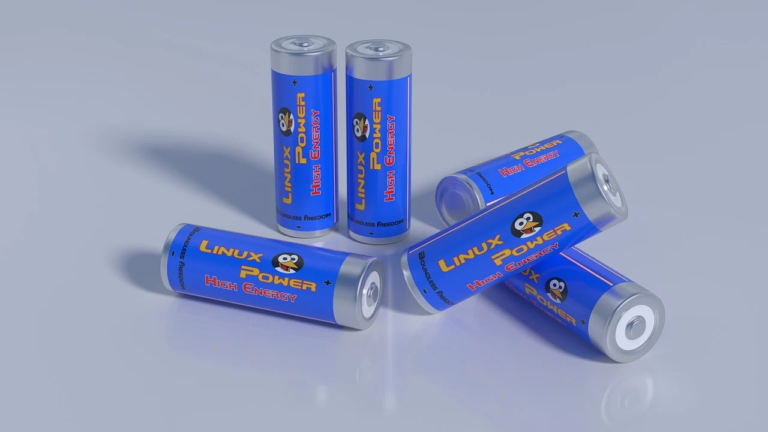
LG Energy Solution has started production at its new Lansing, Michigan battery plant, which will make cells for electric vehicles and energy storage systems. The facility is targeting more than 35 GWh of annual capacity and is expected to employ up to 1,700 people when fully operational. The plant will also supply NMC batteries for Toyota electric vehicles built in Kentucky.
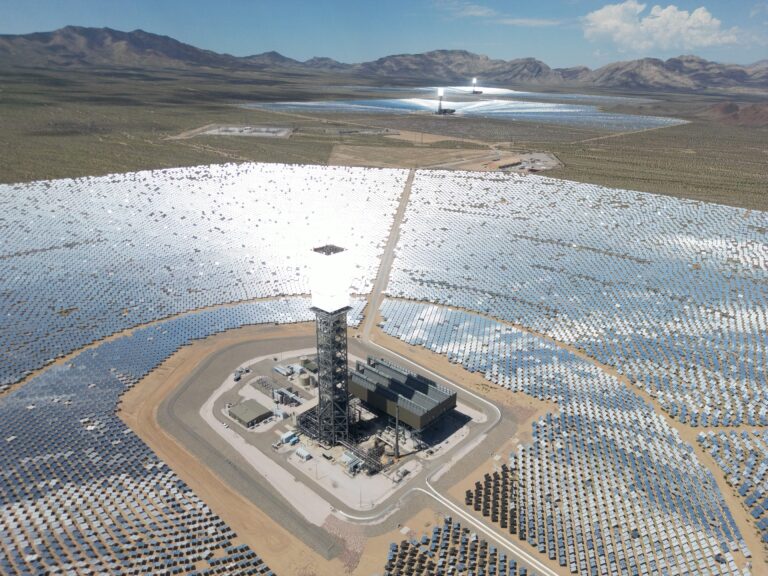
China has completed the installation of 15,927 heliostats at a 100MW solar thermal power plant in Xizang’s Nagqu region. The high-altitude facility uses molten salt to store solar heat and is expected to produce 255 million kilowatt-hours of electricity each year. The project is designed to operate in the region’s extreme cold, strong winds and weak-grid conditions.

Researchers at IMDEA Materials Institute have developed a Cu₃Pt catalyst that achieved performance similar to pure platinum while using 75% less platinum. The team used controlled mechanical compression to change the catalyst’s atomic and electronic structure. The result could help reduce material costs in hydrogen fuel cells, although large-scale production and long-term stability still need to be tested.

JCB has set a new SCTA land speed record with its hydrogen-powered Hydromax at Bonneville. The streamliner reached an average 368.347 mph, beating a 16-year-old class record. Built with two JCB hydrogen internal combustion engines, the car is now being prepared for an FIA world record attempt. The project also gives JCB real-world data for its wider hydrogen engine work in heavy-duty machines.