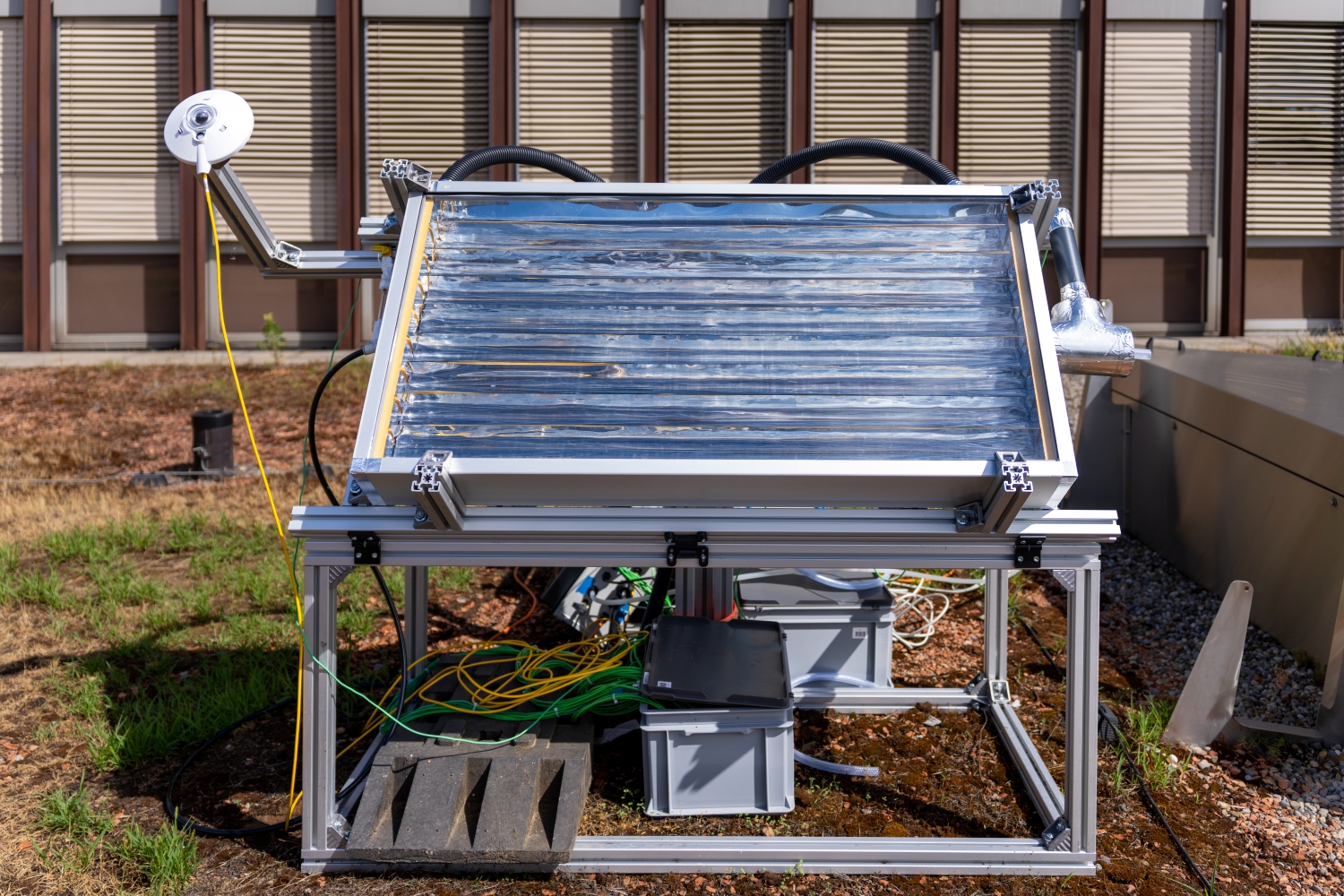
An ETH Zurich researcher is developing a simpler and cheaper solar thermal collector designed to provide heat for industrial processes.
Mechanical engineer and Pioneer Fellow Luca Thommen wants to help factories reduce their reliance on natural gas by using sunlight for applications that require temperatures of up to 150°C.
A prototype installed on the roof of an ETH building has already reached the target temperatures, marking an important stage in the development of the technology.
Industry Needs More Heat
Industrial facilities use large amounts of heat for everyday operations such as pasteurising, drying, cooking, cleaning and dyeing.
READ ALSO: https://modernmechanics24.com/post/llnl-3d-print-ceramic-laser-high-power/
Many factories currently depend on natural gas and other fossil fuels because these sources can provide steady heat at the temperatures required for manufacturing. While renewable electricity has expanded rapidly, replacing fossil-based industrial heat remains a separate and more difficult challenge.
Thommen’s work focuses on this gap between renewable electricity and renewable heat. Instead of converting sunlight into electricity, his system captures solar energy and turns it directly into usable heat. The approach is aimed at industries such as food production, chemicals and pharmaceuticals, where heat is an essential part of manufacturing.
From Engineering To Energy
Thommen began his career as a conventional mechanical engineer, with studies that included combustion engines and robotics.
His interest shifted toward renewable energy as he considered how engineering skills could contribute to addressing climate-related challenges. The idea for the solar collector emerged during his master’s thesis under Aldo Steinfeld, now Professor Emeritus of Renewable Energy Carriers at ETH Zurich.
The research attracted interest from industry at an early stage, encouraging Thommen to develop the concept beyond an academic project. His central objective is to create a solar heat system that companies can adopt without taking on the high costs associated with complex solar thermal technologies. The design therefore places cost, simplicity and practical industrial use at the centre of the project.
WATCH ALSO:https://modernmechanics24.com/post/humanoid-robot-towel-task/
How The Collector Works
The collector uses reflective elements to direct sunlight toward an absorber panel. The panel captures the solar energy and transfers the resulting heat to a medium such as air or water, while insulation helps prevent that heat from escaping. The heated air or water can then be supplied directly to an industrial process.
A major part of the collector is made from lightweight and inexpensive insulation material. Metal is used only where it is necessary, reducing the amount of costly material required for construction. Thommen says the aim is to achieve similar performance to earlier collectors while bringing the overall cost down enough to make the technology attractive to industrial users.
Prototype Moves Toward Industry
The first prototype provided an important test of the concept. After being installed on the roof of an ETH building, the collector reached the temperatures that Thommen had targeted during development. He described that result as a key point because it confirmed that the basic design could work outside the laboratory.
The technology is designed for applications requiring temperatures of up to about 150°C. Such requirements include pasteurising and sterilising milk products, cooking and cleaning in food processing, and distillation in chemical and pharmaceutical production.
At these temperatures, renewable heat solutions have often been too expensive for widespread industrial adoption, leaving companies dependent on fossil-based heating.
Industry Interest Builds
Thommen has also been speaking with potential industrial users as he develops the system. Discussions with companies including Climeworks have indicated that there is demand for reliable renewable heat within industrial operations.
Climeworks uses heat at around 100°C for absorption and desorption processes involved in removing carbon dioxide from the atmosphere, placing those operations within the range of Thommen’s collector.
The ETH Pioneer Fellowship is giving Thommen time and resources to move the technology toward commercial use.
Over the coming year, he plans to develop a market-ready product, test it at a pilot facility and continue discussions with potential customers and investors. The next stage will therefore involve not only improving the collector but also determining how it performs under practical operating conditions.
READ ALSO: https://modernmechanics24.com/post/china-superconductivity-quantum-effects/
A Challenge Beyond Electricity
The development comes as industries face growing pressure to reduce carbon emissions while maintaining reliable energy supplies. Renewable electricity can replace fossil fuels in many applications, but some industrial processes still require direct heat rather than electrical power. Solar thermal systems address that specific requirement by supplying heat without first converting sunlight into electricity.
For manufacturers, economics will remain a key factor in deciding whether to adopt such systems. A technology must provide dependable heat while keeping installation, operation and maintenance costs within a level that makes a switch from conventional fuels financially practical. Thommen’s emphasis on simple construction is intended to address this challenge directly.
Next Steps For Deployment
The prototype’s performance has established a foundation for further engineering and field testing. Thommen now plans to refine the design, test it at a pilot facility and work with potential users to understand how the collector can be integrated into existing industrial systems. These steps will help determine whether the technology can move from a research prototype to a commercially viable product.
The wider significance of the project lies in its focus on an energy requirement that is often less visible than electricity generation. If the collector reaches the required cost and performance levels, it would give industries another option for replacing fossil-fuel-based process heat and reducing exposure to changing fuel prices.
Thommen’s stated priority is ultimately to see the technology deployed in real industrial settings, where its effectiveness can be measured by the heat it supplies and the emissions it helps avoid.