The U.S. Electron-Ion Collider (EIC) project has completed its first major equipment purchase for the new ePIC detector. More than 1,000 lead-tungstate crystals have been delivered, tested and accepted for use in a detector that will help scientists study the basic structure of matter.
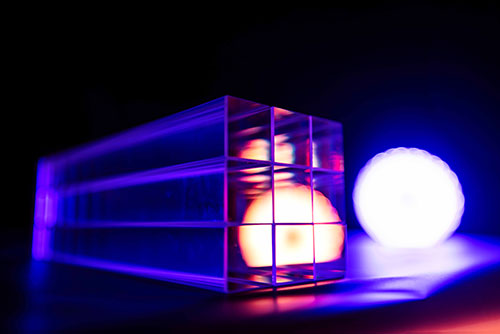
The EIC is being built at Brookhaven National Laboratory in partnership with the U.S. Department of Energy’s Thomas Jefferson National Accelerator Facility. The first procurement contract delivered 1,069 custom-grown crystals, which will be used in the Electron Endcap Electromagnetic Calorimeter, or EEEMCAL.
The crystals are important because the EEEMCAL will measure the energy of electrons produced when particles collide inside the EIC. According to Jefferson Lab, the detector needs to be compact, fast, precise and able to work in a high-radiation environment.
READ ALSO: https://modernmechanics24.com/post/china-superconductivity-quantum-effects/
The EIC will collide beams of electrons and ions moving in opposite directions. These collisions will happen every 10 nanoseconds inside the ePIC detector, a house-sized system made up of several smaller detectors that record what happens after each collision.
The lead-tungstate crystals will act as the main sensing material in the EEEMCAL. When high-energy particles pass through the crystals, they produce light that can be measured to determine the particles’ energy.
The full detector will need about 3,000 crystals, and producing them takes several years. The first order was placed with Crytur, a company that produces synthetic crystals for scientific and advanced technology applications. About 100 to 120 crystals were delivered each month, and none of the 1,069 crystals received so far had to be rejected during quality checks.
The project will now move ahead with the second phase of crystal procurement and continue testing the first batch. Engineers are also working on the mechanical design of the full detector, including its supporting frame. Jefferson Lab said universities including The Catholic University of America, James Madison University, the University of Kentucky and Abilene Christian University are helping with crystal testing.
WATCH ALSO: https://modernmechanics24.com/post/hyundai-atlas-humanoid-robot-wins-honor/
The new detector will play an important role in the EIC’s science program. Researchers hope it will help them study how quarks and gluons form protons, neutrons and other particles, giving scientists a more detailed view of the structure of visible matter.