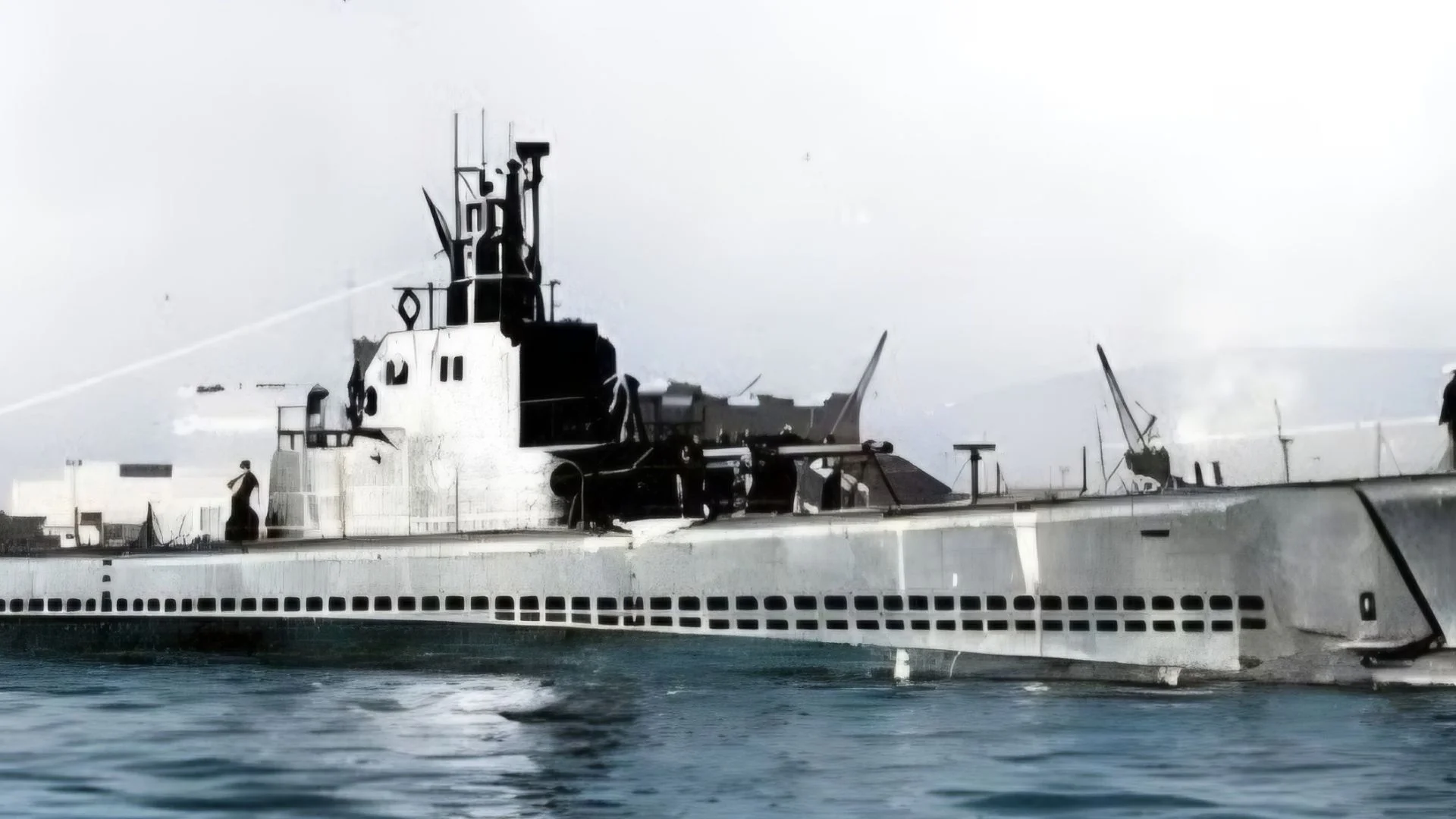
The US Navy has confirmed the identity of USS Herring, a World War II submarine that was lost in the Pacific Ocean in 1944.
The submarine’s wreck was found near Matsuwa Island, Japan, and was identified after several years of research. The discovery helps solve a long-standing wartime mystery and honors the 83 sailors who lost their lives aboard the vessel.
The US Naval History and Heritage Command announced the confirmation on June 1. The date marked 82 years since USS Herring disappeared during a combat mission in World War II. The finding finally reveals the submarine’s exact resting place after decades of uncertainty.
The wreck is located about 300 feet underwater near Matsuwa Island. The island is part of the Kurile Islands, situated between Japan and Russia’s Kamchatka Peninsula. Although the island is uninhabited now, it was an important Japanese military base during the war.
Researchers first suspected the wreck was that of USS Herring in 2017. That year, a joint expedition by the Russian Geographic Society and the Russian military located the submarine on the seabed. Its position and physical features closely matched historical records.
A second expedition returned to the site in 2022. Investigators gathered additional images and survey data from the wreck. Team members also placed a commemorative plaque to honor the submarine’s crew.
The final identification came after years of detailed study. Two American volunteer researchers worked alongside a Japanese researcher to analyze information collected during the expeditions. Their findings confirmed that the wreck was indeed USS Herring.
USS Herring’s Final Combat
USS Herring began its eighth wartime combat patrol in May 1944. The submarine departed after refueling at Midway and headed toward waters near the Kurile Islands. Its mission focused on attacking Japanese shipping routes.
On May 30, 1944, the submarine sank two Japanese cargo vessels. The following day, it met with another American submarine, USS Barb. The two crews coordinated patrol areas before continuing their separate operations.
That meeting marked the last known contact with USS Herring. Early on June 1, the submarine reportedly sank two more Japanese ships anchored near Matsuwa Island. Soon after, Japanese defenses launched a counterattack.
According to Japanese wartime records, a shore-based artillery battery targeted the submarine. Two direct hits reportedly struck the vessel’s conning tower. The damage caused the USS Herring to sink with all hands aboard.
Recent surveys support those historical accounts. The submarine remains upright on the ocean floor and is largely intact. Investigators found visible battle damage near the conning tower, along with signs of impact at the bow.
WATCH ALSO: This robotic system to pick strawberries automates tough tasks
A Protected War Grave and Historic Naval Site
USS Herring carried a crew of 83 sailors when it was lost. None survived the sinking. The site now serves as a permanent resting place for those who died during the mission.
Under US law, the wreck is classified as a protected sunken military craft. It is also recognized as a war grave. Any activity that could disturb the site requires authorization from the Naval History and Heritage Command.
Officials allow non-intrusive documentation such as remote sensing surveys. These methods use sonar and imaging equipment to study underwater sites without touching them. Such technology helps preserve historic wrecks while expanding knowledge about naval history.
The confirmation of USS Herring’s location also highlights growing international cooperation in maritime archaeology. Researchers from different countries contributed to the identification effort. Their work demonstrates how modern technology can solve historical mysteries decades after major events occurred.
During roughly two and a half years of service, USS Herring operated in both the Atlantic and Pacific theaters of war. The submarine completed eight combat patrols and was credited with sinking seven enemy ships. Its service reflected the important role submarines played in disrupting supply lines during World War II.
READ ALSO: New Study Reveals Faster Oxygen Redox in Sodium Batteries with P2-Type Oxides
USS Herring received several military honors for its wartime service. These included the European-African-Middle Eastern Campaign Medal with two battle stars and the Asiatic-Pacific Campaign Medal with three battle stars. The submarine was also awarded the World War II Victory Medal.
The confirmation of USS Herring’s wreck provides long-awaited answers about its final mission. It preserves an important chapter of naval history and ensures the sacrifice of its crew is not forgotten. As underwater exploration technology continues to improve, more lost wartime vessels may finally reveal their stories.