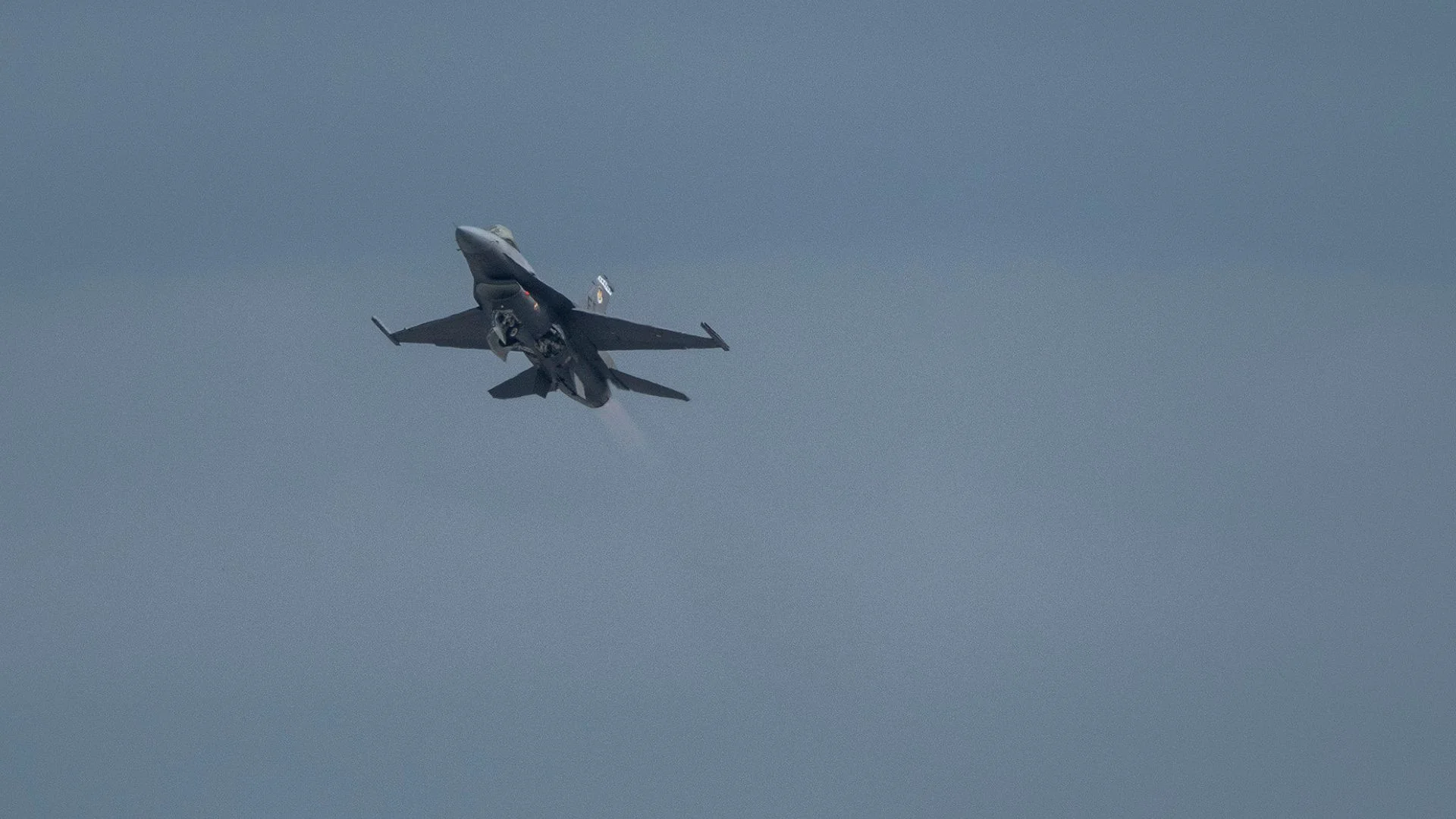
DARPA and the US Air Force have completed a major flight test by allowing an artificial intelligence (AI) system to autonomously control a modified F-16 fighter jet.
The aircraft is part of the Viper Experimentation and Next-generation Operations Model (VENOM) program. The milestone strengthens efforts to develop trusted AI systems for future military aviation while using aircraft already in the operational fleet.
The successful flight demonstrates that existing fighter aircraft can be upgraded with advanced AI technology rather than building entirely new platforms. This approach helps reduce development time while allowing engineers to test new software on proven aircraft. It also creates a practical path for introducing autonomous capabilities into military operations.
The VENOM program is a joint effort between the US Air Force and the Defense Advanced Research Projects Agency (DARPA).
It builds on DARPA’s earlier Air Combat Evolution (ACE) program, which focused on teaching AI systems to fly fighter aircraft during simulated and real aerial combat. Earlier tests used the specially modified X-62A VISTA aircraft, while the latest achievement brings the technology to standard F-16 fighters.
F-16 Existing Jets Upgraded
Several F-16 aircraft have now been modified to serve as autonomous flight test platforms under the VENOM program. Engineers installed a special system known as the VENOM Autonomy Kit, or VAK. The kit allows AI software to control the aircraft while keeping the original flight software unchanged.
READ ALSO: China’s Type 076: The Amphibious Assault Ship That Launches Stealth Combat Drones
The new system connects directly to the aircraft’s flight controls and mission systems. A pilot can switch between manual flying and AI control simply by using a switch inside the cockpit. This design allows human pilots to closely monitor every flight while safely testing autonomous technologies.
According to DARPA Program Manager Brig. Gen. James “Fangs” Valpiani, the modification creates an efficient system for rapidly developing AI designed for aerial combat.
He said the team automated flight controls and sensors without changing the aircraft’s core software. Valpiani added that this approach supports faster innovation while maintaining reliability during testing.
Building Combat AI
The VENOM aircraft will now support the next stage of DARPA’s Artificial Intelligence Reinforcements (AIR) program. The program will test multiple AI agents during live flights rather than relying primarily on computer simulations. These tests will gradually become more complex as researchers expand to formations involving multiple aircraft.
An AI agent is software designed to make decisions and perform specific tasks without constant human input. In this case, the AI controls the aircraft by processing flight information and responding to changing conditions. Researchers aim to improve both the speed and reliability of these systems before they are used in operational missions.
The AIR program will also study how AI performs during beyond-visual-range combat. This type of air combat happens when opposing aircraft engage each other using sensors and long-range weapons rather than direct visual contact. Such situations involve large amounts of information that AI can help process quickly while keeping human operators involved in decision-making.
Valpiani said today’s air combat environment is becoming increasingly complex because of evolving threats. He explained that AI has the potential to help pilots manage this complexity, especially during long-range engagements. At the same time, he noted that researchers still need to answer important questions about how reliable and trustworthy AI remains under the uncertainty of real combat.
Future Combat Teams
DARPA expects the AIR program to support future military operations where human pilots coordinate teams of autonomous aircraft. These unmanned aircraft would work alongside crewed fighters during complex missions. The research also supports the US military’s Collaborative Combat Aircraft programs, which aim to combine crewed and autonomous systems in future air operations.
Lt. Col. Patrick Dice Highland has joined DARPA as the incoming program manager for the AIR program.
He praised the progress made through the VENOM flights and said they provide an early look at how AI may reshape future air warfare. Highland added that the next objective is to develop autonomous systems capable of handling beyond-visual-range missions involving multiple aircraft.
READ ALSO: MIT’s SceneSmith Uses AI Agents to Build 3D Robot Training Worlds Faster Than Ever Before
Terry Wilson, director of AI Development and Transition for the Air Force Research Laboratory’s Autonomy Capability Team, continues to oversee technical leadership for both the VENOM and AIR programs. He credited engineers, industry partners, test crews, and maintenance teams for reaching the latest milestone. Wilson said the focus now is on moving advanced AI capabilities from simulation into increasingly realistic flight operations.
Next Testing Stage
Future testing will focus on accelerating AI development while improving the accuracy of flight models. Researchers will expand testing from single aircraft to coordinated missions involving multiple autonomous and human-controlled platforms. Each stage will introduce more challenging scenarios to strengthen the performance of AI systems.
The latest flight demonstrates more than the successful operation of a single aircraft. It establishes an experimental platform that allows researchers to safely develop, test, and improve autonomous combat technologies on operational fighter jets. As testing expands, these AI-controlled F-16s are expected to play an important role in shaping the next generation of military aviation and future joint force operations.