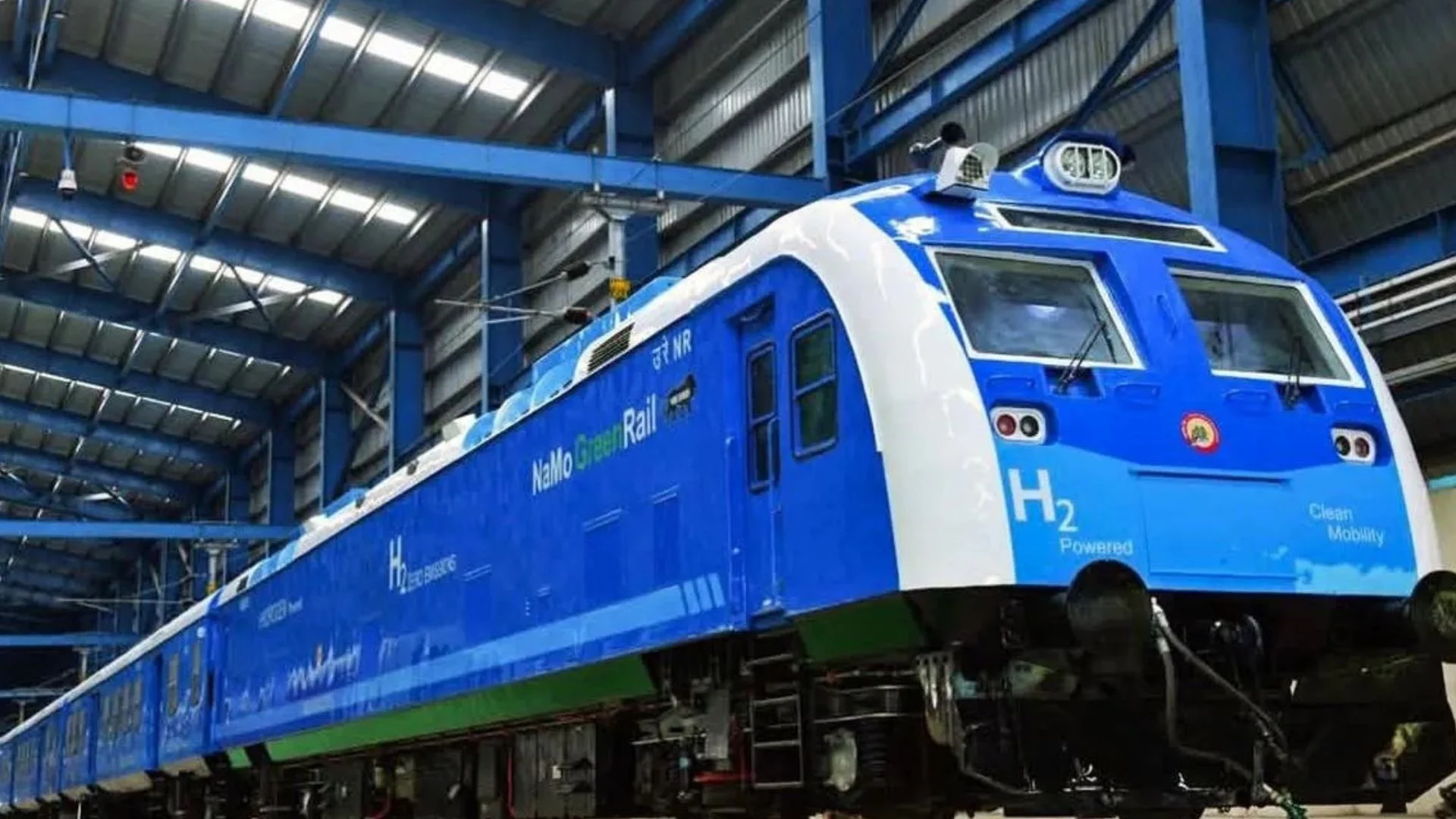
India has entered a new era of Green Rail transportation after inaugurating its first indigenous hydrogen-powered train on July 17, 2026.
The new train will operate on the Jind-Sonipat section of Northern Railway and showcases India’s growing focus on clean energy-based mobility. Designed and developed within the country, the project also reflects the government’s push to strengthen domestic manufacturing under the Atmanirbhar Bharat initiative.
The hydrogen-powered train is not driven by conventional diesel engines. Instead, it produces electricity on board using hydrogen fuel cells, making it one of the cleanest rail transport technologies currently available. The train emits only water vapour and heat during operation, helping reduce pollution and dependence on fossil fuels.
The project represents more than the launch of a new passenger service. It also introduces the supporting infrastructure, operational systems, and technical expertise needed to expand hydrogen-powered rail transportation in the future. The experience gained from this pilot project will help Indian Railways evaluate the technology for wider deployment.
Advanced Train Features
The train consists of ten coaches, including two Hydrogen Driving Power Cars and eight trailer coaches. It is powered by a 1,200-kilowatt hydrogen fuel cell propulsion system that generates electricity throughout the journey. The train has been approved to operate at a maximum speed of 75 kmph, while its design allows speeds of up to 110 kmph.
The train can accommodate around 2,600 passengers in a single trip. It will connect Jind Junction, Gohana Junction, and Sonipat, serving several intermediate stations along the route. The project has been developed from the design stage to prototype manufacturing entirely within India.
READ ALSO: Geely’s 16-in-1 Intelligent E-Drive Sets Two Guinness Records and Raises EV Efficiency Standards
Each Hydrogen Driving Power Car carries hydrogen storage cylinders, fuel cells, and lithium iron phosphate batteries. The batteries store and manage energy efficiently, ensuring reliable operation even during varying power demands. Together, these systems provide a cleaner alternative to conventional diesel-powered trains.
One of the biggest advantages of hydrogen fuel is its high energy content. Hydrogen delivers nearly three times more energy per kilogram than diesel, allowing efficient power generation while producing no harmful exhaust emissions. The technology also requires relatively lower maintenance because it has fewer moving mechanical parts than traditional engines.
Green Rail Technology
The train uses Proton Exchange Membrane Fuel Cell technology to generate electricity. In simple terms, hydrogen reacts with oxygen inside the fuel cell to produce electrical power without burning fuel. The only by-products of this chemical reaction are water vapour and heat, making the process environmentally friendly.
Hydrogen fuel cell technology has gained worldwide attention as countries seek cleaner transport solutions. Unlike diesel locomotives, hydrogen-powered trains significantly reduce carbon emissions while maintaining operational efficiency. This makes them especially suitable for railway routes where complete electrification may not yet be practical.
With this launch, India joins a small group of nations exploring hydrogen-powered rail transport. Countries including Germany, Japan, China, and the United States have already introduced similar technologies through pilot projects and commercial operations. India’s entry into this group highlights its growing investment in next-generation transportation systems.
Safety And Infrastructure
To support the new service, Indian Railways has established the country’s largest railway hydrogen storage and refuelling facility at Jind in Haryana. The facility can store nearly 3,000 kilograms of hydrogen and has received the required licence from the Petroleum and Explosives Safety Organisation. It also follows internationally accepted safety standards, including NFPA-2 and ISO 19880 guidelines.
The hydrogen ecosystem includes a dedicated compression system, a standby compressor, technical support, and essential spare parts. Independent safety assessments were carried out by Germany-based TÜV SÜD to verify the system’s compliance with international safety requirements. These measures help ensure reliable and secure refuelling operations.
Indian Railways has also introduced multiple safety systems across trains and their supporting infrastructure. Hydrogen leak detectors, flame sensors, continuous ventilation, and automatic hydrogen shut-off systems constantly monitor operations. If unusual heat, smoke, or flame is detected, the system immediately isolates the hydrogen supply to minimise risk.
READ ALSO: DARPA’s AI-Controlled F-16 Flight Marks a New Step Toward Autonomous Air Combat Operations
The locomotive pilot receives real-time information about the train’s health through onboard monitoring displays. A dedicated emergency operating mode also allows the train to be moved safely if required. Trained personnel, regular inspections, and round-the-clock monitoring further strengthen operational safety during the initial deployment phase.
Future Rail Mobility
The hydrogen-powered train supports India’s broader efforts to build cleaner and more energy-efficient transportation systems. It aligns with the National Green Hydrogen Mission and the country’s long-term target of achieving net-zero carbon emissions. The project also provides valuable operational data that will guide future hydrogen railway programmes.
Beyond introducing a cleaner train, the initiative establishes the technical foundation required for larger hydrogen-powered rail networks. It helps validate maintenance practices, operating procedures, and infrastructure requirements under real-world conditions. This knowledge will be essential if hydrogen technology expands across additional railway routes.
As Indian Railways continues its modernization programme, hydrogen-powered mobility offers another pathway toward sustainable transport. The successful introduction of this train demonstrates how clean energy can be integrated into public transportation while maintaining passenger capacity and operational efficiency. Its long-term impact may shape the future of environmentally responsible rail travel across India.