Scientists in a Finnish lab are transforming stretchable, skin-like electronics from futuristic ideas into real devices that can bend, stretch, and reshape how everyday technology feels and works.
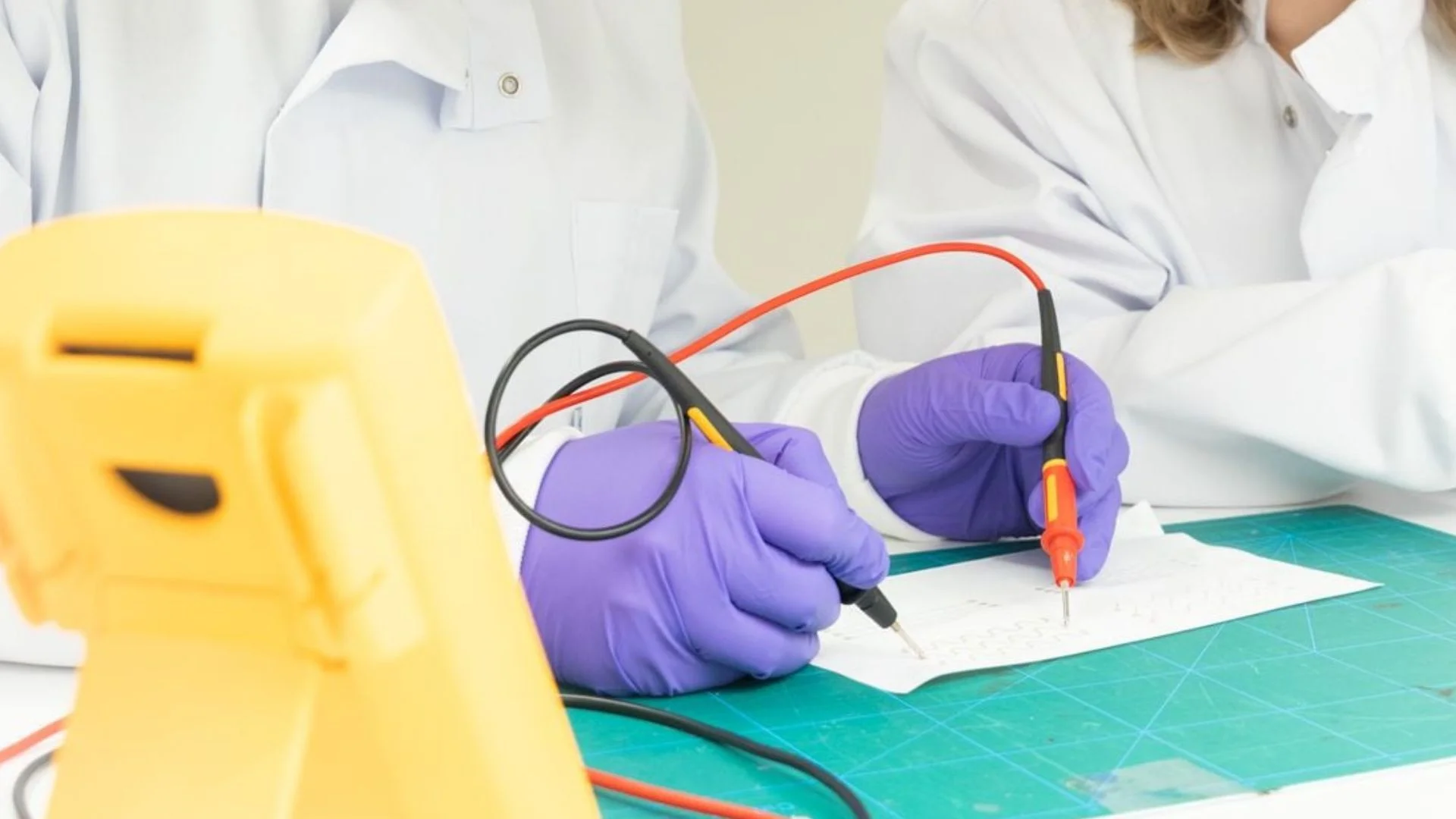
A research team led by Vipul Sharma at the University of Turku is developing a new method for building flexible electronics.
These materials are inspired by nature, especially the structures seen in tree leaves. The goal is to create electronics that are not just powerful, but also adaptable and environmentally friendly.
Sharma explains the vision clearly. “We aim for high efficiency and use only environmentally friendly materials. We have built electronic materials that stretch, breathe, conduct electricity, and stay transparent. That makes them better than many existing options.”
READ ALSO: B-21 Raider Reveals Hidden Design In First Overhead Image During Secret Trials
The idea may sound futuristic, but its impact is easy to imagine. Phones that roll up and fit into your pocket. Television screens that stretch into large home theatre displays when needed. Wearable devices that feel like a second skin instead of a rigid gadget.
The team has already taken a major step forward. They created a material that works like electronic skin. This thin, flexible layer can sense touch. To test it, the researchers attached it to a robotic hand. The result was impressive. The robotic hand could detect pressure when touched, giving it a sense similar to human skin.
This technology has important uses in prosthetics. In the future, people using artificial limbs may be able to feel pressure, temperature, and even humidity. This would make prosthetics far more natural and useful in daily life.
At the same time, another team at the same university is focusing on soft robots. These machines are very different from traditional robots. Instead of rigid metal parts, they are made from flexible materials that can bend and move more like living organisms.
WATCH ALSO: Biohybrid robots turn food waste into functional machines
Anastasia Koivikko, who leads this effort, highlights why softness matters. “We are building soft devices that can help patients recover movement. Robots must feel safe and comfortable when they work with people,” she says.
Soft robots are especially useful in healthcare. They can assist hospital staff by lifting patients or supporting rehabilitation exercises. Because they are flexible, they reduce the risk of injury and feel less intimidating to patients.
Their usefulness does not stop there. In industries, soft robots can handle fragile items without breaking them. In rescue operations, they can squeeze into tight spaces where rigid machines cannot go. Researchers are even exploring their use in space missions, where adaptability is crucial.
These robots move in interesting ways. Many use compressed air to create motion, allowing them to expand, contract, or even jump in small spaces. Others use electricity, light, or fluids to move. This flexibility opens the door to many new applications.
Koivikko points to another important possibility. “Soft robots can work in dangerous environments, like areas with high radiation. They can also detect when fruits are ripe and pick them gently,” she says.
READ ALSO: Human-like Robots in McDonald’s Uniforms in China, But Only for a Reason
Despite their promise, soft robots are not yet widely available. Researchers are still improving their design, durability, and cost. But progress is steady.
Sustainability is a key focus in this work. The teams are actively searching for materials that are less harmful to the environment. While silicone is commonly used today, scientists want greener alternatives.
One promising option comes from nature itself. Sharma’s group is exploring biomass from Finnish wood as a base material for future electronics. This approach could reduce dependence on materials sourced from other countries and lower the production’s environmental impact.
Sharma believes this resource holds strong potential. “Forests are Finland’s oil. Few countries in Europe have this level of access to timber. We see great global potential in using this biomass for electronics,” he says.
Researchers are not just building new gadgets. They are rethinking how electronics and machines are made, how they feel, and how they interact with people.
WATCH ALSO: Swiss company’s new ‘brain’ to help robots conduct real-life tasks autonomously
Stretchable screens and soft robots may still be developing, but their direction is set. Technology is moving away from rigid and mechanical designs toward systems that are flexible, responsive, and closer to nature. And when that shift fully arrives, everyday devices may no longer feel like tools, but like something far more natural.