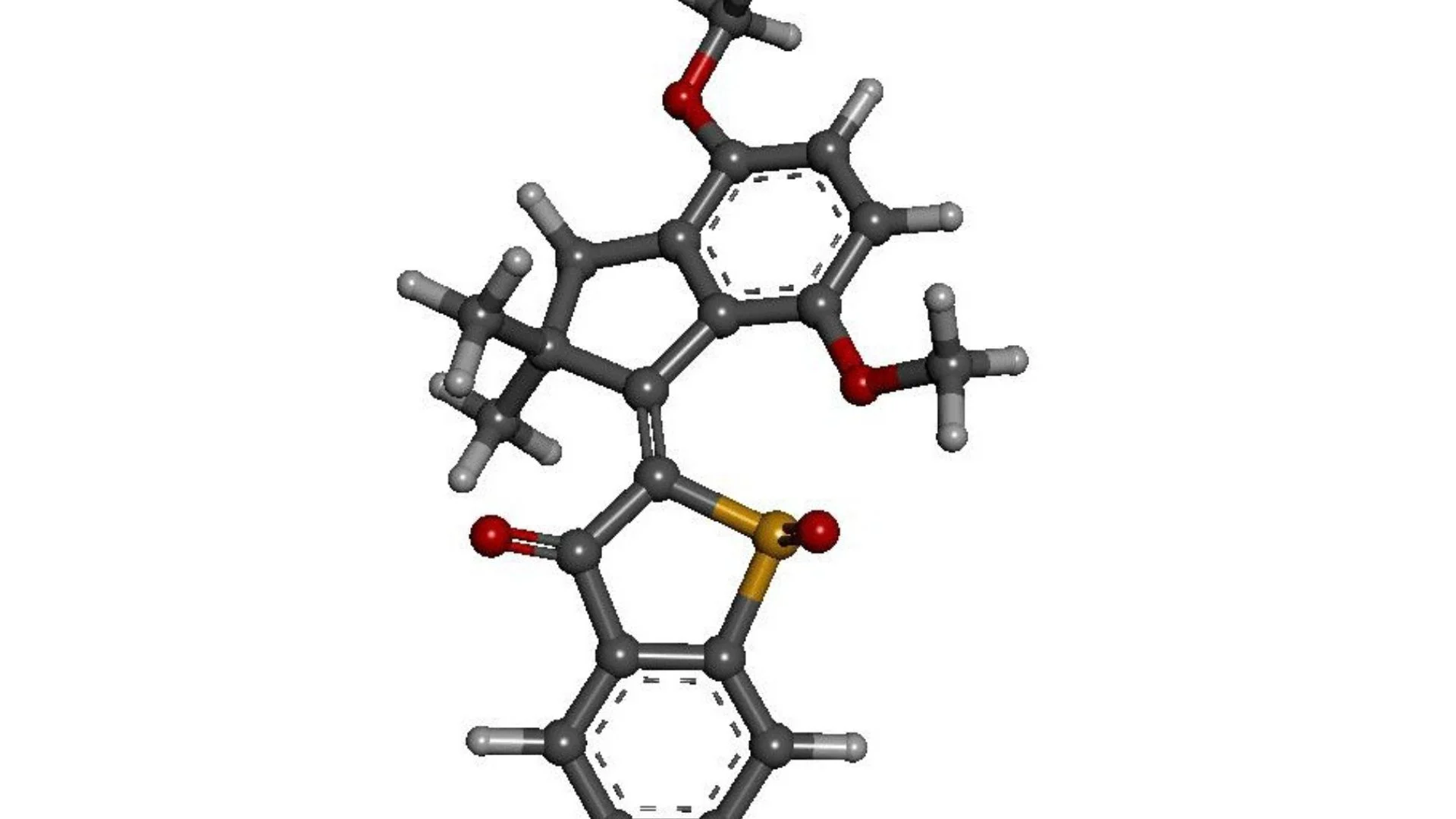
Scientists in Germany are developing a new class of light-responsive materials made from molecules that contain just a few dozen atoms.
Led by Professor Henry Dube at Friedrich-Alexander-Universität Erlangen-Nürnberg (FAU), the team is studying how these tiny systems can be combined into advanced smart materials.
Despite their small size, the molecular machines can move, change shape, and perform tasks when activated by light, with the project supported by around 900,000 euros from the Volkswagen Foundation.
Dube’s goal is to build materials that behave almost like living systems. In nature, molecular machines already exist inside the human body and other organisms. Muscles, for example, work through the coordinated movement of proteins. These proteins slide past each other, creating force and movement.
READ ALSO: AI Data Center Power Rush Drives 129M Greenhouse Emissions Surge Bigger Than Nations
“We have been developing molecules for some time now that enable similar functions in principle,” Dube said. “However, they are generally built quite differently from their natural counterparts and are also significantly smaller.”
His team has already made progress in building such tiny machines. They have created molecular gears, nanomotors, and even microscopic tweezers capable of grabbing extremely small objects. These inventions show that controlled motion at the molecular level is possible.
Instead of working with single molecular machines, they plan to connect many of them together. The idea is to build three-dimensional structures where different types of molecular units are linked in specific ways. By carefully choosing and arranging these building blocks, the scientists aim to create materials with programmed behaviors.
“In a muscle, countless ‘pull-up molecules’ are connected in series,” Dube explained. “They are bundled together by the hundreds of thousands so that they can generate enough power collectively.”
WATCH ALSO: Boston Dynamics Atlas humanoid robot demonstrates remarkable mobility, balance
The team wants to follow a similar approach. By linking many molecular machines together, they hope to create systems that can perform complex tasks as a group.
One of the most exciting possibilities is the development of artificial muscles. These materials would contract and expand like real muscles, but instead of being controlled by electrical signals, they would respond to light.
“Many of the nanomachines we use change shape when exposed to light,” Dube said. “This allows us, for example, to trigger movements.”
This light-driven behavior makes the system highly flexible. By simply changing the type or color of light, scientists can control how the material behaves.
In some cases, molecular changes also affect how the material interacts with light. For example, a shift in shape may change color. This feature could be used to design advanced display technologies.
READ ALSO: Talk Without Talking: AI Neckband Turns Silent Words Into Your Voice; Here’s How It Works
Dube’s team is exploring cube-shaped screens that can display three-dimensional images. These images would be visible from all angles, offering a more immersive viewing experience than traditional screens. Unlike etched or fixed displays, these images could also be erased and reprogrammed easily.
The scientists want to create materials whose physical properties can be adjusted on demand. For instance, a material might become stiff when exposed to blue light and turn flexible under red light.
“We are also planning to produce materials whose properties can be programmed,” Dube said. “For example, they could become rigid under blue light, but elastic under red light.”
This kind of control would be highly useful in robotics. Imagine a robotic arm that becomes flexible only at a specific point and only for a short time. Such precision would enable machines to perform delicate tasks more efficiently. Despite the promise, the project is still in its early stages.
WATCH ALSO: China Sets World Record with 700 km/h Maglev
Dube describes the work as exploring uncharted scientific territory. Traditionally, organic chemists focus on individual molecules. This research, however, moves into the field of materials science, which requires a different approach and new expertise.
“As organic chemists, we usually work with individual molecules,” Dube said. “With our ideas, however, we are venturing into materials science, a field that requires a completely different set of expertise.”
To support this transition, the project will bring in researchers with experience in related fields. The funding from the Volkswagen Foundation will help hire postdoctoral scientists with specialized knowledge.
The project is part of the foundation’s Momentum Program. This initiative supports researchers who have recently become professors and want to expand their work into new directions.
Dube remains confident about the path ahead.
“I am absolutely confident that we can successfully put our ideas into practice this way,” he said.
READ ALSO: US ‘Hellscape’ Drone Swarms Hit Real-World Limits Near Taiwan Strait Standoff
If successful, the research will reshape how materials are designed and used. Instead of static substances with fixed properties, future materials may act more like dynamic systems, changing shape, function, and behavior in response to light.
From artificial muscles to reprogrammable displays, the possibilities are wide-ranging. However, this work represents a shift in thinking. It brings together chemistry, physics, and materials science to build systems that blur the line between machines and materials.
And it all starts at a scale too small to see but powerful enough to transform how things move and respond in the visible world.