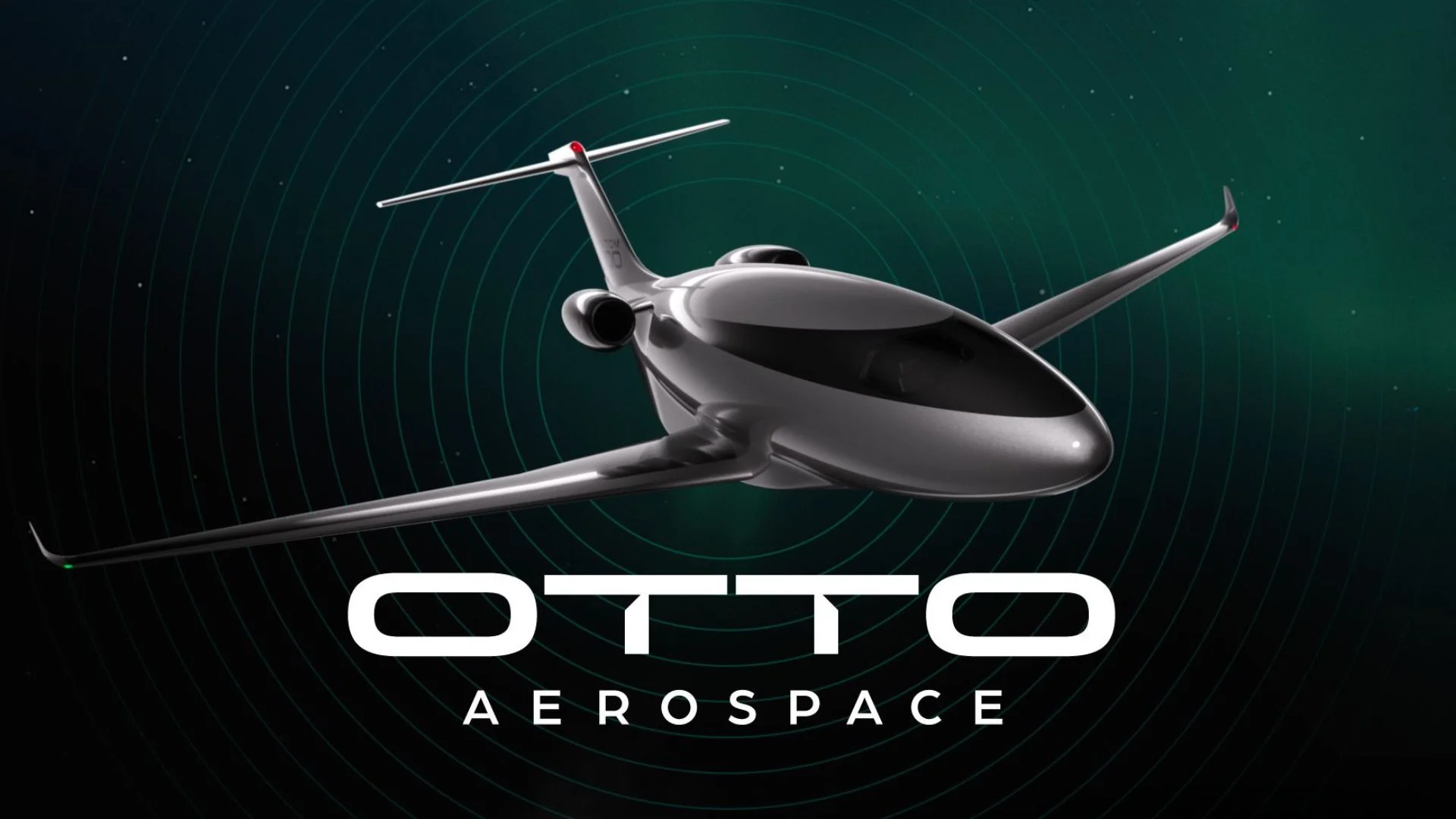
Otto Aerospace completed the Phantom 3500’s preliminary design review in late February at its headquarters in Jacksonville, Florida.
Engineers and evaluators examined the aircraft’s systems, structures, aerodynamic layout, and overall performance during the assessment.
The review confirmed that the program is ready to move into detailed engineering and production planning.
Company executives described the milestone as an important step for the aircraft’s development timeline. Otto Aerospace President and CEO Scott Drennan said the Phantom 3500 has now moved from concept stage toward actual manufacturing and flight preparation. The company continues to target the second half of 2027 for the jet’s maiden flight.
READ ALSO: Atomic Canyon and Diablo Canyon Power Plant Use Frontier Supercomputer to Pioneer Nuclear AI
Phantom 3500 Windowless Business Jet
The Phantom 3500 first attracted global attention because of its unusual design. Unlike traditional business jets, the aircraft does not use passenger windows. Instead, it relies on panoramic interior screens connected to external cameras that provide real-time views of the outside for passengers.
Otto Aerospace removed traditional windows to improve airflow around the aircraft. Engineers believe windows interrupt smooth airflow and increase aerodynamic drag during flight. By eliminating them, the company aims to maintain cleaner airflow across the fuselage and improve fuel efficiency.
The aircraft uses a technology known as transonic laminar flow. This system keeps air moving smoothly over the aircraft’s surface for longer distances before turbulence forms. NASA has described laminar flow as one of aviation’s biggest long-term engineering goals because it can significantly reduce fuel burn and operating costs.
READ ALSO: Rolls-Royce Engineers Successfully Test World’s First 100% Methanol Marine Engine
The Phantom 3500 also features a streamlined fuselage that resembles a bullet shape. Compared to conventional private jets, the aircraft has a narrower and more elongated body. Otto says this design helps reduce drag while supporting long-range travel at high altitudes.
The business jet is expected to fly at a service ceiling of 51,000 feet. That altitude is higher than many commercial aircraft and allows the jet to operate above heavy air traffic and turbulent weather. Otto also claims the aircraft will deliver lower fuel consumption compared to traditional business jets in the same category.
The Phantom 3500 is expected to offer a range of 3,200 to 3,500 nautical miles, depending on the final configuration. That range allows nonstop flights on routes such as New York to Los Angeles or London to Dubai. The aircraft will use twin Williams FJ44 turbofan engines for propulsion.
Otto Aerospace Expands Laminar Flow Aviation Plans
The Phantom 3500 program builds on Otto Aerospace’s earlier Celera aircraft concepts.
The company combined design elements from the Celera 800 airframe and the Celera 500L piston-powered aircraft to create the new platform. Engineers refined the overall shape to better support high-efficiency airflow and long-distance performance.
WATCH ALSO: ISRO successfully conducts test of main parachutes for Gaganyan Crew module
Otto Aerospace says the aircraft is designed mainly for the business aviation market. However, the company also plans to use the platform to validate technologies for future military applications.
Earlier this month, Otto successfully tested its unmanned EWA drone, showing the company’s broader interest in defense-related aerospace systems.
The aircraft’s cabin will provide approximately 800 cubic feet of interior space, with a cabin height of 7 feet. Otto plans to manufacture the Phantom 3500 at a future facility located at Cecil Airport in Jacksonville. The company has previously estimated the aircraft’s price at around $19.5 million.
Otto expects FAA Part 23 certification and commercial service entry around 2030. The project arrives as aviation companies search for more efficient aircraft designs to reduce fuel costs and environmental impact.