The US Army has awarded a $325.5 million contract to Northrop Grumman to develop a new high-altitude uncrewed aircraft called RangeHawk.
The program is designed to support hypersonic and long-range missile testing with improved tracking and data collection.
The contract was announced on 14 May 2026 and highlights the Army’s push to strengthen airborne test infrastructure.
RangeHawk is a mobile airborne sensor platform that can track missile flight paths in high speed test missions. It helps close gaps left by ground stations and ships, which often cannot capture the full flight data.
The aircraft is designed for long-duration flights at high altitude. It carries advanced tracking sensors to monitor hypersonic weapons during testing. This setup improves the accuracy and completeness of data collected in extreme-speed flight conditions.
The program supports the Army’s wider hypersonic development efforts, including long-range strike weapons. It connects directly to testing needs for systems like the Long-Range Hypersonic Weapon, also known as Dark Eagle. The focus is on improving test reliability and reducing data gaps during flight trials.
READ ALSO: U.S. Army Sees First Tactical-Ready 3D-Printed Hybrid Rocket from Firehawk Aerospace
How RangeHawk Supports Hypersonic Testing
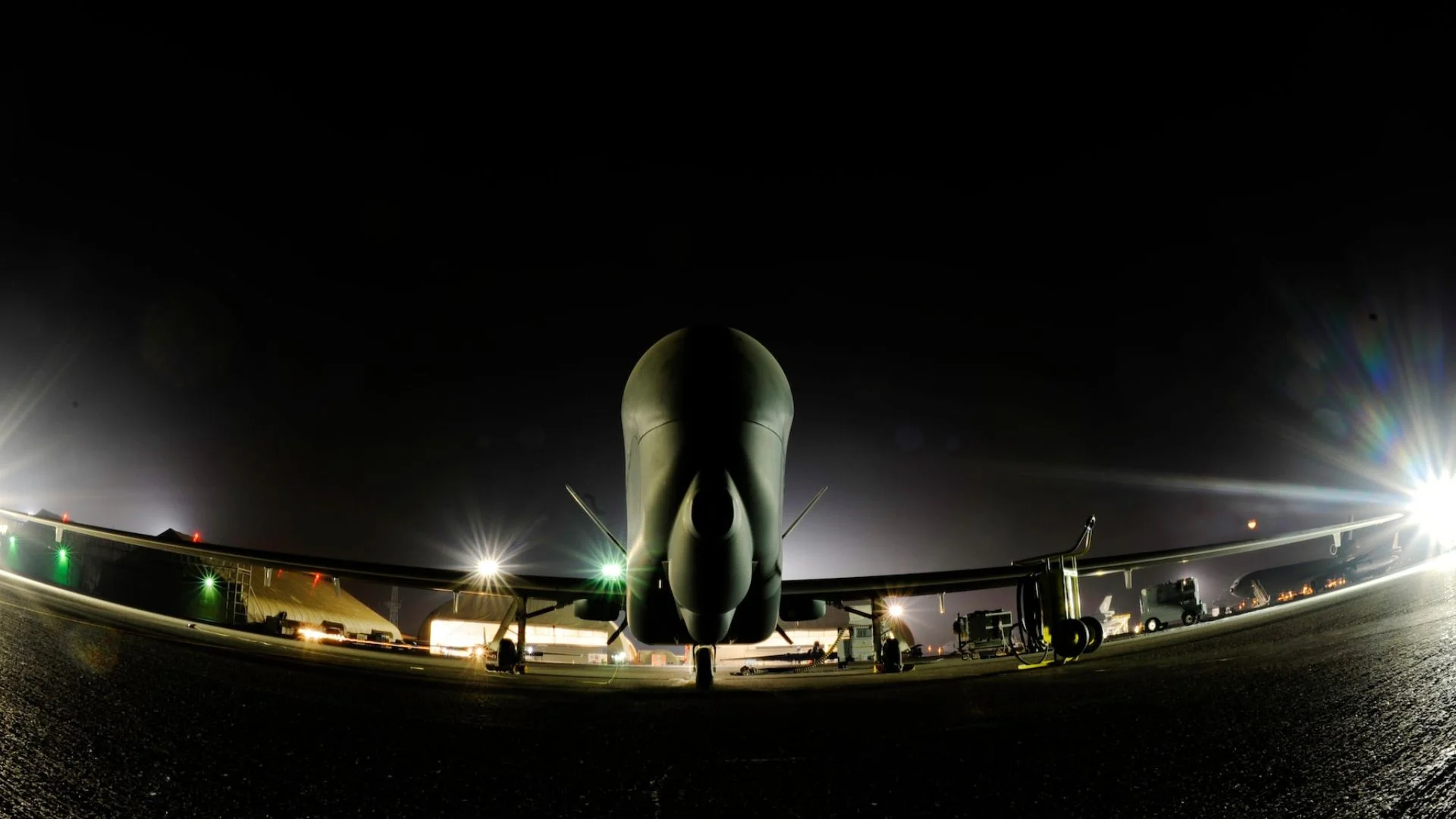
RangeHawk is based on the design lineage of the RQ-4 Global Hawk used by the US Air Force. The aircraft class is known for long endurance, high altitude, and large payload capacity. It operates without onboard weapons and focuses entirely on surveillance and data missions.
The system will carry advanced telemetry receivers and tracking sensors rather than weapons. These include phased array antennas, infrared cameras and protected communication systems. It is designed to collect detailed flight data from hypersonic vehicles moving at extreme speed.
A key feature of RangeHawk is its modular payload design. This allows different sensor systems to be installed depending on the test mission. The approach reduces the time needed to adapt aircraft systems for new missile programs.
The design concept aligns with broader airborne testing upgrades linked to programs such as SkyRange. The Test Resource Management Center has supported similar airborne tracking systems to improve missile test coverage. These systems aim to replace older ship-based tracking methods that limit flexibility.
WATCH ALSO: Rolls-Royce tests world’s first high-speed marine engine powered by methanol
Impact on US Hypersonic Missile Development
RangeHawk will improve the way the US tracks and analyzes hypersonic missile tests in real time. It can follow more closely missile flight paths than fixed ground stations. This helps engineers collect continuous data throughout high speed flight stages.
The system is especially important for programs like the US Army’s Dark Eagle hypersonic missile. The weapon is part of the Long-Range Hypersonic Weapon program developed in cooperation with Leidos and other defense partners. It is designed for long-range precision strikes against high-value targets.
Hypersonic missiles travel at speeds above Mach 5 and require advanced tracking systems during testing. Even small data gaps can slow development or reduce accuracy in later designs. RangeHawk aims to reduce those gaps by staying closer to missile flight corridors.
The system also improves testing speed and flexibility. Traditional ship-based tracking platforms require long planning times and complex logistics. Airborne systems like RangeHawk can be deployed more quickly to support frequent test cycles.
For the wider defense industry, the program strengthens the US ability to improve the next generation of weapons. It allows quicker feedback loops between testing and design teams. This can help reduce the delays in moving advanced systems from prototype to production.
READ ALSO: New Algorithms Boost Neutrino Hunt for Cosmic Ray Origins
RangeHawk reflects a shift toward mobile airborne test networks in modern defense systems. It combines long-endurance flight with advanced sensor technology to support complex missile programs. The focus is on improving test accuracy and reducing operational delays.
As hypersonic development expands, systems like RangeHawk will play a key role in test infrastructure. The program strengthens the connection between airborne data collection and weapons development. It marks a step toward more flexible, responsive missile-testing capabilities.