The US Air Force is exploring a new plan to convert offshore oil rigs into rocket recovery platforms.
The idea is part of Project Able Baker, a program designed to support reusable rockets launched by the US Space Force and private space companies.
The proposal aims to reduce launch costs, increase mission frequency, and give retired oil platforms a new role at sea.
The proposal was announced through a Small Business Innovation Research solicitation. The Air Force described the plan as a way to combine space infrastructure with existing maritime assets. Officials said the concept could support both military and commercial space missions.
Offshore Oil Rigs Get New Role in Space Operations
Many offshore oil and gas platforms in US federal waters are reaching the end of their service life. Removing these structures is expensive and often disrupts marine ecosystems that have formed around them over time.
READ ALSO: Las Vegas Welcomes Zoox’s Driverless Ride-Hailing Service
The Air Force said some decommissioning projects can cost more than $1.6 billion per platform.
Under Project Able Baker, selected rigs would be reinforced and upgraded for rocket landings. The platforms would need to handle strong vibrations, heat, and pressure produced during booster recovery operations. Engineers would also install systems for fire suppression, navigation guidance, and flame control.
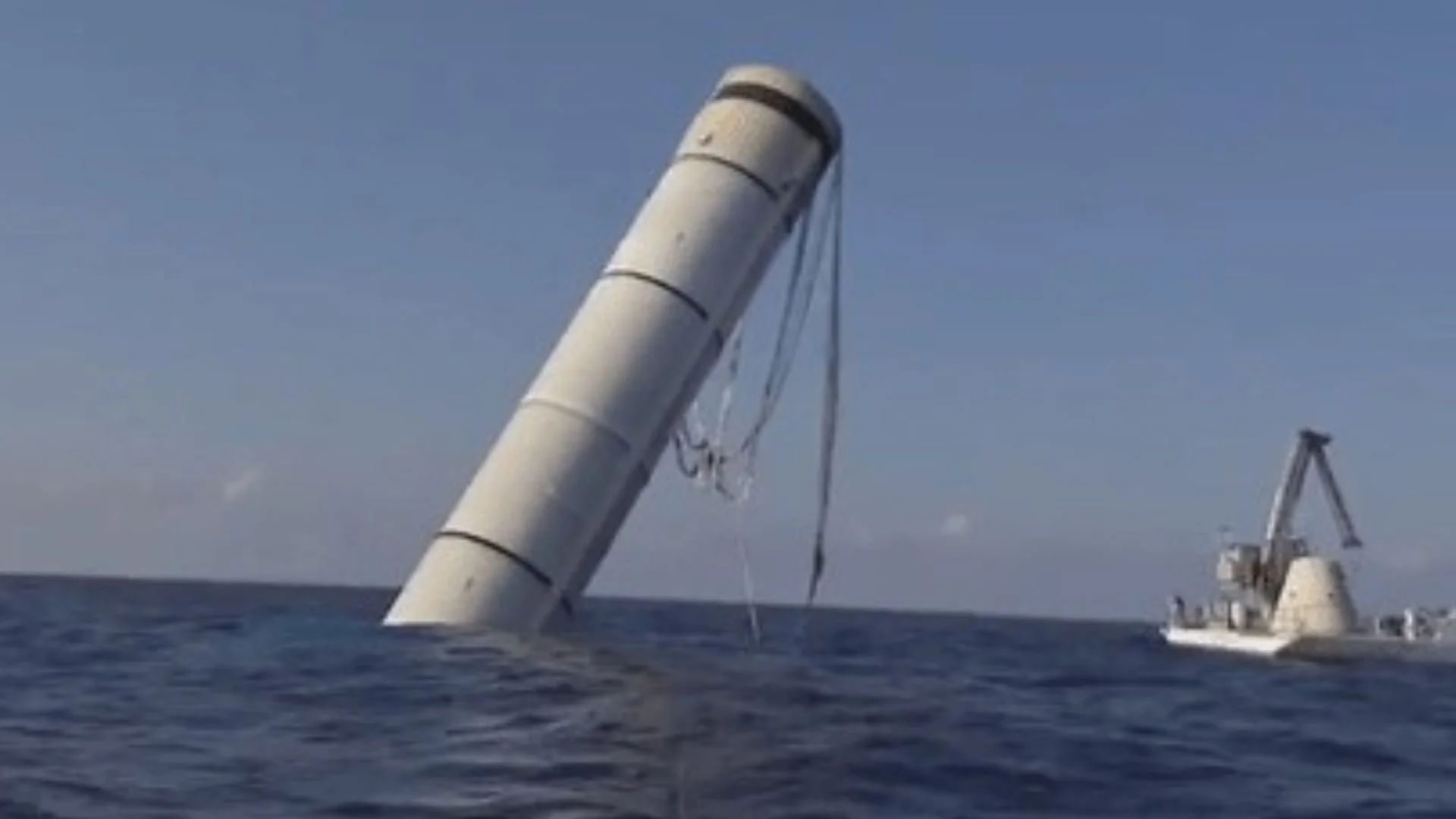
The Air Force sees these converted rigs as an alternative to specialized recovery ships. SpaceX currently uses drone ships stationed at sea to recover Falcon 9 boosters after launch. Offshore platforms could offer a more stable and reusable option for future heavy-lift rockets.
The proposal mentions several modern rocket systems expected to use the recovery stations. These include SpaceX’s Falcon 9, United Launch Alliance’s Vulcan rocket, and Blue Origin’s New Glenn. All three launch systems are designed to carry large payloads into orbit.
The Air Force said the platforms should support autonomous rocket landings with precision guidance systems. Some stations could also include Vertical Takeoff and Landing transport systems or integrated barges. These features would help move recovered boosters back to shore for reuse.
Project Able Baker Focuses on Cost and Launch Speed
The first stage of the project focuses on technical and economic studies. Companies participating in the program will examine structural safety, environmental impact, and regulatory requirements. They will also identify at least three offshore platforms capable of supporting heavy rocket operations.
Researchers will study the effect of sonic booms on nearby ships and coastal communities. The Air Force also wants detailed reviews of possible impacts on local marine ecosystems. Officials said environmental safety is a major part of the evaluation process.
WATCH ALSO: China’s new massive battle tank takes part in live-fire test
The proposal connects closely with the federal government’s Rigs to Reefs initiative. That program encourages the reuse of retired offshore rigs as artificial reef habitats for marine life. The Air Force said its recovery station concept aligns with those environmental goals.
During the second phase, companies will build and test a modular reinforcement system on part of an offshore structure. Engineers will perform static-fire simulations and heavy inert-mass drop tests ranging from 10 to 25 tons. These tests are designed to measure vibration, structural strain, and heat effects from rocket operations.
The Air Force believes the project could enable faster, more flexible launch schedules. Reusable rockets already reduce launch costs because companies can fly the same booster multiple times. Offshore recovery stations could shorten turnaround time and reduce dependence on crowded coastal facilities.
Growing Global Competition in Space Launch Infrastructure
The proposal arrives as global space activity continues to increase rapidly. Governments and private companies are launching more satellites for communications, navigation, defense, and Earth observation. This growing demand is putting pressure on launch and recovery infrastructure worldwide.
The Air Force said sea-based recovery stations could support tactically responsive space missions. These missions aim to launch satellites quickly when military or emergency needs arise. Offshore recovery sites would also allow operations in remote ocean regions and high-latitude environments.
READ ALSO: Chinese Scientists Discover “Geochemical Switch” Controlling Earth’s Long-Term Climate Balance
China is also developing offshore systems for rocket recovery operations. The Air Force acknowledged that other countries are investing heavily in reusable launch technologies and maritime recovery platforms. Expanding the US recovery infrastructure is viewed as important for maintaining competitive space capabilities.
Officials described the project as both practical and environmentally conscious. Reusing existing offshore structures could reduce industrial waste while supporting future launch systems. The concept also offers a new commercial purpose for aging maritime infrastructure.
If Project Able Baker moves forward, offshore oil rigs may become a key part of future space operations. The system could reshape how reusable rockets are recovered and prepared for new missions.