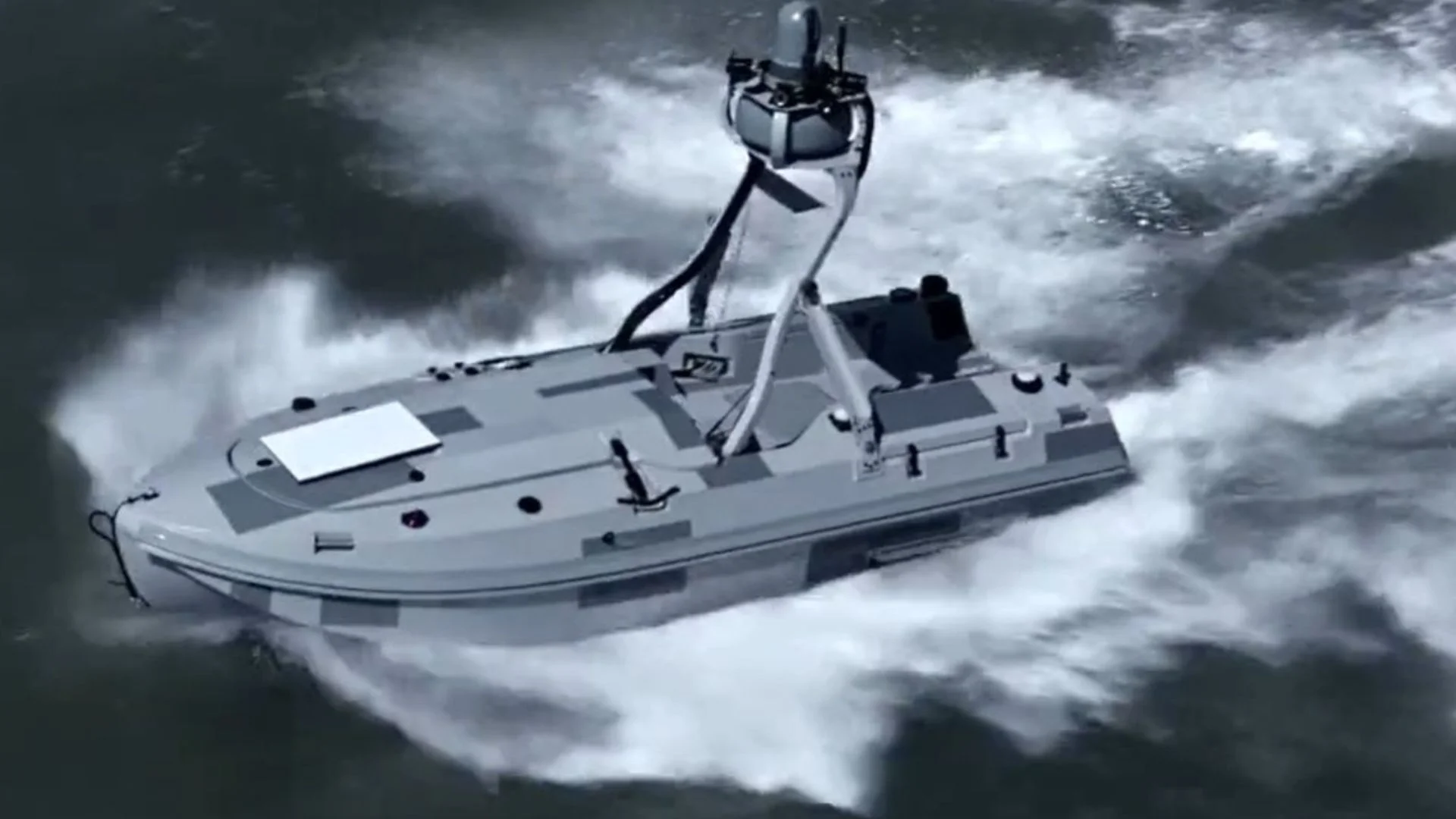
British defense company SubSea Craft has announced a major upgrade to its MARS unmanned surface vessel as the platform moves into production.
The latest variant includes improvements designed for operations in harsh climates and long-range autonomous missions.
The move highlights growing demand for compact naval drones that can support surveillance, strike, and crewed-uncrewed operations.
The company said the new version was developed after extensive testing and operator feedback. The updated design will support an existing customer contract already in progress.
READ ALSO: Squire WIG Drone’s Low-Altitude 40-Knot Flight Signals New Way To Move And Fight
The six-meter vessel was first introduced in May last year as a stealth-focused naval drone. It reportedly reaches speeds of up to 30 knots and travels more than 300 nautical miles without refueling. The vessel is designed for autonomous missions or operations alongside crewed naval platforms.
SubSea Craft said the latest version includes improved ventilation systems for both propulsion components and the modular payload bay. These changes are intended to support operations in hotter regions, including the Middle East.
The company retained several systems from the original design, including the digital control architecture also used in its VICTA platform.
The MARS USV features a modular payload section that allows operators to configure the vessel for different missions.
Payload options include electro-optical and infrared cameras, active and passive sensors, and loitering munitions. This flexibility allows a single platform to handle surveillance, reconnaissance, and strike-support tasks.
The vessel can also operate as part of crewed-uncrewed teaming missions, often called CUC-T operations. In these missions, autonomous systems work alongside traditional naval assets to extend range and reduce personnel risk.
WATCH ALSO: Falcon 9 rocket of SpaceX recently launched 24 Starlink internet satellites
Many defense forces are increasing investment in such systems as maritime threats become more complex and dispersed.
SubSea Craft said its development process follows a rapid testing and refinement model, often described as ‘prototype warfare’.
The company focuses on quickly building systems, testing them in realistic conditions, and improving them using operational feedback. This approach helps shorten development cycles and speed up deployment of new military technologies.
SubSea Craft CEO Camilla Martin said the upgraded MARS reflects the company’s focus on delivering mature and deployable operational capability.
She added that demand for scalable autonomous systems continues to grow among allied defense forces. The company also highlighted that the platform is fully developed and resourced in the UK.
Alongside MARS, SubSea Craft produces the VICTA hybrid craft, which can travel at high speed on the surface before transitioning underwater for covert missions. The company also develops CADDIS, a subsurface-launched drone system designed for surveillance operations. Together, these platforms show increasing industry focus on multi-domain autonomous systems for naval warfare.
READ ALSO: US Air Force Revives AGM-183A ARRW With $296M Upgrade to Target Enemy Warships
The launch of the upgraded MARS comes as navies worldwide expand investments in unmanned maritime technologies. Autonomous vessels are used for surveillance, logistics, electronic warfare, and strike-support missions. MARS is expected to strengthen SubSea Craft’s position in the growing global market for autonomous naval systems.