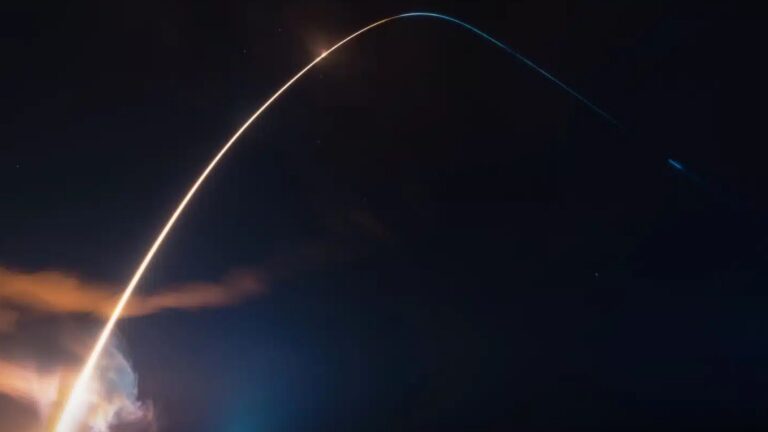
China has launched the world’s first artificial embryo experiment in space through its Tianzhou-10 cargo mission.
Chinese researchers are sending human embryos to the Tiangong space station to study how they develop under microgravity and space radiation conditions.
Scientists believe the research will help answer major questions about human reproduction, development, and long-term survival in space.
The project is led by the Technology and Engineering Center for Space Utilization under the Chinese Academy of Sciences.
Researchers described it as the world’s first study of embryo-like structures under real space conditions. The experiment will examine how microgravity and cosmic radiation affect early biological development.
READ ALSO: US Air Force Revives AGM-183A ARRW With $296M Upgrade to Target Enemy Warships
Tianzhou-10 transported 67 scientific research items weighing more than 768 kilograms. The mission supports 41 experiments covering life sciences, biotechnology, astronomy, Earth science, and microgravity physics.
Chinese scientists said the mission represents another major step in the country’s growing space research program.
Embryo research is part of a broader biological research system developed by Chinese scientists. Earlier experiments focused on zebrafish embryos and mouse embryos in space. The new mission expands that work using stem-cell-based artificial embryos.
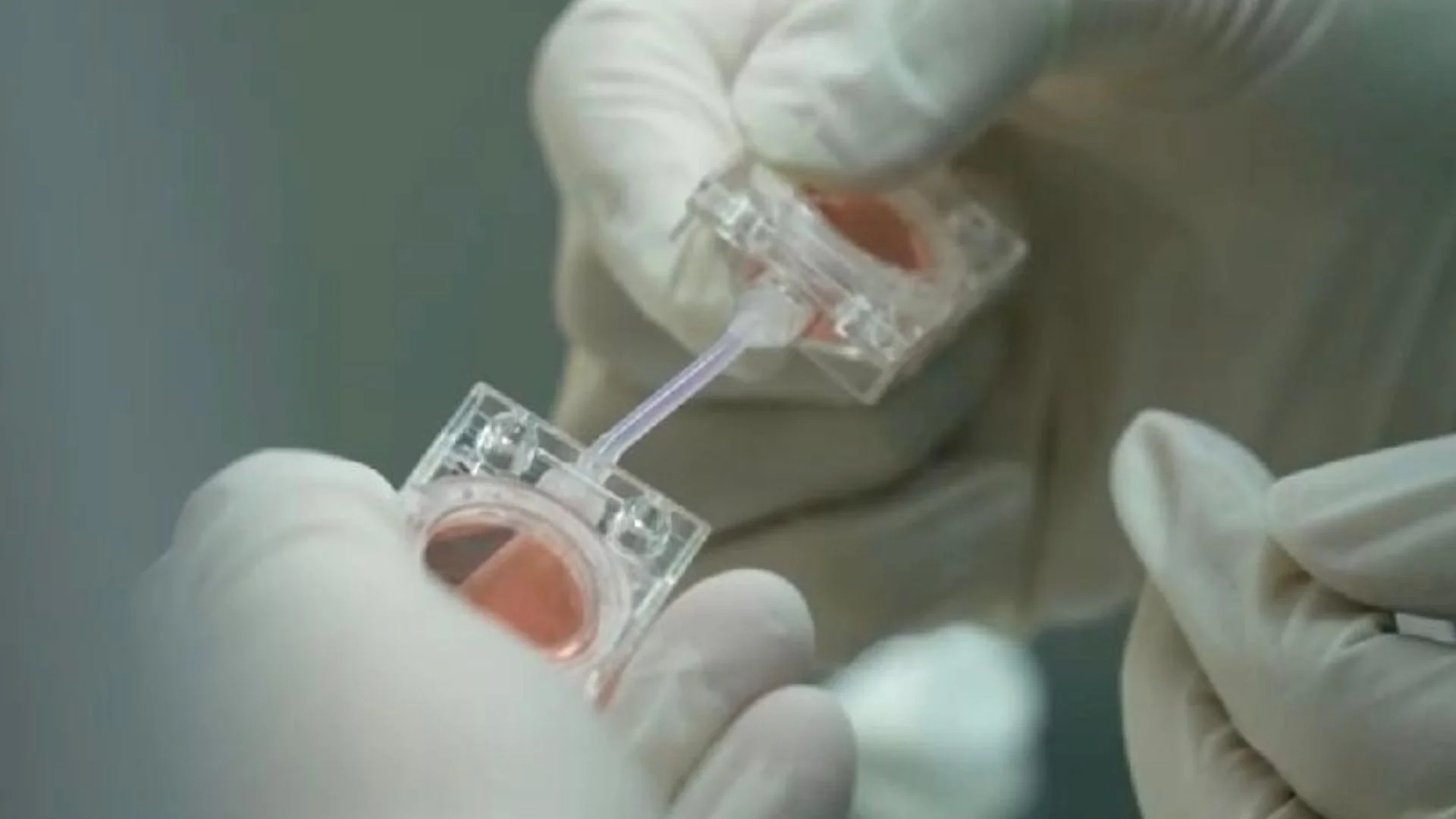
Scientists explained that artificial embryos are not real human embryos. They are laboratory-created structures made from stem cells that mimic key stages of embryonic development. Researchers use them because real human embryos are difficult to obtain for large-scale scientific studies.
According to project manager Yu Leqian, the models used in the mission represent a key stage of development between 14 and 21 days after fertilization.
During this short period, the basic body structure begins to form. Important developmental directions, such as where the head and tail will develop, are also established at this stage.
Yu said this stage is critical because many organs begin to form during these early days. Problems during this period may later lead to birth defects or diseases. Scientists hope the space experiment will help them better understand these biological processes.
WATCH ALSO: Drum-shaped antenna reflector on NASA-ISRO NISAR satellite deployed
Why Scientists Study Embryos in Microgravity
Life on Earth evolved under constant gravity for billions of years. Scientists still do not fully understand how mammalian development changes in a near-zero-gravity environment. Space stations provide conditions that cannot be fully recreated on Earth.
The Chinese space station offers long-term exposure to microgravity and natural cosmic radiation. These two conditions are important for studying how living systems react outside Earth. Researchers believe this environment can reveal hidden biological effects that normal laboratory experiments cannot detect.
The artificial embryos will develop for five days aboard the space station. Chinese astronauts, also known as taikonauts, will supervise the experiment during the mission. Automated systems will replace nutrient solutions each day to maintain stable growth conditions.
After the experiment ends, the samples will be frozen in orbit. The frozen samples will later return to Earth for laboratory analysis. Scientists will then study how space conditions changed the development process.
Researchers are mainly trying to answer whether space directly affects early biological organization. They want to understand how cells organize themselves into complex body structures. Scientists also hope to identify potential risks associated with development in space environments.
Yu said researchers first need to understand the effects before trying to reduce them. Future technologies may eventually help protect human development during long-duration space missions. This research may support future plans for deep-space exploration and permanent settlements beyond Earth.
The experiment arrives at a time when many countries are preparing for long-term human missions to the Moon and Mars. Space agencies are now studying how humans can live safely outside Earth for extended periods. Reproduction and healthy development remain among the biggest unanswered questions.
China has rapidly expanded its space ambitions in recent years. The country has built its own space station, completed lunar missions, and increased investments in advanced biological research. The Tianzhou-10 mission highlights how China is combining space exploration with life science studies.
READ ALSO: Butterfly Wings Inspire Earthquake-Resistant Buildings That Bend, Not Break
Other countries have also explored the effects of space on plants, animals, and human cells. However, no mission has previously tested artificial embryo development under real space conditions at this scale. That makes the Tianzhou-10 experiment an important milestone in space biology research.
Scientists say understanding development in space is essential for the future of human exploration.
If humans eventually live on the Moon or Mars, future generations may also need to survive and reproduce there. Research like this may help determine whether long-term human civilization beyond Earth is scientifically possible.
The results from Tianzhou-10 are expected to shape future studies on human health and space medicine. They will also influence how future spacecraft and space habitats are designed.
As space agencies move toward longer missions, understanding how life begins and develops in space is becoming more important than ever.