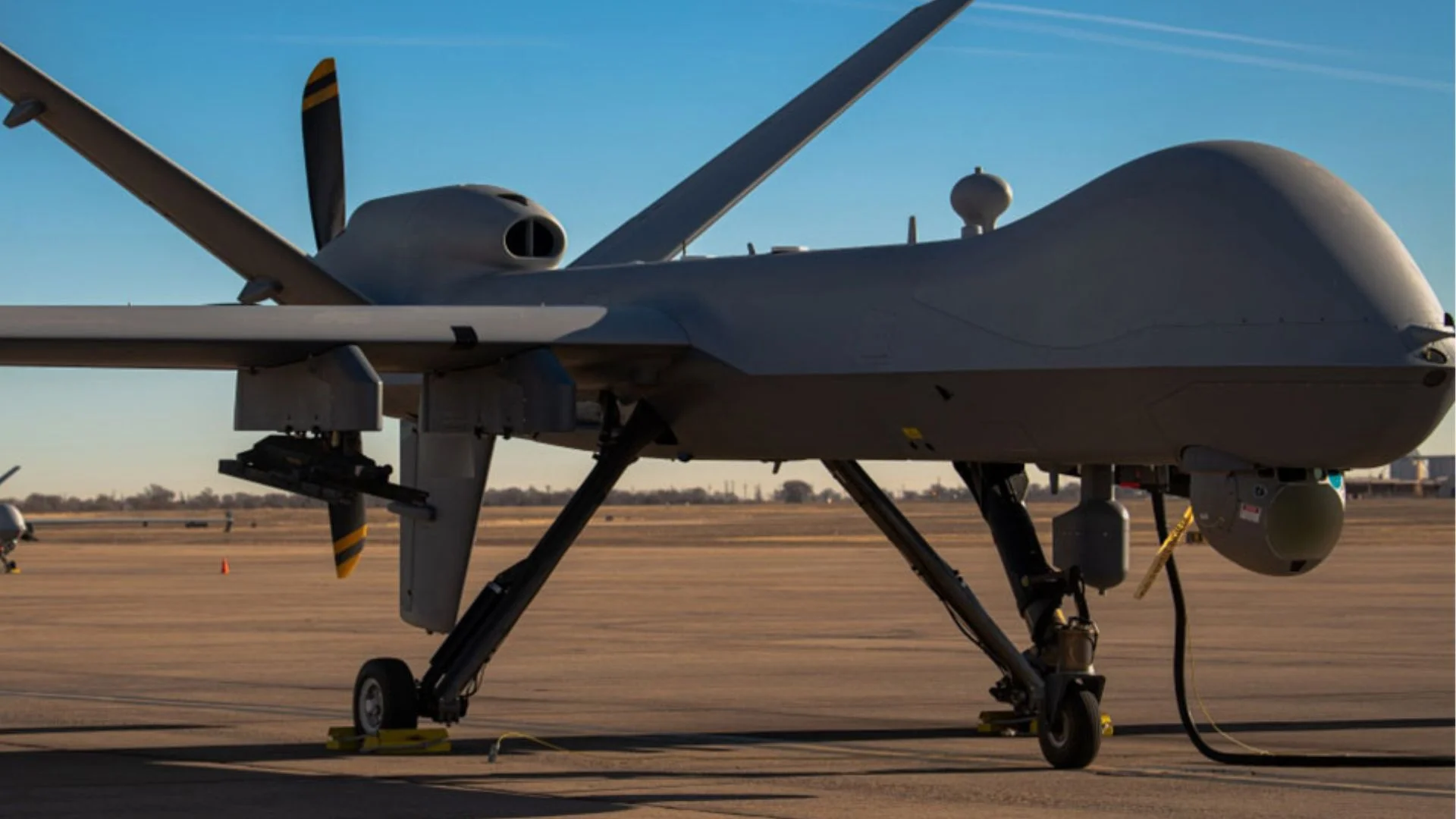
The US Air Force has finalized key requirements for a next-generation drone that will eventually replace the aging MQ-9A Reaper fleet.
The decision comes as the service faces rising combat losses, growing threats from advanced air defenses, and increasing pressure to modernize unmanned warfare capabilities.
Officials say the future aircraft will be cheaper, modular, and easier to produce in large numbers for high-risk missions.
USAF Begins MQ-9A Reaper Replacement
The US Air Force has taken a major step toward replacing the MQ-9A Reaper drone after nearly two decades of service.
READ ALSO: HIV Vanishes After Bone Marrow Transplant: World’s First Case Driven by Sibling’s Gene
Senior officials confirmed this week that the service approved formal requirements for a future unmanned aircraft system.
Maj. Gen. Christopher Niemi announced the update during testimony before the Senate Armed Services Airland subcommittee.
Niemi said he signed the requirements package on Monday as part of the Air Force’s modernization effort. He explained that the future platform must use open architecture systems and support fast, large-scale production.
The MQ-9A Reaper entered US Air Force service in 2007 and became one of America’s most widely used military drones. It conducted intelligence gathering, surveillance, reconnaissance, and precision-strike missions across the Middle East and Southwest Asia. The aircraft became heavily associated with operations during the Global War on Terror.
Why the Air Force Wants a Cheaper Drone
Air Force leaders said the current Reaper is effective but too expensive for future high-threat conflicts.
Niemi stated that some MQ-9A configurations can cost as much as $50 million per aircraft, depending on onboard sensors and mission equipment. That cost makes it difficult to treat the aircraft as expendable during dangerous operations.
The Air Force now wants a drone with modular systems that can be added or removed as mission needs change. Officials believe this approach can reduce costs and simplify production. It would also allow operators to fly less expensive versions in risky combat areas where losses are more likely.
WATCH ALSO: American company’s next-generation ejection seat offers a 92% survivability rate
Military planners increasingly worry about drone survivability against advanced air defense systems. Concerns grew after reports of Reaper losses during operations linked to Yemen and Iran.
Questions about the drone’s ability to survive in modern warfare also surfaced during discussions about potential deployments near Ukraine.
Lt. Gen. David Tabor said the Air Force still values the MQ-9A despite recent losses. He explained that the service currently operates around 135 aircraft, following attrition that reduced the fleet size. Even so, Tabor said the Air Force continues to maintain 56 combat air patrol lines worldwide.
Tabor added that the Air Force does not consider the MQ-9A an attritable platform. In military terms, attritable systems are designed to be relatively cheap and acceptable to lose during combat. The Reaper’s high cost and specialized systems make replacement more difficult when aircraft are destroyed.
The Air Force recently issued a request for information for a new attritable intelligence, surveillance, and reconnaissance drone. Lt. Gen. Luke Cropsey said more than 50 vendors responded to the request. Officials believe strong industry interest will produce several competitive proposals for the future aircraft.
The service wants the next drone to support missions similar to the Reaper while adapting to future combat conditions. Intelligence, surveillance, and reconnaissance aircraft collect battlefield data, track enemy movements, and provide targeting information. These missions remain essential for modern military operations across multiple regions.
General Atomics, the manufacturer of the MQ-9 series, defended the aircraft after comments about survivability and cost.
Company spokesman C. Mark Brinkley said the firm is offering modular MQ-9B options that meet current Defense Department requirements. He also argued that criticism surrounding the aircraft often includes misinformation about its performance and pricing.
READ ALSO: Morphing Flapless Wings Twist Mid-Flight in New Aircraft Tests in Germany
Brinkley stated that General Atomics continues investing heavily in drone production to meet military demand. He described the MQ-9 family as one of the best-value unmanned systems currently available to the US military. The company also stressed that upgraded Reaper variants can still provide immediate operational capability.
At the same time, Air Force officials confirmed plans for short-term purchases to rebuild MQ-9A losses. Tabor said the service is actively exploring options to buy additional aircraft during the current fiscal year. This effort aims to maintain operational readiness while the long-term replacement program moves forward.
The Air Force’s decision reflects a wider shift in military strategy toward cheaper, scalable, and more survivable unmanned systems. Future conflicts are expected to involve stronger air defenses, electronic warfare, and faster battlefield losses.