The German Aerospace Center (Deutsches Zentrum für Luft- und Raumfahrt; DLR) has developed a new aircraft wing that can change its shape during flight. The project, called morphAIR, aims to make flying more efficient, smoother, and easier to control.
Imagine looking out of an airplane window and seeing the wings gently ripple and twist like a living creature. It may sound unsettling, but this is exactly what engineers in Germany are testing right now.
Unlike traditional aircraft wings, these new wings do not rely on flaps or hinged parts. Instead, they move as a single, smooth surface, continuously adapting to the air around them.
READ ALSO: Room-Temperature Multiferroic Shows Leap in Magnetism, Signals Low-Energy Computing Future
morphAIR wings: Inspired by Birds and Fish
In nature, movement is fluid and precise. Birds adjust their wings constantly while flying. Fish glide through water with smooth body motions.
Aircraft, however, have always worked differently. They use rigid wings with separate moving parts, such as flaps and ailerons. These parts help control the aircraft, but they also bring problems. They add weight, increase noise, and create drag. They also require more maintenance. For decades, engineers accepted this as a necessary compromise.
A wing designed for takeoff is not perfect for cruising. A wing that works well at high altitude may not perform well during landing. So, aircraft wings have always been designed as a balance between different needs.
The morphAIR project takes a different path. Instead of building a fixed wing that works well enough in all situations, engineers designed a wing that can adapt to each situation.
WATCH ALSO: 6-ton tiltrotor aircraft completes first flight in China
“The morphing wing changes its shape during flight and adjusts to different conditions,” said project leader Martin Radestock from DLR. He explained that the wing can provide high lift when needed, reduce drag during cruise, and remain stable in rough air.
This flexibility allows the aircraft to perform better across all phases of flight.
The wing is built using fiber-reinforced composite materials. The most important feature is its special trailing edge, which can smoothly shift shape.
This system is called the Hyperelastic Trailing Edge Morphing system(HyTEM). It replaces traditional flaps and ailerons with a series of small actuators placed along the wing.
These actuators adjust the wing at multiple points up to 10 sections across the wingspan. Instead of creating gaps like conventional flaps, the wing stays smooth and continuous. This smooth surface reduces drag and improves airflow. It also allows better control over lift and movement.
READ ALSO: Shell Waste Turns CO₂ Into Fuel at Record Efficiency Without Toxic Chemicals
Radestock said the system precisely adjusts the wing profile, improving both aerodynamics and flight control.
AI That Thinks Like a Pilot
The morphing wing is paired with an advanced AI-based flight control system. This system constantly monitors the aircraft’s behavior in real time. It compares actual flight conditions with a trained model. If something changes, like turbulence or a system fault, the AI reacts instantly.
It redistributes control commands across the actuators to keep the aircraft stable. Engineers even trained the system to handle failures. If part of the wing stops working, the AI adjusts other sections to compensate. This makes the system more resilient than traditional designs.
Fewer Sensors, Smarter Data
Instead of covering the wing with sensors, engineers developed a smarter method. They use a limited number of measurement points to rebuild the full pressure distribution across the wing. This gives the system a clear picture of how air is flowing at any moment.
By comparing real-time data with expected patterns, the system detects disturbances early and reacts quickly. This allows the aircraft to feel the air around it and respond almost as if it were a living organism.
Flight Testing on PROTEUS
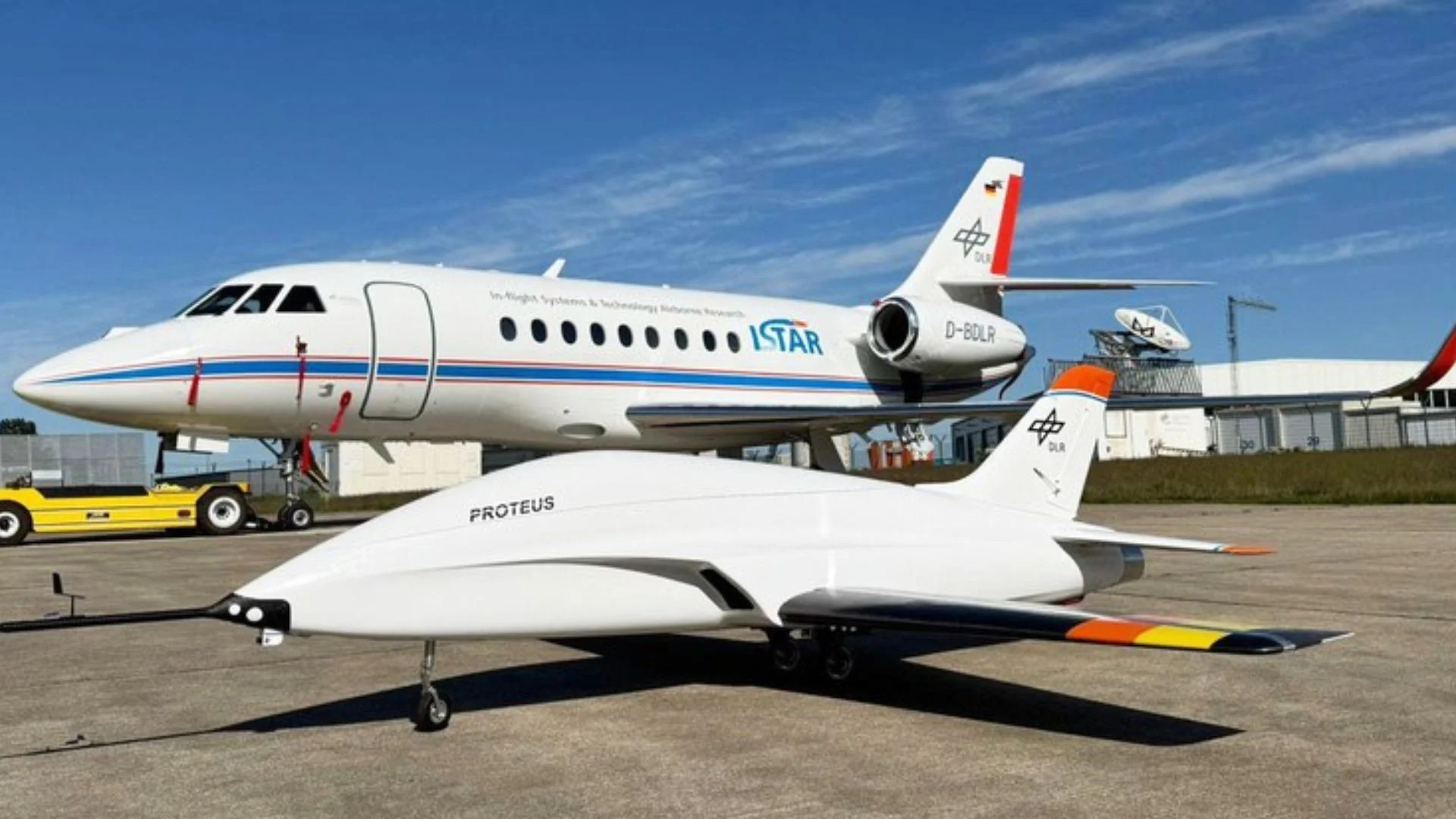
To test the technology, DLR installed the morphing wings on an experimental unmanned aircraft called PROTEUS. The aircraft was fitted with both traditional wings and the new morphing design. Early test flights focused on basic safety and system integration.
WATCH ALSO: EHang’s next-gen autonomous eVTOL completes first public flight
The results showed that the concept works and can be safely operated. These tests mark an important step toward more advanced trials.
The technology is still in its early stages. It will not appear on commercial airplanes anytime soon. However, it shows strong potential for unmanned aircraft, where efficiency and adaptability are critical.
DLR plans to scale up the system. The next phase includes testing a larger PROTEUS aircraft weighing 70 kilograms.
Morphing wings represent a major shift in aircraft design. Instead of rigid structures with moving parts, future wings may behave more like living systems: flexible, responsive, and intelligent.
This approach can reduce fuel use, lower noise, and improve performance in ways traditional designs cannot match. However, the sight of a wing twisting mid-air may seem unusual. But it may soon become a normal part of aviation’s next chapter.