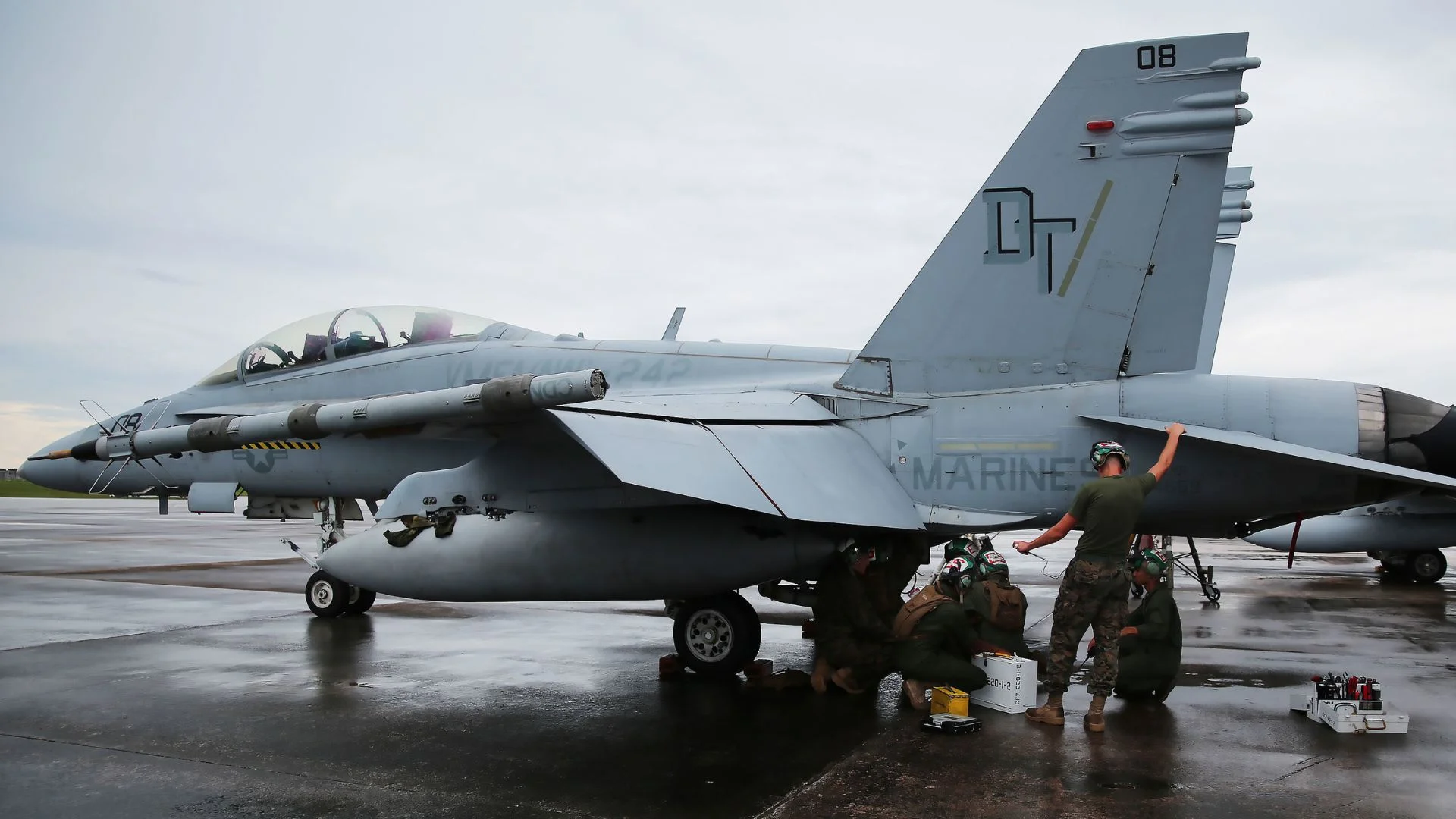
The US Marine Corps is preparing a major change in its tactical aviation force by retiring the F/A-18 Hornet by 2030.
The service plans to replace it with around 420 fifth-generation fighter jets, based on the F-35 Lightning II.
This shift reflects a broader effort to modernize air combat capabilities for future high-end warfare.
The transition focuses on stealth, advanced sensors, and networked operations designed for contested environments, especially in the Indo-Pacific region.
It also represents a structural change in how Marine aviation units operate, train, and deploy. The new force will rely more on distributed operations and shared battlefield awareness across multiple platforms.
READ ALSO: NASA Fuel Cell Tests Pave Way for Artemis Energy Storage Systems on the Moon
Officials and internal planning documents indicate that the change is already in its final phase. The Marine Corps is now aligning personnel, maintenance systems, and bases to support the incoming F-35 fleet. The move marks one of the most significant aviation restructurings in recent Marine Corps history.
F-35 Transition, F/A-18 Hornet Retirement
The Marine Corps is steadily phasing out the F/A-18 Hornet as part of its long-term aviation modernization plan. According to service planning timelines, all Hornet operations are expected to end by 2030. The transition also includes the restructuring of maintenance roles tied directly to the aircraft.
An internal administrative message reported by defense sources outlines how personnel changes will be managed. Marines working on Hornet-specific systems such as radar, navigation, and engines will either retrain or move to other roles.
Key Marine Corps air stations are scheduled to complete the transition in stages over several years. Marine Corps Air Station Beaufort is expected to finish Hornet operations by 2028. Marine Corps Air Station Miramar will follow in 2029, with final retirements at Fort Worth by 2030.
The Marine Aviation Plan 2026 supports a future fleet of around 420 F-35 aircraft. This includes both the F-35B and F-35C variants, depending on mission requirements. The plan represents a long-term shift toward a unified fifth-generation combat aviation force.
Technology Shift to F-35 Lightning II
The F-35 Lightning II is designed as a multi-role stealth fighter with strong sensor and networking capabilities. It uses advanced systems that allow pilots to detect, track, and share target data in real time. This improves coordination across air, land, and sea forces during operations.
WATCH ALSO: NASA rover discovered ancient microbial life signature on Mars
One of the key systems in the aircraft is the AN/APG-81 AESA radar, which provides long-range tracking and high-resolution targeting. The jet also uses electro-optical sensors and a distributed aperture system to give pilots a full 360-degree battlefield view. These tools reduce the need for external targeting support in many missions.
The aircraft also relies on secure data links to connect with other military platforms. Systems like MADL and Link 16 allow it to share targeting data with ships, ground units, and other aircraft. This turns the F-35 into both a fighter and a real-time airborne sensor node.
The F-35B variant’s propulsion system uses the Pratt & Whitney F135 engine, combined with a lift fan, for vertical landing. This design allows short takeoff and vertical landing from ships and small airstrips. It gives the Marine Corps flexibility to operate from forward and dispersed locations.
The Marine Corps is shifting its strategy to support operations in contested regions, such as the Indo-Pacific. The F-35 Lightning II plays a central role in this approach due to its ability to operate in high-threat environments. Its stealth features help reduce detection risks during the early stages of conflict.
A key concept driving this change is Expeditionary Advanced Base Operations, which focuses on small, mobile units operating across islands and coastal zones. The F-35B variant is especially suited for this role because it can operate from short runways and amphibious ships. This allows forces to stay mobile and harder to target.
The Marine Corps also aims to use aircraft as part of a larger distributed network. In this system, aircraft share sensor data with ships, ground units, and command centers in real time. This creates a faster decision-making cycle during combat operations.
READ ALSO: Saab Unveils Bolide 2 Missile With Stronger Anti-Drone Power for RBS 70 NG
However, the transition also introduces operational risks linked to reliance on a single aircraft family. Earlier Marine aviation included multiple aircraft types, such as Harrier jets and Hornets, for different missions. The new structure concentrates capability within the F-35 fleet, increasing dependence on its performance and availability.
Strategic Impact of the F-35 Fleet Expansion
The retirement of the F/A-18 Hornet marks the end of an aircraft that has served the Marine Corps for decades. While still capable, it faces limitations against modern air defense systems that use advanced radar and missile networks. This has accelerated the shift toward stealth-based platforms.
The expanded use of the F-35 Lightning II reflects a broader US military focus on fifth-generation aircraft. These jets are designed to survive in environments with strong electronic warfare and layered defenses. They also support joint operations with allied forces through shared data networks.
Maintenance and logistics systems are also being redesigned to support the new fleet. The F-35 program requires advanced digital maintenance tools and global supply coordination. This change will reshape how Marine aviation units operate at both home bases and forward locations.
WATCH ALSO: Drum-shaped antenna reflector on NASA-ISRO NISAR satellite deployed
The transition highlights a long-term shift in military aviation toward connected, stealth-enabled, and highly networked forces.
As the Marine Corps completes the retirement of the Hornet fleet, it will rely almost entirely on the F-35 for tactical air power. This development signals a major step in preparing for future high-intensity conflicts in the Indo-Pacific region.