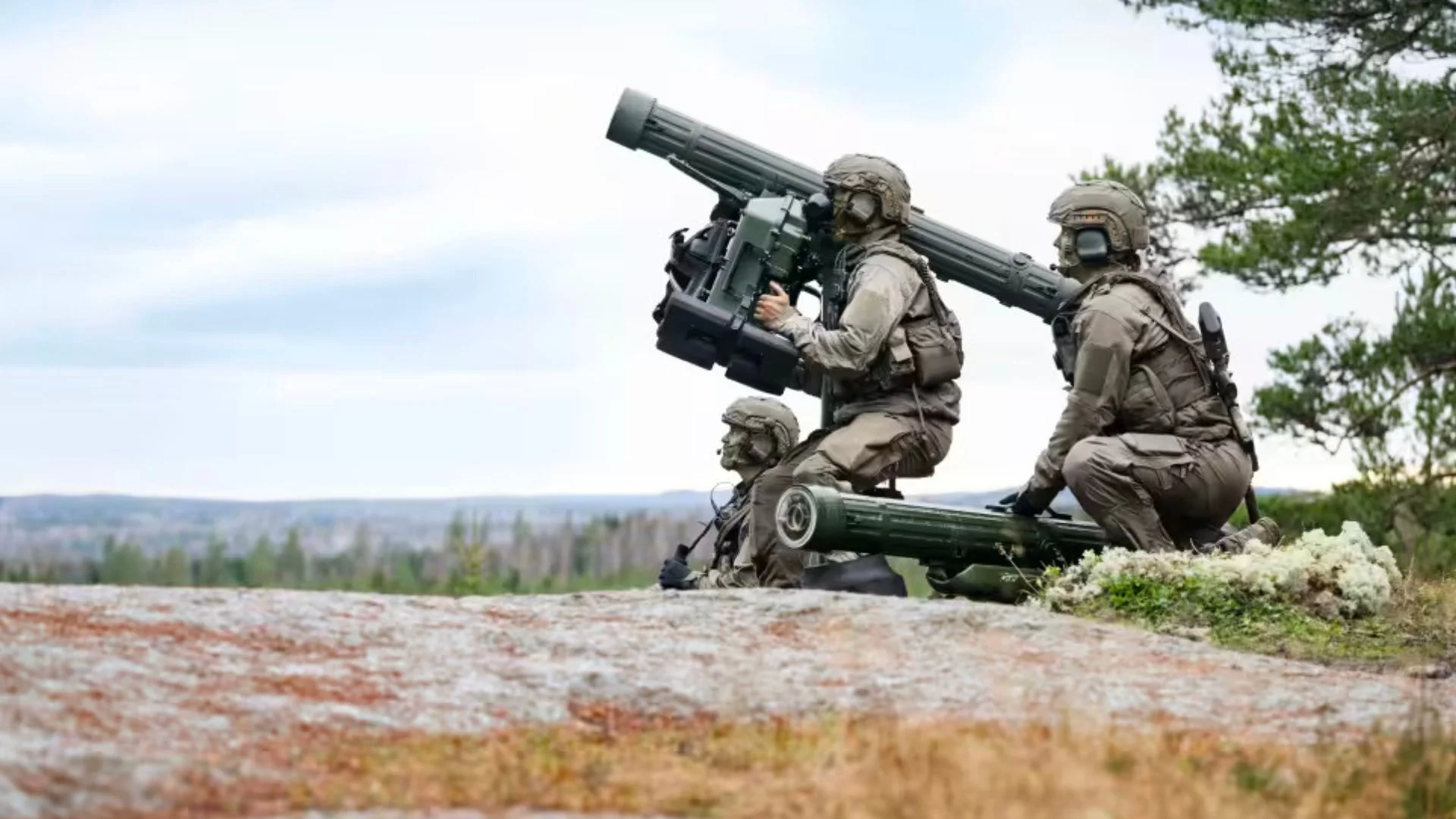
Swedish defense company Saab has launched the Bolide 2 missile, an upgraded interceptor designed for the RBS 70 NG short-range air defense system.
The missile is built to improve protection against drones, helicopters, aircraft, and other low-flying threats.
Saab said the new version will become the standard missile for the RBS 70 NG while remaining compatible with earlier launch systems.
Saab Upgrades RBS 70 NG with Bolide 2 Missile
The Bolide 2 keeps the laser beam-riding guidance system used by earlier versions of the missile. This guidance method is difficult to jam because the missile follows a laser beam projected by the operator rather than relying on onboard radar seekers.
Saab said the missile keeps the same operational range of 9 kilometers and altitude coverage of 5 kilometers as the original Bolide.
READ ALSO: Solar Impulse 2, Plane That Flew the World on Sunlight, Crashes Into Gulf of Mexico
The company began developing the missile about 4.5 years ago. Saab confirmed that several development trials have already been completed successfully. Deliveries are scheduled to begin in 2027 as more countries strengthen air defense networks against drones and precision-guided attacks.
Larger Warhead Improves Anti-drone Lethality
Saab significantly upgraded the missile’s warhead to improve its effectiveness against smaller aerial targets. According to company representatives, the Bolide 2 carries 50 percent more explosive material and produces 40 percent more fragmentation than the original version.
Despite the added firepower, the missile maintains the same overall weight thanks to changes in the materials used in its design.
The fragmentation area remains the same size as before, but the denser spread increases the chance of hitting small drones. This is important because many reconnaissance drones and loitering munitions are small and difficult to destroy with standard air defense missiles.
Saab also added more laser-based proximity fuze sensors around the missile’s nose to improve target detection before detonation.
The missile now uses an aluminum shell instead of steel, helping reduce overall weight while carrying a larger warhead. Saab also replaced the original copper-shaped charge with an aluminum-based design.
Company representatives explained that the earlier copper cone often penetrated too deeply, whereas aluminum creates stronger internal pressure and greater fragmentation within the target.
This design change is especially important against helicopters and low-flying aircraft. Aluminum fragments more easily than copper during impact, producing a wider spread of damaging material inside the target. Saab said this increases the probability of disabling critical systems or injuring crew members during interception.
The Bolide 2 arrives at a time when short-range air defense systems are becoming increasingly important on modern battlefields. Small drones are now widely used for reconnaissance, artillery targeting, and direct attacks. Even low-cost drones can guide larger strikes against command centers, logistics sites, and military airfields.
WATCH ALSO: World’s first motorbike backflip between two moving trucks successfully completed
Military planners increasingly view systems like the RBS 70 NG as important layers in wider air defense networks. Unlike radar-guided systems, the RBS 70 uses passive laser guidance that does not emit radar signals before launch. This makes it harder for enemy aircraft or drones to detect the threat in advance and avoid engagement.
The missile can also be used in mobile or hidden deployments to create a pop-up threat. Troops can rapidly position the launcher near front-line areas, engage low-flying targets, and relocate quickly afterward. This capability can force enemy aircraft and helicopters to operate at safer but less effective altitudes.
Saab said the upgraded missile is designed to remain adaptable against future aerial threats through its modular structure. The company believes the growing use of drones, cruise missiles, and precision-guided systems will continue driving demand for advanced short-range air defense weapons.
As countries invest heavily in layered air defense strategies, the Bolide 2 is expected to play a larger role in protecting military forces and important infrastructure.