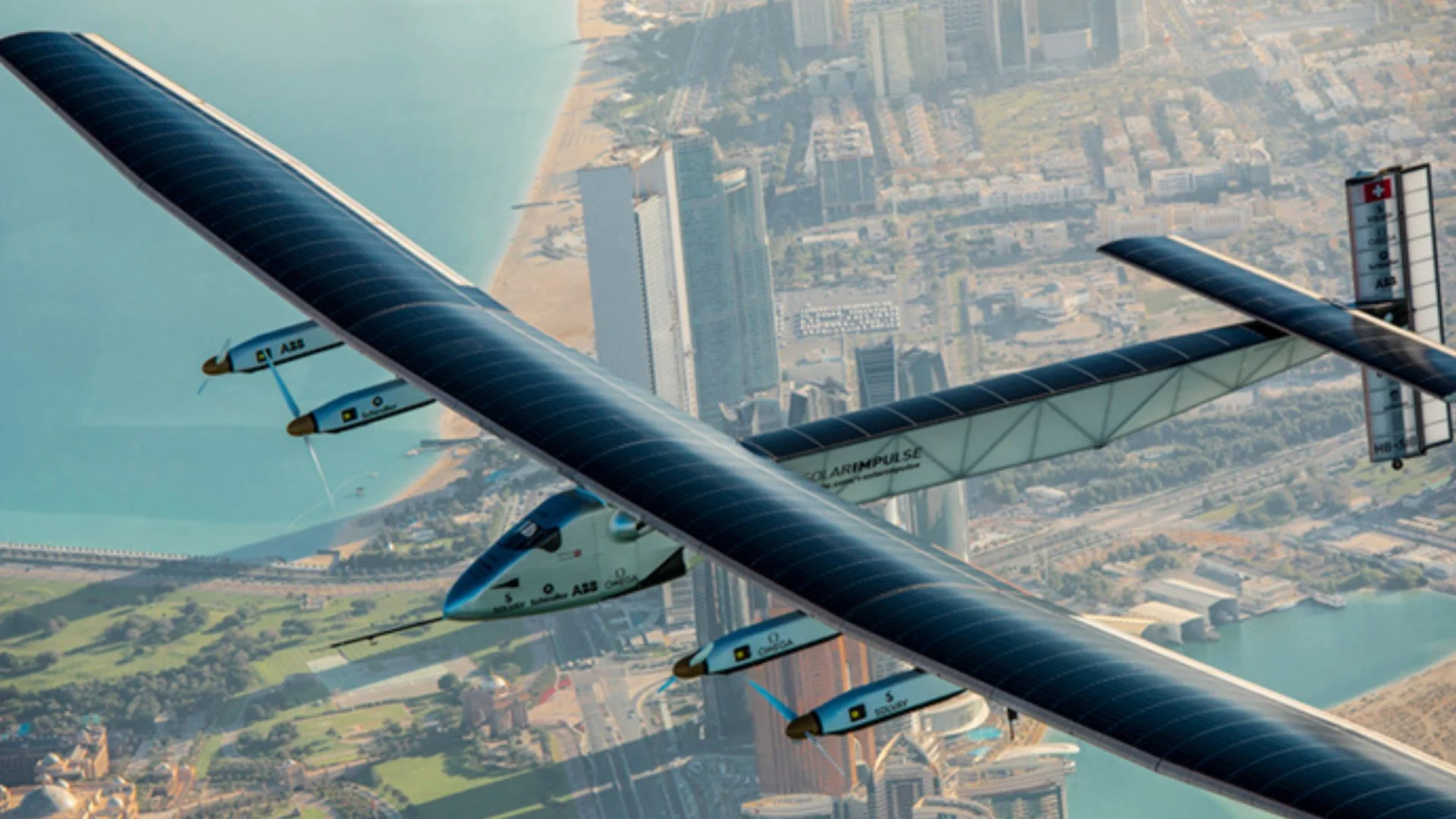
Solar Impulse 2, the world’s largest solar-powered aircraft, reportedly crashed over the Gulf of Mexico on May 4 during a flight linked to Skydweller Aero’s autonomous aircraft program.
The aircraft was operating as part of the company’s effort to develop long-endurance solar-powered drones for military and commercial use. Reports said the aircraft lost power before the crash.
The incident marked the end of a remarkable chapter for one of the most recognized experimental aircraft ever built.
Solar Impulse 2 became a symbol of clean aviation technology after completing a historic around-the-world mission nearly a decade ago. Its crash now raises fresh questions about the technical and operational challenges facing solar-powered aircraft.
READ ALSO: African Lion 26 Tests US Army Robotic Ground Vehicles in Counterattack Drill in Morocco
Swiss aviators Bertrand Piccard and André Borschberg led the original Solar Impulse project. The aircraft completed its global journey in 2016 after flying across several continents in 17 stages over 16.5 months. The mission proved that solar energy alone could keep a manned aircraft flying for extended periods.
The aircraft relied on thousands of solar cells installed across its wings to generate electricity during daylight hours. That energy powered electric motors and also charged onboard batteries for nighttime flight. Solar Impulse 2 typically flew at relatively low speeds between 31 and 62 miles per hour to conserve energy.
The plane’s success attracted global attention because it demonstrated a cleaner alternative to traditional aviation systems. However, the aircraft was never designed for commercial passenger transport. Its main purpose was to showcase the future potential of renewable energy technologies.
In 2019, the Solar Impulse Foundation sold the aircraft to Spanish-American company Skydweller Aero for an undisclosed amount. The company planned to transform the aircraft into a fully autonomous platform capable of remaining airborne for weeks or even months. The project shifted the aircraft’s focus from environmental awareness to defense and surveillance operations.
Skydweller Aero modified the aircraft with autonomous flight systems and military-grade equipment. The company aimed to use the platform for surveillance missions involving radar systems, telecommunications devices, and electronic monitoring tools. The aircraft was also expected to support maritime patrol and border monitoring operations.
Unlike satellites, solar-powered drones can fly at lower altitudes and offer more flexible coverage over targeted regions. They are also generally cheaper to operate than space-based systems. This makes them attractive for governments and defense agencies seeking long-duration surveillance capabilities.
WATCH ALSO: Poland and Portugal Gain New Space Capabilities After ICEYE Launch
Skydweller completed the aircraft’s first autonomous flight in Spain in 2023. The first fully uncrewed autonomous test flight later took place in Mississippi in 2024.
Company officials said the long-term goal was to build a fleet of aircraft capable of near-continuous flight between regions such as Miami and Rio de Janeiro.
The project represented a growing global interest in high-altitude solar-powered aircraft. Several aerospace companies and defense contractors are now exploring similar systems for communications, intelligence gathering, and environmental monitoring. These aircraft are often viewed as a middle ground between drones and satellites.
Legacy of Solar Impulse 2
The crash has drawn attention from aviation experts and clean-energy supporters worldwide. Bertrand Piccard and André Borschberg said they were saddened to learn of the aircraft’s loss through social media reports. They described Solar Impulse 2 as an important technological flagship.
The aircraft also carried symbolic value because it represented years of research into renewable energy and sustainable engineering.
Piccard previously said the project aimed to make environmental innovation more exciting and accessible to the public. The aircraft showed that advanced clean technologies could achieve ambitious goals once thought impossible.
According to Swiss media reports, part of the original sales agreement required the aircraft to eventually return to Switzerland. Plans reportedly included displaying it at the Swiss Museum of Transport in Lucerne after its operational service ended. The crash may now affect those plans.
READ ALSO: 2D-3D Perovskite Contact Pushes Solar Cell Efficiency to 26.25% With Higher Stability
The incident comes at a time when aerospace companies are investing heavily in unmanned systems and alternative energy technologies. Governments are also increasing interest in low-emission aircraft for both civilian and defense applications. Solar-powered aviation remains an emerging field with significant technical challenges still to overcome.
Even after the crash, Solar Impulse 2’s legacy is likely to remain influential in future aviation development.
The aircraft proved that long-distance solar-powered flight is possible under real-world conditions. Its journey helped shape ongoing efforts to build cleaner, longer-endurance aircraft for the next generation of aviation and surveillance systems.