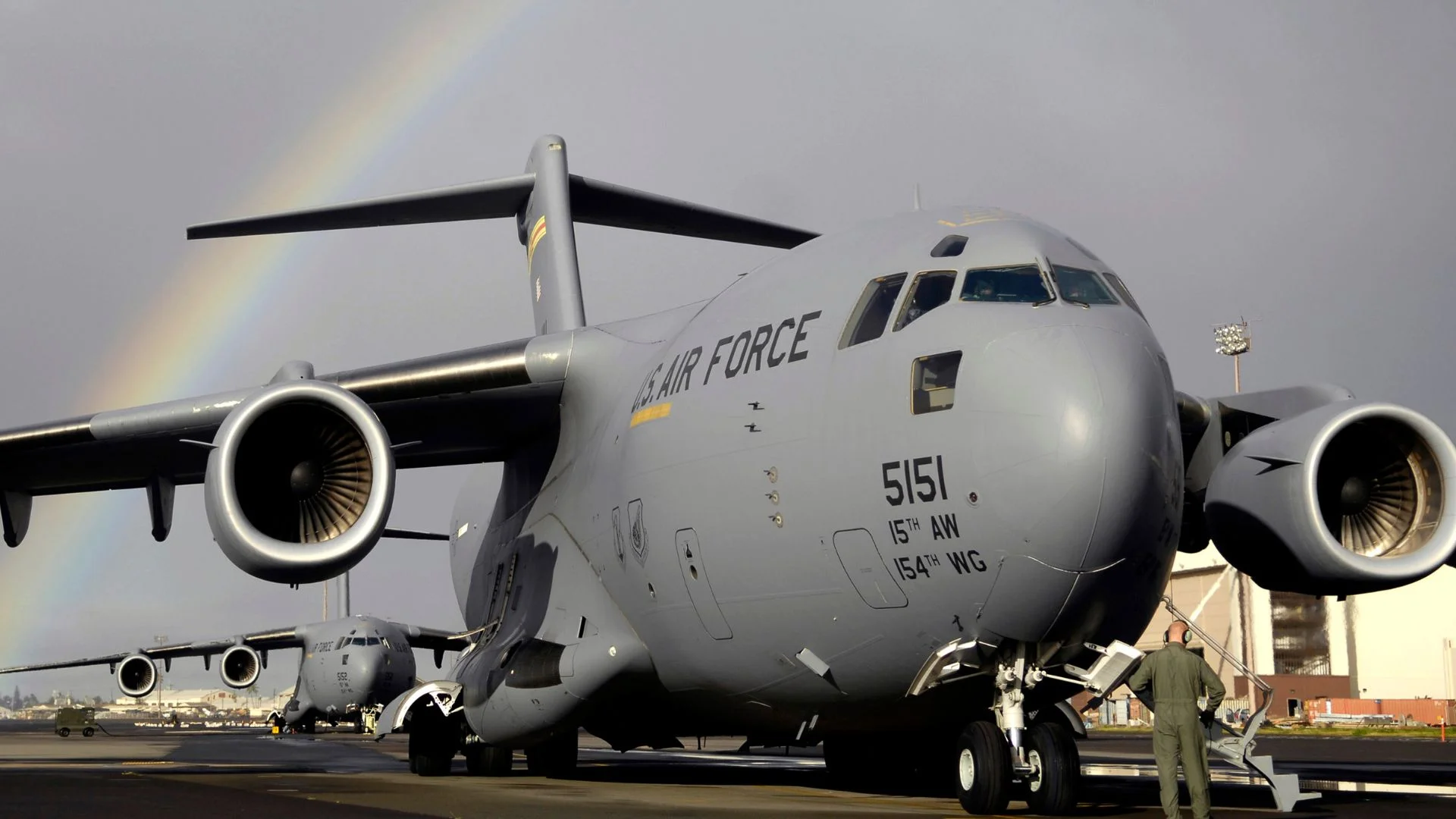
The US Air Force is moving forward with a new plan under the Dragon Cart program to turn cargo aircraft into potential strike platforms.
The effort focuses on deploying cruise missiles from palletized systems dropped from aircraft like the C-17 and C-130.
The program is expected to reach operational use around 2027. It builds on years of research aimed at making strike capabilities cheaper and more flexible.
From Rapid Dragon to Operational Program
The idea behind this system started with a research effort called Rapid Dragon.
READ ALSO: Space Rider: Europe’s First Reusable Spacecraft Clears Major Reentry and Landing Tests
The Air Force Research Laboratory developed the concept to test how cargo planes could release weapons without needing major aircraft modifications. The system uses standard airdrop methods to deploy missile-loaded pallets.
These pallets are released from the aircraft like normal cargo drops. After release, parachutes slow the container before it stabilizes in the air. The cruise missiles then separate, ignite their engines, and move toward their targets.
Early tests included flights using both the C-130 and C-17 aircraft. Some demonstrations carried multiple simulated weapons along with live missiles. These tests showed that existing cargo aircraft could support long-range strike roles.
Dragon Cart Program and New Capability Goals
The Air Force Life Cycle Management Center has now turned this concept into an official program called ‘Dragon Cart.’ This program will manage the transition from experiments to operational deployment. It aims to integrate palletized munitions into regular Air Force operations.
Officials say prototype contracts for Dragon Cart are expected in late May. The goal is to field the system by 2027 if development stays on track. The system will likely remain under government control for design and technical updates.
WATCH ALSO: NASA rover discovered ancient microbial life signature on Mars
Program leaders describe it as a flexible, born-digital system built using modern engineering principles. This means updates and changes can be made through digital design tools before production. Officials say this helps speed up improvements and reduce redesign costs.
Strategy, Cost, and Military Impact
The Dragon Cart concept is part of a broader Air Force push to increase missile capacity at a lower cost. The service is also developing a wider ‘Family of Affordable Mass Munitions’ program. These efforts aim to produce large numbers of lower-cost cruise missiles and bombs.
Recent planning documents suggest the Air Force may buy nearly 28,000 cruise missiles over the next five years. These would include both air-launched and pallet-based systems. The goal is to increase volume while keeping costs manageable.
Palletized weapons offer several operational advantages for military planners. They can saturate enemy air defenses by launching multiple missiles simultaneously. They also increase flexibility by allowing cargo aircraft to support strike missions without redesign.
The system also adds uncertainty for adversaries, who may not know which cargo flights are armed. This can complicate defense planning and force wider missile coverage. The concept aims to stretch existing airlift fleets into multi-role platforms.
READ ALSO: California to Fine Driverless Cars Under New Traffic Law Starting July 2026
Future Deployment and Operational Outlook
Dragon Cart builds on a series of evolving missile development programs within the Air Force. One related effort is the FAMM-Beyond Adversary Reach initiative, which focuses on long-range cruise missiles. These systems are expected to reach ranges beyond 1,200 miles.
Earlier versions of affordable munitions focused on ranges of 250 to 500 miles. The new direction extends that reach significantly while maintaining cost targets. This reflects a shift toward scalable mass production of strike weapons.
If successful, cargo aircraft could become part of routine strike planning by 2027. This would mark a major change in how air mobility fleets are used in combat scenarios. It also reflects a broader shift toward distributed, flexible strike options.
As development continues, the Air Force aims to refine both missile design and pallet systems. Future upgrades may allow faster deployment, higher payload flexibility, and improved integration with existing aircraft. The program is expected to reshape how air-delivered strike power is delivered in the coming years.