Hear the Solar System: NASA Converts Planet Data Into Music
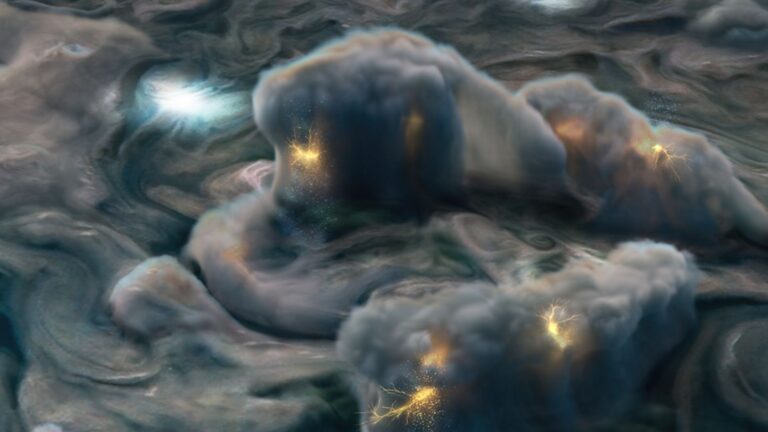
NASA has transformed real telescope data from Jupiter, Saturn, and Uranus into immersive soundtracks. The project turns scientific observations into

NASA has transformed real telescope data from Jupiter, Saturn, and Uranus into immersive soundtracks. The project turns scientific observations into

A female mouse that once lived aboard China’s space station has now delivered her third healthy litter back on Earth.

The University of Glasgow’s NextSpace TestRig, the world’s first system for testing 3D-printed materials manufactured in space, has won a national manufacturing award. Built with Dr Gilles Bailet and the Manufacturing Technology Centre, the facility uses a vacuum chamber that creates temperatures from -150°C to +250°C to simulate orbit conditions. The £253,000 project helps ensure space-printed materials can withstand extreme physical strains.

Engineers at the University of Southampton created a shape-shifting robotic wing inspired by birds and fish. The soft wing senses underwater currents and adapts automatically, reducing sudden jolts by 87 percent compared to rigid drone wings. It uses less energy and responds faster than existing designs, bringing underwater robots closer to the agility of living animals.

MIT alum Ashley Beckwith founded Foray Bioscience to grow plant products from single cells using AI-powered biomanufacturing. The company addresses the fragility of natural supply chains as 45 percent of plant species face extinction. Foray has already developed molecules, materials, and fabricated seeds with partners, including disease-resistant chestnut trees, aiming to shorten plant development timelines from decades to months.

University of Oxford scientists have solved a long-standing mystery about the moon’s magnetic field. By re-examining Apollo mission rocks, they found the moon experienced short, intense magnetic bursts lasting only thousands of years, not the half-billion years previously thought. The study explains why some samples showed strong magnetism while theory suggested a weak field. The discovery helps scientists understand how planetary cores evolve.

German and Australian researchers have demonstrated a new method to control the internal grain structure of 3D-printed metal parts during printing. The UltraGRAIN project uses pulsed-laser excitation to reduce grain size by up to 75 percent in targeted areas. This allows manufacturers to print stronger zones exactly where loads are highest, improving part performance and extending service life.

Scientists at Wuhan University of Technology built a polymer solar cell that achieves 19.1% efficiency while retaining 97% of its performance after 2,000 hours in air. The team solved polymer chain entanglement by adding a small-molecule acceptor that improves molecular packing and charge transport. The estimated lifetime exceeds 100,000 hours, moving flexible organic solar cells closer to commercialization.

Lockheed Martin is developing a fission surface power system for NASA’s Artemis Moon base with a target launch date of 2030. The nuclear reactor will provide continuous electricity through two-week lunar nights when solar power is unavailable. The company’s design is flexible, scalable from 10 to 50 kilowatts, and builds on decades of naval nuclear experience.

Citizen scientists Jan Pope and Sophie Kalkowski-Pope have discovered the world’s largest known coral colony on Australia’s Great Barrier Reef. The 364-foot-wide structure, found during a reef census, is as long as a football field. Researchers are now studying how it survived while stressing the discovery does not signal reef recovery from climate pressures.
We uphold the highest standards of journalistic integrity and ethical reporting, ensuring that truth and transparency prevail in all our content.
contact@modernmechanics24.com