Mars’ Water Mystery: Dust Storms Reveal Clues to Red Planet’s Ancient Water
A recent study shows that an unusual dust storm on the Red Planet pushed water high into the atmosphere, where

A recent study shows that an unusual dust storm on the Red Planet pushed water high into the atmosphere, where
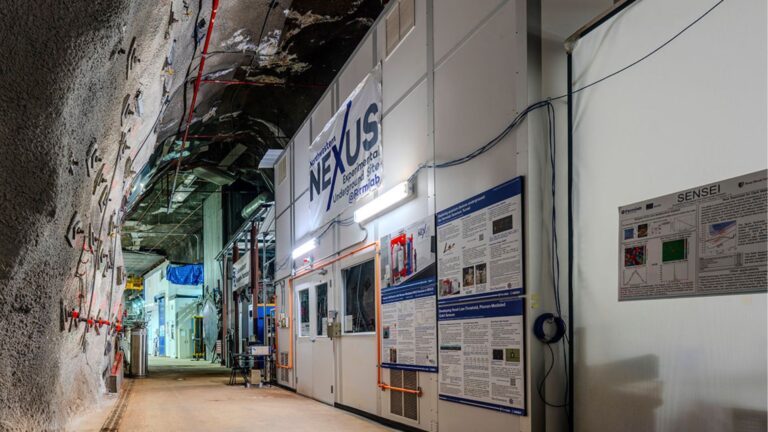
A team of scientists at a US lab is conducting experiments to understand how radiation from space and the environment

Scientists have discovered how a powerful solar superstorm dramatically affected Mars in May 2024. Two spacecraft orbiting the Red Planet
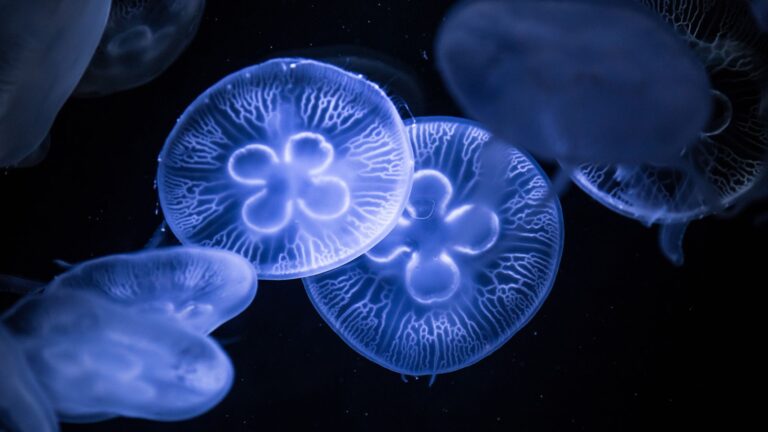
In the early 1990s, scientists at NASA carried out an unusual space experiment. They wanted to understand how living organisms
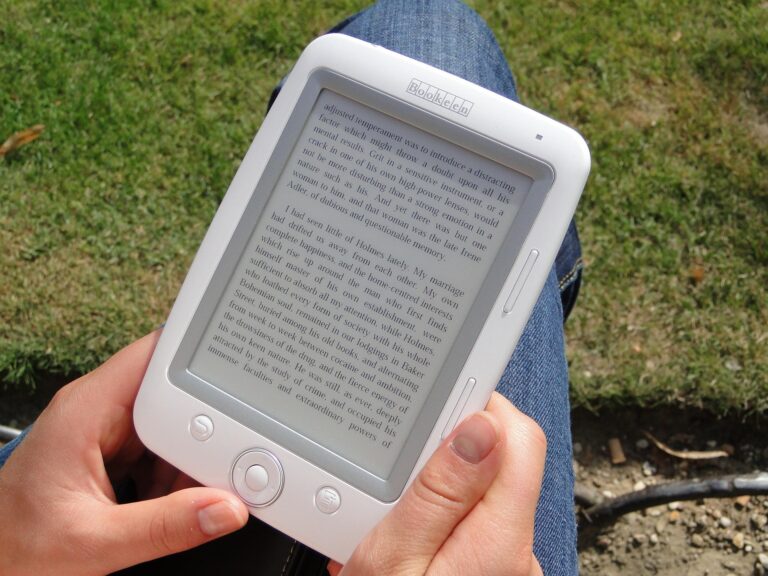
U.S. startup Tiiny AI has unveiled the AI Pocket Lab, a supercomputer small enough to carry in a pocket. It runs 120-billion-parameter AI models locally using 80 GB of RAM and a dedicated neural processor. The device delivers 190 TOPS of power, letting users run coding, analysis, and reasoning tasks without internet access or cloud servers.
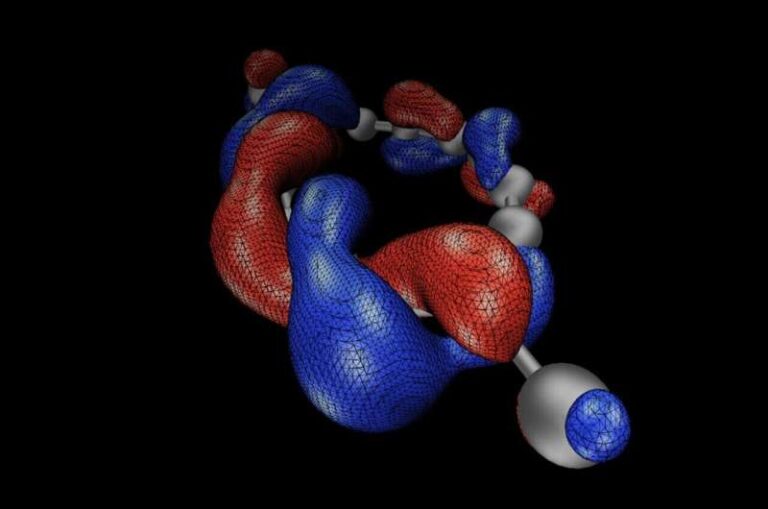
An international team led by IBM has created a molecule with electrons that travel in a corkscrew pattern, a structure never seen before. They used a quantum computer to confirm its half-Möbius topology, which classical machines could not fully model. The discovery shows that electronic topology can be engineered, opening new possibilities for designing materials with specific properties.
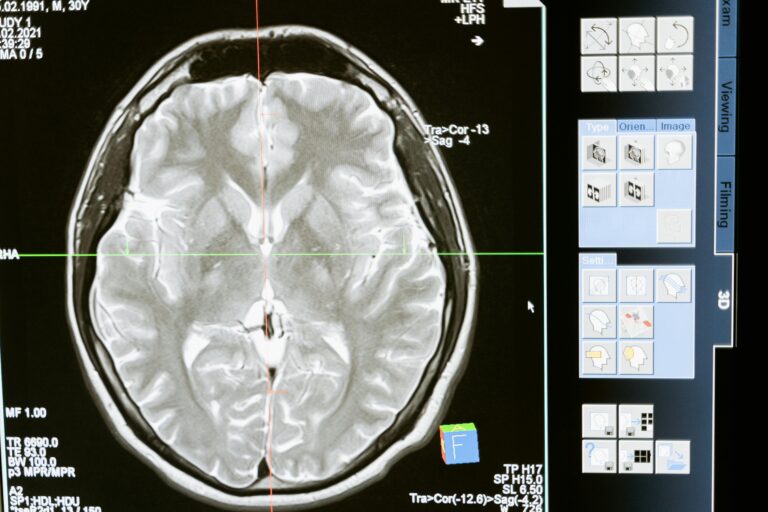
A University of Florida study reveals that zero gravity causes astronauts’ brains to shift upward and stretch inside the skull. Led by *Rachael Seidler, the research shows the motor cortex moves about 2.5mm in space, causing temporary balance problems. The findings raise important questions for future Mars missions.
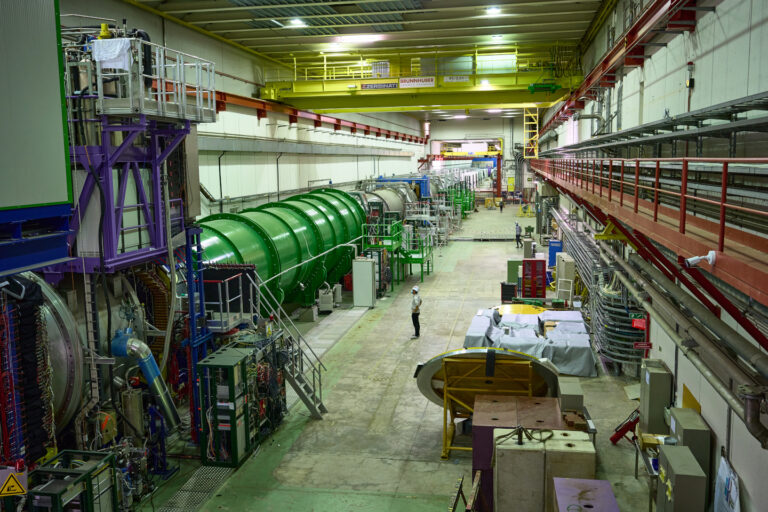
The NA62 Collaboration at CERN has measured an ultra-rare kaon decay with 40 percent smaller uncertainty than before. The process, where a kaon decays into a pion and neutrino pair, happens less than once in ten billion decays. The result matches Standard Model predictions and sets tight limits on possible new physics.
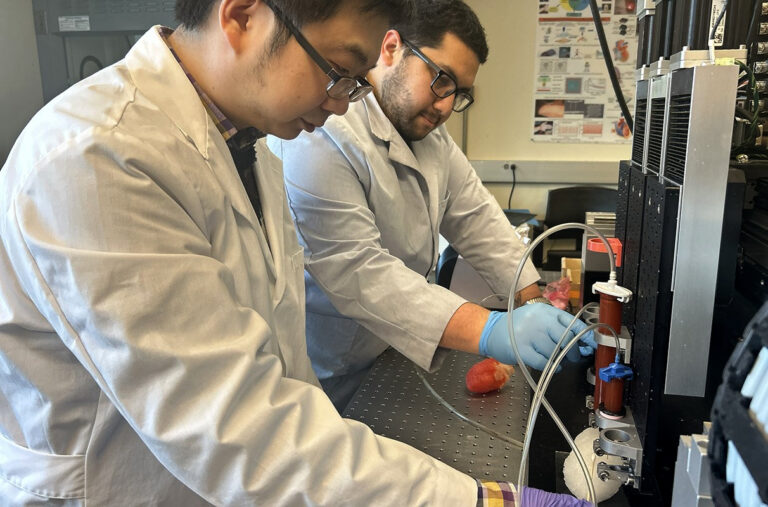
Washington State University researchers have built a beating 3D-printed model of the left side of the heart. Made from soft materials using patient scans, it allows surgeons to practice valve repairs with real tools and imaging. The model successfully simulated a mitral valve repair, showing potential for better surgical training without relying on animals or cadavers.