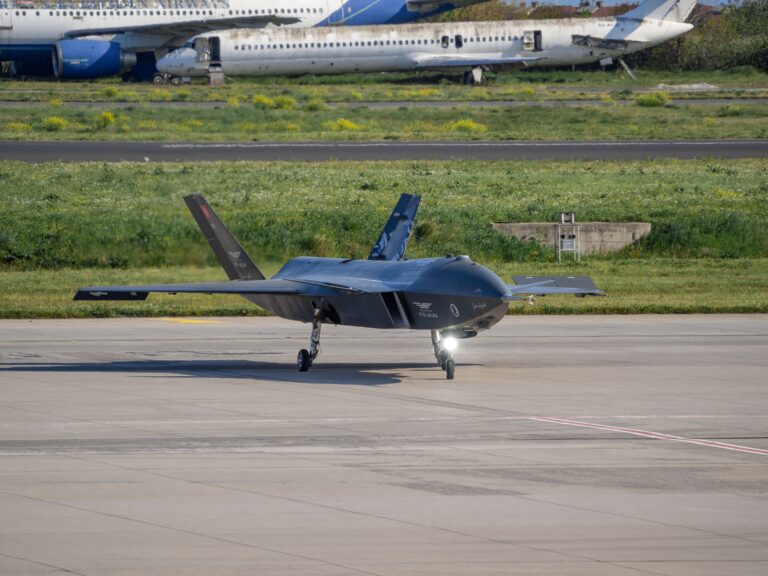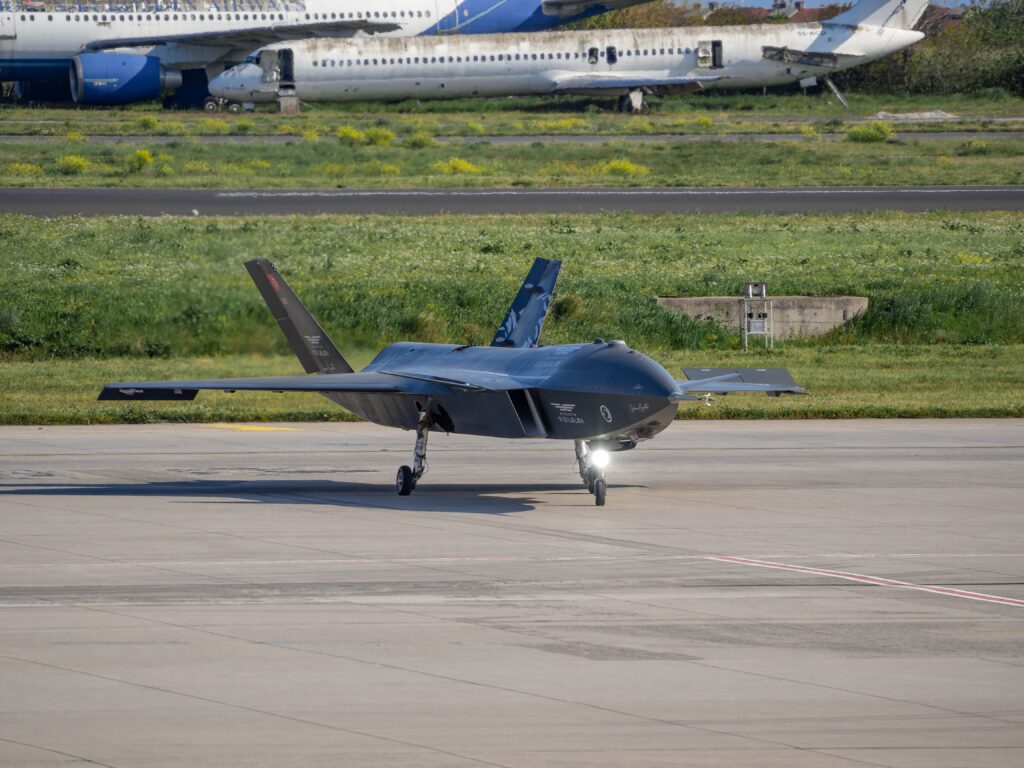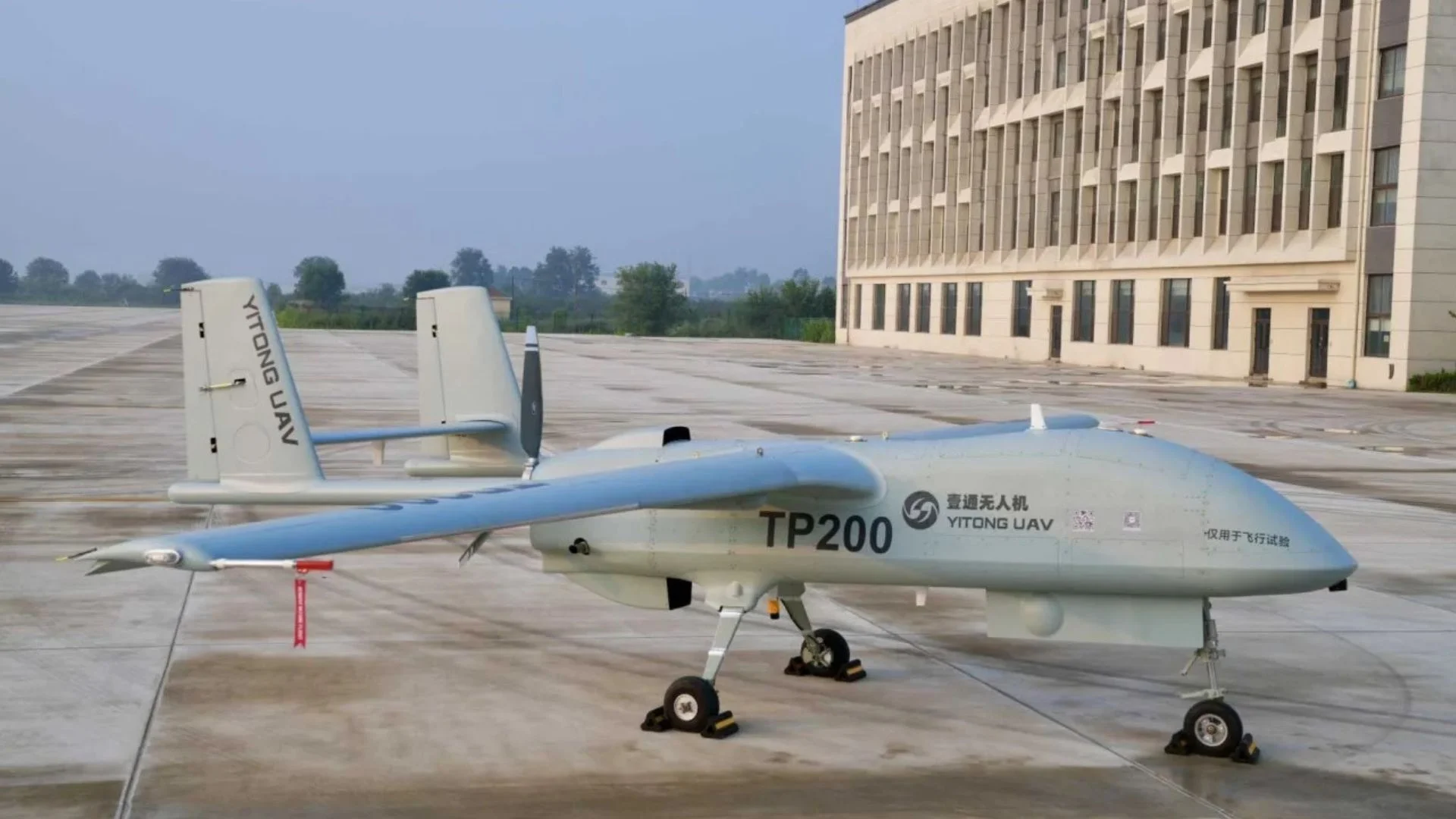
China’s first multi-functional long-endurance uncrewed aircraft, the TP200, has completed its maiden flight in Yantai, Shandong Province.
The test flight confirmed that the aircraft met its planned performance targets for climb rate, cruise speed, and overall flight stability. Developed by Yitong UAV System Co., the TP200 drone is designed to serve multiple civilian missions using a single adaptable platform.
The maiden flight took place on July 26, 2026, after several years of development. Engineers reported that the aircraft maintained stable and controllable flight throughout the test. The successful trial marks an important milestone before further certification and operational testing.
TP200 Drone: Built For Versatility
Unlike many drones designed for a single purpose, the TP200 uses a modular design that allows operators to swap mission equipment quickly. This means one aircraft can perform different tasks without major structural changes. The approach improves equipment use while reducing operating and maintenance costs.
The drone was developed under the airworthiness requirements of the Civil Aviation Administration of China (CAAC). These rules influenced the aircraft’s structure, flight control systems, production process, and maintenance planning from the beginning. Building the aircraft around certification standards supports future commercial operations in regulated airspace.
The TP200 fills the gap between small commercial drones and larger military-style medium-altitude long-endurance aircraft. Small drones usually carry light payloads over short distances. Larger systems offer greater capability but are more expensive to purchase and operate.
Long Range Performance
The TP200 measures 6.05 meters in length with a wingspan of 10 meters and a height of 2.4 meters. It has an empty weight of 450 kg, a maximum take-off weight of 700 kg, and can carry payloads weighing up to 200 kg. Its high-mounted wings and gasoline engine are designed to improve fuel efficiency and extend flight duration.
According to the company, the drone can remain airborne for more than 24 hours. It also offers a maximum flight range of 3,000 km, while carrying its full 200 kg payload over distances of up to 2,000 km. The aircraft reaches a top speed of 225 km/h and can operate at altitudes of up to 7,620 meters.
READ ALSO: China Develops Over 400 Humanoid Robot Models, More Than Half of Global Total
The TP200 requires only 300 meters for both take-off and landing. That allows it to operate from shorter runways than conventional aircraft, including remote airstrips and emergency landing sites. The drone is also designed to handle crosswinds of at least 15 meters per second, making it suitable for coastal and island operations.
The aircraft can operate from airports located as high as 4,500 meters above sea level. That capability supports missions in mountainous regions where thinner air often reduces aircraft performance. Such operations are especially relevant in western parts of China with high-altitude terrain.
Wide Mission Options
The TP200 is designed for a wide range of civilian tasks. Planned missions include maritime patrol, coastline monitoring, offshore search and rescue, weather observation, disaster relief, ecological surveys, and mapping. It can also support rain enhancement programs and forest fire prevention patrols.
During emergencies, the drone can transport relief supplies to remote mountain villages and isolated islands. Its payload capacity allows it to carry medical equipment, food, communication devices, and other essential materials. This makes it useful when roads or traditional transport routes become inaccessible.
The modular payload system also allows different sensors to be installed. Operators can equip the aircraft with optical cameras, infrared sensors, mapping equipment, weather instruments, or maritime surveillance systems depending on mission requirements. Standardized interfaces simplify switching between different roles.
The payload limit supports several specialized configurations without requiring multiple aircraft fleets. Some missions may prioritize cargo space, while others focus on surveillance or environmental monitoring. This flexibility helps government agencies and commercial operators use one aircraft for many applications.
Growing Drone Industry
Yitong UAV System Co. was established in 2021 with backing from Yantai Yeda Economic Development Group. The company has expanded its manufacturing operations to a production facility covering more than 130,000 square meters. Engineering teams remain based in Beijing and Xi’an, two important centers of China’s aerospace industry.
READ ALSO: United and Delta Ban Humanoid Robots From Flights: Here’s What Happened
The company’s engineering team includes specialists who previously worked on major Chinese aircraft programs. Yitong has also developed other uncrewed aircraft, including the TP500, TP1000, and several vertical take-off logistics drones. These projects show the company’s growing focus on cargo transport and commercial unmanned aviation.
The TP200 enters a rapidly expanding Chinese drone market. China manufactures most of the world’s civilian drones and produces a large share of key components, including batteries, motors, electronics, sensors, and carbon-fiber materials. More than 1.27 million civilian drones are already registered with the CAAC across different industries.
The new aircraft targets customers who need greater payload capacity than small drones but do not require expensive crewed aircraft. Government agencies, emergency services, logistics companies, and environmental organizations represent potential users. Its combination of long endurance, modular design, and relatively simple operating requirements makes it suitable for diverse missions.
The successful maiden flight marks the beginning of the TP200‘s next phase of certification and development. However, the aircraft is expected to strengthen China’s growing portfolio of long-endurance civilian drones. Its adaptable design and extended range also reflect the increasing demand for unmanned aircraft capable of supporting both public services and commercial operations.