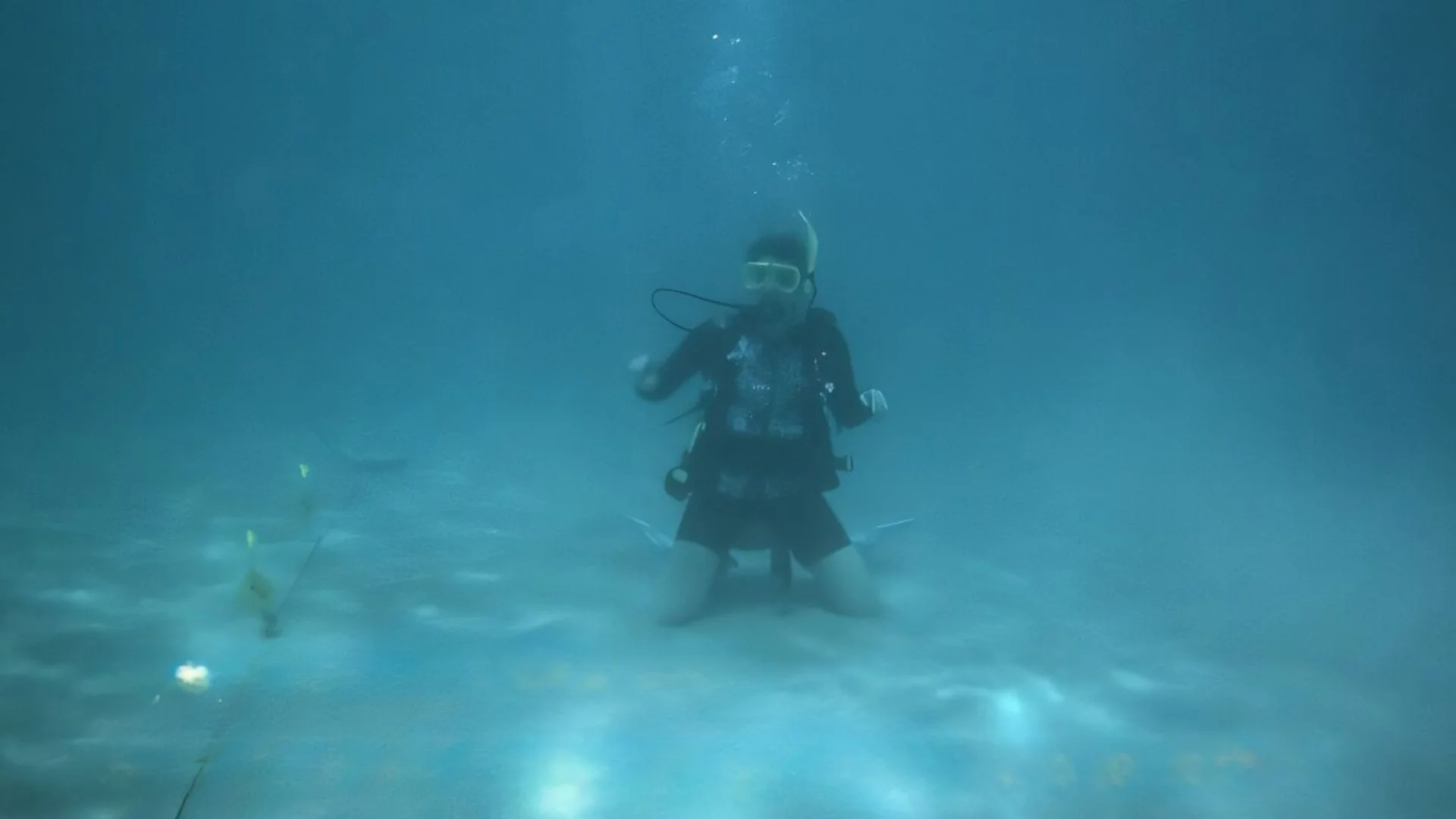
Researchers at the University of Minnesota Twin Cities have developed an artificial intelligence system that enables underwater robots to monitor a diver’s breathing by analyzing exhaled bubbles.
The new technology allows robots to estimate a diver’s respiration rate in real time without requiring any physical contact. The study appears in The International Journal of Robotics Research and marks the first use of robotic vision to measure human breathing underwater.
The system is designed to improve diver safety by identifying early signs of physical stress while underwater. It uses cameras mounted on companion robots to observe the bubbles released from a diver’s breathing regulator. By analyzing the frequency and size of these bubbles, the AI estimates how fast the diver is breathing.
Safer Diving Support
Scuba diving often places people in physically demanding situations where constant monitoring is difficult. Divers can experience exhaustion, stress, or breathing difficulties, particularly during deep or complex underwater missions. Detecting these warning signs early allows faster responses and improves overall safety.
Traditional health monitoring methods are difficult to use underwater because most sensors require direct skin contact. Thick wetsuits and drysuits prevent many wearable devices from collecting reliable data. Wireless communication also performs poorly underwater, making real-time health monitoring more challenging.
READ ALSO: India Just Built a 350 kg Turbojet Engine Designed to Fly Only Once: Here’s Why
The new AI system avoids these limitations by relying entirely on visual observations. Instead of attaching equipment to the diver, the robot watches the bubbles produced during normal breathing. This contact-free approach makes the monitoring process simpler and less intrusive.
Teaching Robot Vision
The research team trained the AI using a method called fuzzy labeling to improve recognition accuracy. Since underwater images are often blurred or affected by poor visibility, researchers manually labeled thousands of images. They also matched these images with audio recordings of breathing sounds to teach the system exactly when each breath occurred.
Senior researcher Junaed Sattar said the project aims to provide divers with a robotic safety partner that can continuously monitor their condition.
He explained that the long-term goal is for robots to observe not only individual divers but also groups working together underwater. Such assistance could become valuable during scientific research, underwater inspections, and rescue operations.
Lead author Demetrious Kutzke said measuring breathing underwater is far more difficult than monitoring people on land. The team therefore collected extensive visual and audio data from different environments to improve the AI’s performance. This helped prepare the system for changing underwater conditions.
Underwater Robots Learn Fast
To make the AI reliable, researchers gathered data from several locations with different water conditions. Testing took place in Lake Superior near Duluth, Square Lake in Minnesota, and the Caribbean Sea near Barbados. These varied environments exposed the system to differences in water clarity, lighting, and temperature.
The researchers also developed a communication system known as HREyes. It allows the robot to notify divers about their breathing status during a dive. The system classifies breathing as below normal, normal, or above normal based on breaths per minute.
According to the researchers, breathing below 14 breaths per minute is considered below normal, while 14 to 20 breaths per minute falls within the normal range. A breathing rate above 20 breaths per minute may indicate stress, heavy physical effort, or possible respiratory distress. These alerts provide divers with immediate information about their physical condition.
READ ALSO: China’s TP200 Drone Takes Flight With 3,000 km Range, 24-Hour Endurance for Civil Missions
Future Safety Plans
The research team plans to expand the system by combining breathing analysis with movement tracking. Monitoring both breathing patterns and body movement will allow robots to build a more complete picture of a diver’s physical condition. This combined assessment will help identify signs of fatigue or distress more accurately.
The technology also has broader significance as underwater robotics becomes more common across research, industry, and environmental monitoring. Companion robots equipped with health monitoring capabilities could support scientific expeditions, offshore inspections, military diving, and emergency response missions. The ability to monitor divers without wearable sensors may improve safety across many underwater operations.
The research team also included undergraduate researcher Vennela Dupati from the University of Minnesota’s Departments of Computer Science and Engineering and Electrical and Computer Engineering. However, AI-powered underwater robots may become trusted safety partners that help divers monitor their health throughout challenging underwater missions.