India has successfully developed its first indigenous expendable turbojet engine in the 350 kg thrust class.
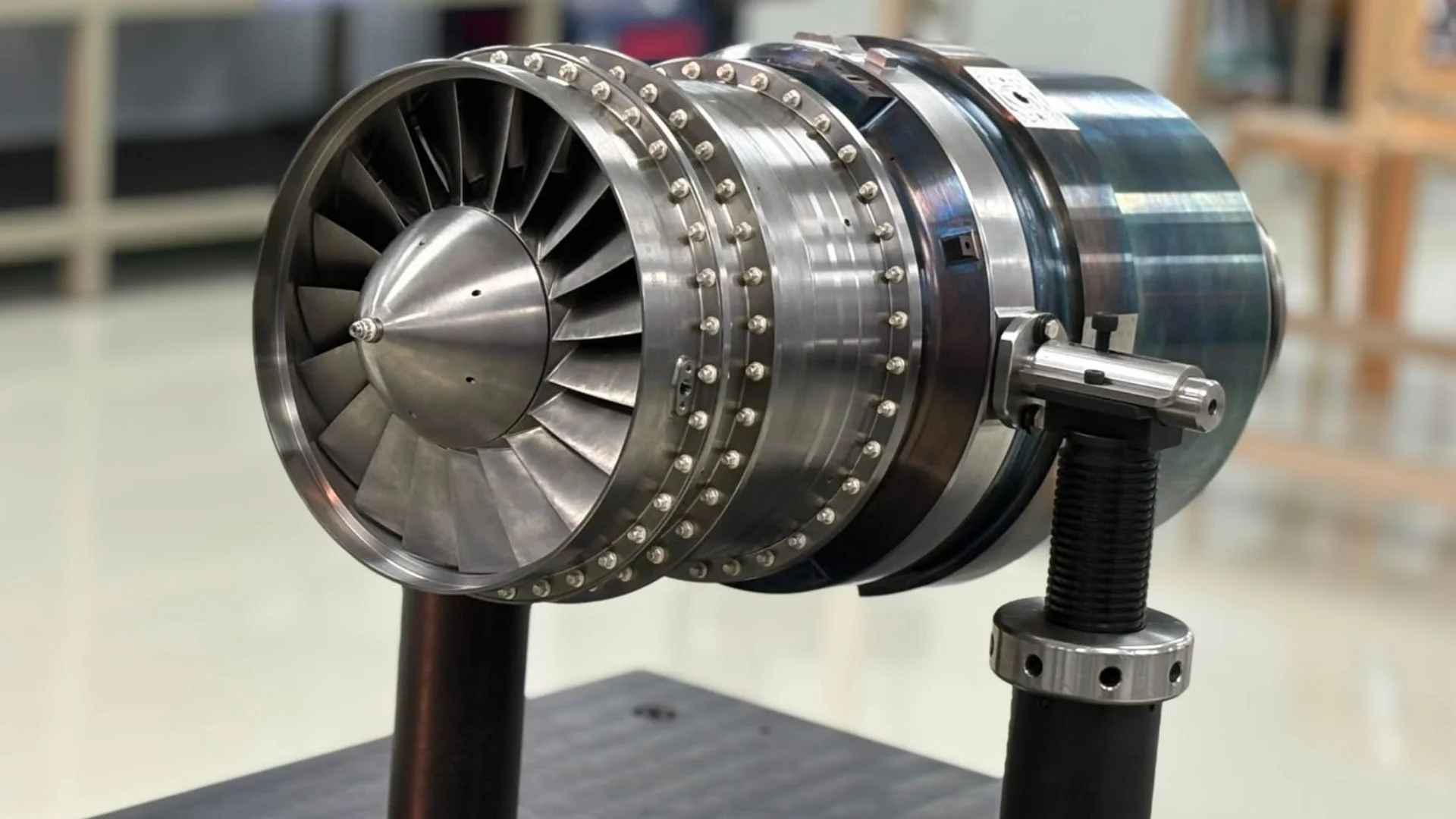
The engine has been designed by the Defence Research and Development Organisation’s Gas Turbine Research Establishment (GTRE). It is expected to power future missile and unmanned aerial platform programmes developed within the country.
The engine was successfully manufactured and delivered to GTRE by Azad Engineering on Wednesday. Azad Engineering Chief Executive Officer Rakesh Chopdar handed over the engine to Director General (Aeronautical Systems) Dr K. Rajalakshmi Menon and GTRE Director Dr S. V. Ramanamurty. The delivery marks the completion of years of research, engineering and industrial collaboration.
Turbojet Engine Built Different
The Ministry of Defence said the engine reflects India’s growing ability to design and manufacture advanced propulsion systems.
Jet engine technology remains one of the most demanding engineering fields because it requires precise manufacturing, specialised materials and high operating reliability. Only a small number of countries have developed such technologies independently.
The new engine follows a single-spool turbojet design that balances compact size with dependable performance. It includes a four-stage axial-flow compressor, an annular combustor, a single-stage uncooled turbine and a fixed exit-area nozzle. Together, these components compress air, burn fuel and generate the thrust needed to propel missiles or unmanned aircraft.
READ ALSO: Airbus Unveils AI-Powered UAV Network That Lets Multiple Drones Think and Act as One Team
Unlike reusable aircraft engines, expendable turbojet engines are designed for one-time or limited-duration missions. This allows engineers to focus on delivering reliable performance while keeping production costs under control. Such engines are commonly used in cruise missiles and some long-endurance drones where recovery is not required.
Supporting Defence Programmes
The engine is primarily intended to power medium-range anti-ship missiles. Its compact design also makes it suitable for integration into certain UAVs and drone platforms that require efficient propulsion over extended distances. This flexibility increases its value across multiple defence applications.
Developing an indigenous engine also reduces dependence on foreign suppliers for an essential defence component. Countries that rely on imported propulsion systems often face supply restrictions, licensing requirements or delivery delays during periods of geopolitical tension. Domestic production helps improve long-term operational readiness and programme continuity.
The Ministry of Defence said the achievement demonstrates the close partnership between DRDO and the Indian private sector. It added that the project combines scientific research with advanced manufacturing expertise developed within the country. The collaboration also highlights the growing role of Indian industry in producing complex defence equipment.
Strategic Industrial Value
Defence Secretary and DRDO Chairman Rajesh Kumar Singh congratulated GTRE and Azad Engineering on the successful development.
He said their joint efforts transformed a long-term vision into a significant national achievement. His remarks recognised the contribution of both government laboratories and private industry to the project.
Building turbojet engines demands exceptional manufacturing precision at every stage of production. Critical components operate under extremely high temperatures and rotational speeds, making material quality and engineering accuracy essential. Maintaining these standards while expanding production will remain an important challenge for manufacturers.
India also enters a competitive global environment where countries such as the US, Russia and China already deploy advanced expendable propulsion systems. Continued testing, production and integration into operational platforms will determine how quickly the new engine supports defence capabilities. Faster deployment will also strengthen indigenous missile and unmanned systems.
READ ALSO: MIT’s New AI Lets Robots Think While They Move, Cutting Reaction Delays 30x
Future Development Plans
The successful delivery of the engine represents more than a single product milestone. It strengthens India’s domestic capability in one of the world’s most complex defence technologies while creating opportunities for future propulsion programmes. The experience gained through this project is expected to support the development of more advanced engines for next-generation defence systems.
As India continues to expand its indigenous defence manufacturing ecosystem, technologies such as this turbojet engine are likely to play an important role. Greater self-reliance in propulsion systems will help support future missile, UAV and drone programmes while strengthening the country’s long-term strategic and industrial capabilities.