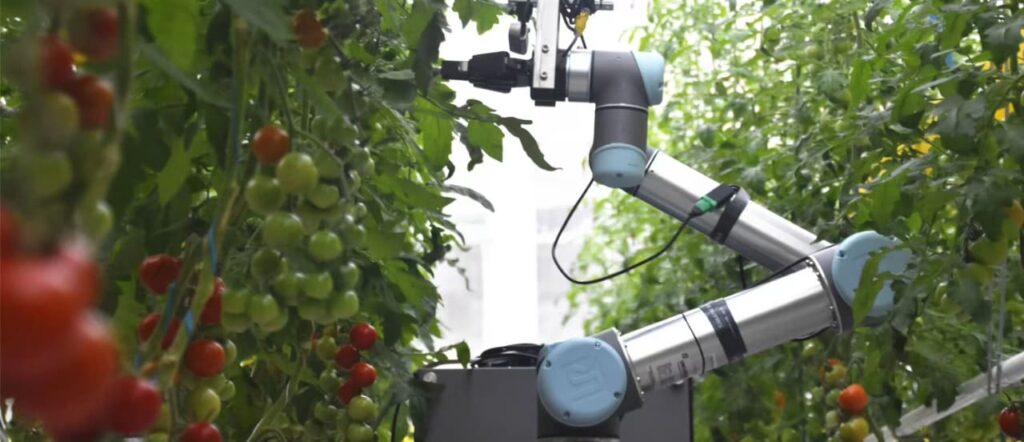
Researchers at the Massachusetts Institute of Technology (MIT) have developed a new artificial intelligence technique that allows robots to plan future actions while carrying out their current tasks.
The approach reduces delays between movements and enables robots to react much faster in dynamic environments. The system, called Vision-Language-Action System with Hindsight(VLASH), improved robot speed across several real-world tasks without increasing computing requirements.
The research addresses a long-standing challenge in robotics where machines often pause before deciding their next move. These short interruptions may seem minor, but they reduce efficiency and make robots less effective in fast-changing situations. By allowing robots to think ahead instead of waiting for each action to finish, the MIT team has significantly improved overall performance.
The researchers presented the work ahead of the Intelligent Robots and Systems Conference. The project involved scientists from MIT, Nvidia, the University of California at Berkeley, the University of California at San Diego, the California Institute of Technology, and Tsinghua University. The work also received support from the MIT-IBM Computing Research Lab, Amazon, the US National Science Foundation, and Nvidia.
Planning Future Actions
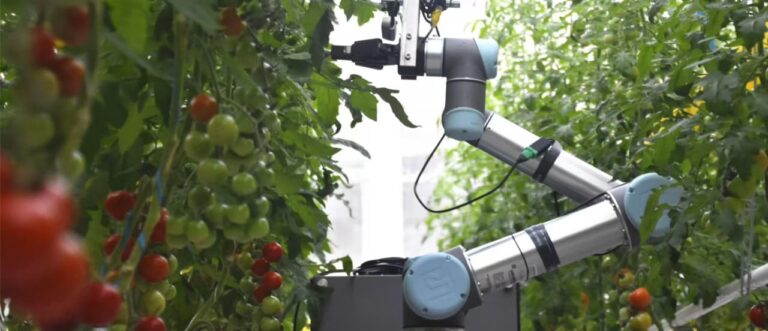
Modern robots increasingly rely on artificial intelligence systems known as Vision-Language-Action (VLA) models. These systems process camera images, understand task instructions, and generate a sequence of movements for the robot to perform. They act as the decision-making system that connects what a robot sees with how it moves.
Most existing VLA models complete one set of actions before starting to calculate the next. During this planning stage, the robot briefly pauses while the AI processes fresh information and prepares another movement sequence. These repeated pauses create jerky motion and reduce reaction speed.
The MIT researchers designed VLASH to eliminate this waiting period. Instead of planning only after finishing an action, the system predicts where the robot will be in the near future and starts preparing its next movements. In contrast, current methods still execute actions. This overlap between thinking and acting makes the robot move more smoothly.
According to the research team, this simple change solves an important problem in robot control. When robots plan using outdated information from their current position, the surrounding environment may already have changed by the time the next action begins. Planning based on the predicted future position helps avoid this mismatch and keeps movements stable.
MIT Associate Professor Song Han, who led the research, said the work creates a strong foundation for efficient and affordable robotics applications. He added that the team plans to combine this technology with advanced AI world models to improve robot capabilities in the future.
READ ALSO: L3Harris to Quadruple THAAD Propulsion Output Under New Pentagon Agreement
Reducing Motion Delays
A key feature of VLASH is its ability to estimate the robot’s future state before the current task ends. While the AI cannot predict every environmental change, it already knows the robot’s present position and the movements it is about to perform. Using that information, it estimates where the robot will be after completing its current action.
Graduate student Jiaming Tang, one of the lead authors, explained that the team wanted to overlap the robot’s thinking process with its execution process. He said this approach allows robots to react much faster because planning happens in parallel instead of one step at a time. The result is a much shorter delay between action sequences.
The researchers reported that VLASH reduced reaction delays by more than thirty times compared with traditional approaches. Faster planning translated into smoother movement without requiring additional computing resources. This makes the technique attractive for existing robotic systems that cannot easily upgrade their hardware.
Another advantage is that VLASH works across different types of robots. Since the technique changes the planning method rather than the physical machine, manufacturers can apply it to various robotic platforms. This flexibility increases its value for both research laboratories and commercial applications.
MIT Robots Learn Faster
The team also combined VLASH with another technique known as action quantization. Instead of generating many small movements, the AI creates fewer but larger action groups that follow the same path. This reduces the number of planning cycles needed to complete a task.
Although this method caused a slight reduction in precision, the overall speed improvement was substantial. Robots completed tasks between two and three times faster while maintaining high levels of accuracy. The trade-off remained small enough for many practical applications.
The researchers also introduced a new training method to help the AI understand future-state information more effectively. They reorganized existing training data so the model learned to rely on predicted future positions instead of only current observations. This approach increased training speed by five times without adding extra computing costs.
Tang said that even though powerful AI models work behind the scenes, VLASH allows robots to react much more like humans. Rather than stopping to think after every movement, robots continue acting while preparing their next decision. This creates more natural and efficient behavior during complex tasks.
Real World Applications
The researchers evaluated VLASH in computer simulations as well as physical robotic systems. Across all tests, the new method consistently outperformed standard planning approaches in terms of speed while maintaining reliable accuracy. These improvements appeared in both simple and highly dynamic activities.
One demonstration involved sorting coloured cubes into a box. Robots using VLASH completed the sorting task twice as fast as existing methods while matching the best baseline accuracy of around 90 percent. The faster completion time came without sacrificing consistent task performance.
READ ALSO: Gallium Nitride Powers China’s Geosynchronous Radar Satellite for Nonstop Earth Monitoring
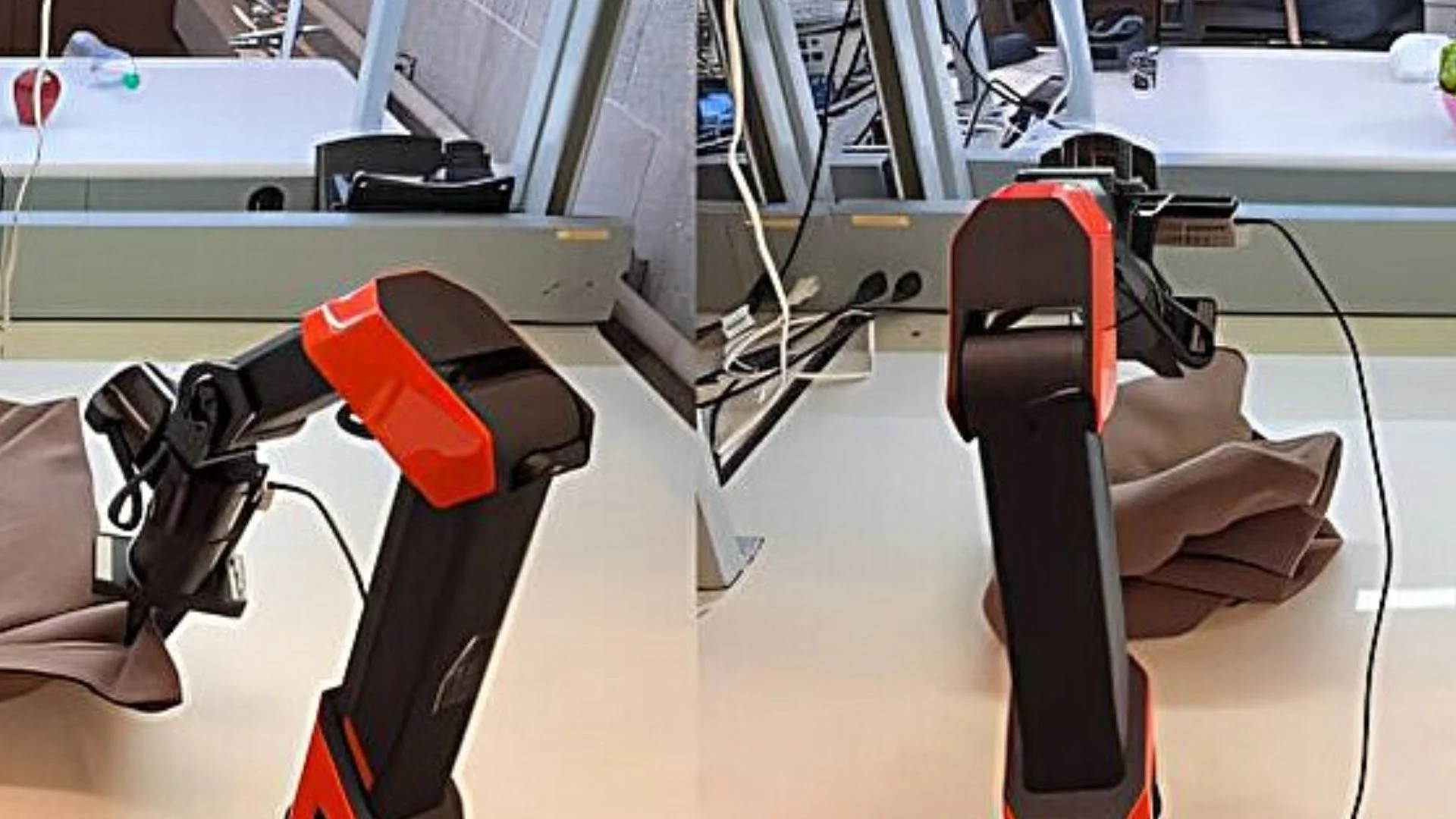
The system also handled demanding activities that require quick reactions. Robotic arms successfully played table tennis and the fast-paced arcade game Whack-a-Mole, where rapid movement is essential. These demonstrations showed that the planning method performs well beyond routine industrial work.
The technology may also benefit robots operating in emergency response and search-and-rescue missions. In these situations, machines must quickly adapt to changing surroundings while avoiding obstacles and recovering from unexpected mistakes. Faster decision-making can improve both safety and efficiency during critical operations.
Beyond emergency services, the approach has potential across manufacturing, logistics, warehouse automation, healthcare, and service robotics. Faster planning enables robots to work more efficiently alongside people without introducing additional hardware costs. Businesses seeking higher productivity may benefit from software improvements instead of replacing existing robotic systems.
Researchers believe the next stage of development will involve combining VLASH with advanced AI world models. These systems attempt to predict how the surrounding environment itself will change rather than only estimating the robot’s future position. Integrating both technologies may allow robots to make even smarter decisions while handling extremely complex real-world tasks, supporting wider adoption of intelligent automation across industries.