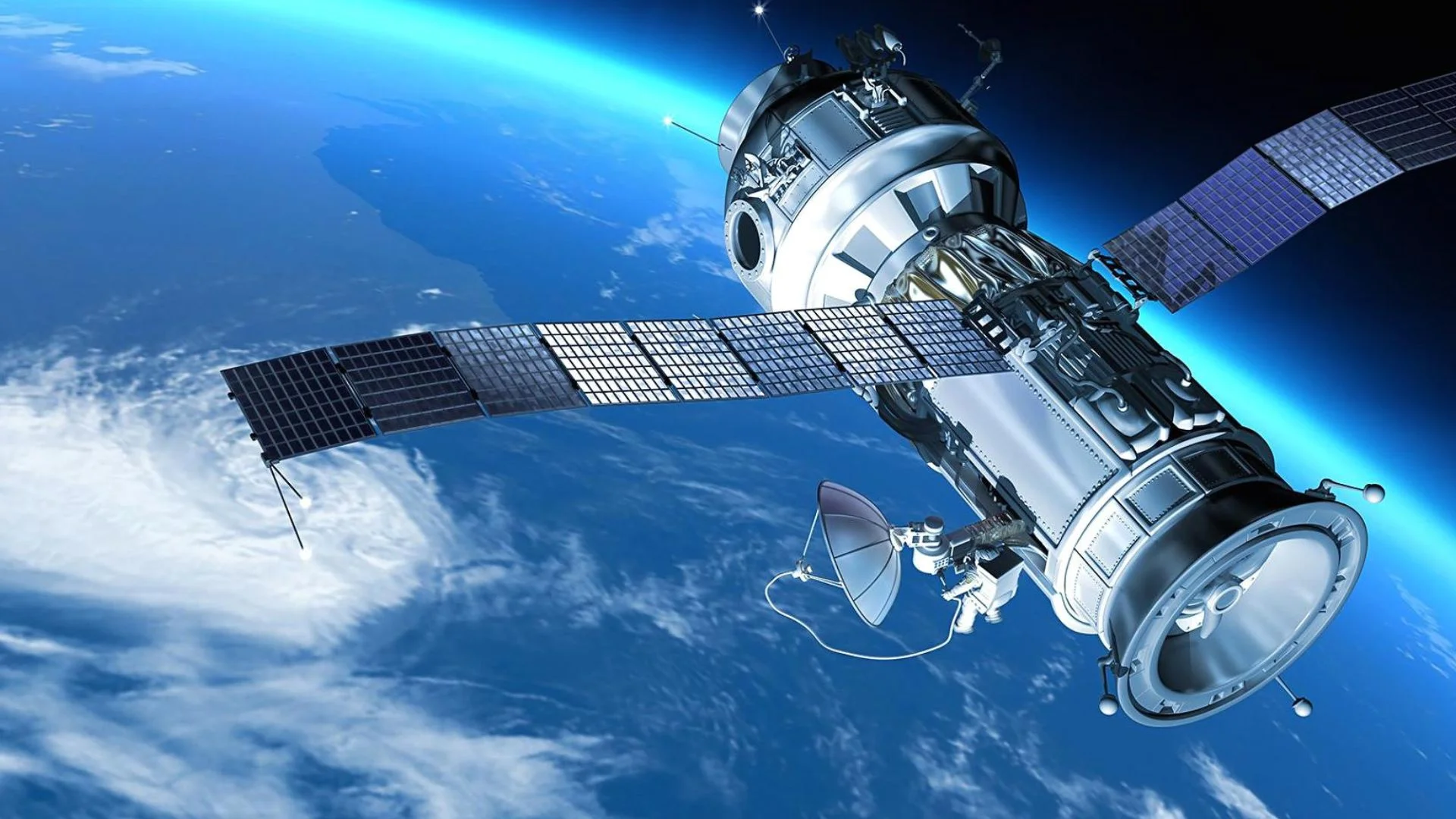
China’s Ludi Tance-4 01 satellite relies on gallium nitride (GaN) technology to deliver continuous radar observation from high Earth orbit, according to a newly published study.
Researchers say the satellite uses GaN-based power amplifiers that allow it to operate from nearly 36,000 kilometers above Earth. The findings also highlight China’s dominant position in the global supply of gallium, the key material used to produce GaN semiconductors.
Unlike most radar satellites that circle Earth in low orbit, Ludi Tance-4 01 operates in geosynchronous orbit. This means it remains above the same location on Earth instead of constantly moving across the planet. As a result, it can continuously monitor a large region and track changing activity over time.
Researchers from the Xian Institute of Space Radio Technology conducted the study. It was published in the Journal of Microwaves and received support from the National Key Laboratory of Space Microwave Communication. The research explains how the satellite’s radar system achieves the power needed for long-distance observation.
High Orbit Advantage
Most radar observation satellites operate much closer to Earth, making repeated passes over the same location several hours or days apart. Ludi Tance-4 01 works differently because its geosynchronous orbit allows uninterrupted monitoring of nearly one-third of Earth’s surface. This gives it the ability to observe both wide regions and moving objects without waiting for another orbital pass.
READ ALSO: NASA Tests SWEET-15 Composite Wing To Failure For Future Fuel-Efficient Aircraft
Operating from such a high altitude creates technical challenges. Signals must travel much farther than those from low-Earth orbit satellites, requiring much stronger transmission power. Higher power also improves image quality and helps the satellite resist electronic interference.
To meet these demands, engineers developed powerful solid-state amplifiers using gallium nitride technology. These amplifiers generate the microwave signals required for the satellite’s synthetic-aperture radar system. Synthetic-aperture radar creates detailed two-dimensional and three-dimensional images by using radio waves instead of visible light, allowing observations in darkness and through clouds.
Power Behind Radar
According to the research, the satellite uses gallium nitride high-electron-mobility transistors inside its power amplifiers. Each amplifier produces about 800 watts of output power. Together, the satellite’s amplifier system delivers more than 18,000 watts for radar operations.
Researchers monitored 20 amplifiers during two years of operation in space. They found the equipment maintained stable performance throughout the testing period. The study concluded that the amplifiers met the requirements for high reliability and an expected operational life of eight years.
The researchers also reported a power-added efficiency of 50.3 percent. In simple terms, this measures how effectively the amplifiers convert electrical energy into useful radio-frequency output. Higher efficiency reduces wasted energy while improving overall system performance.
Gallium Supply Focus
Gallium nitride has become one of the most important semiconductor materials for advanced radar and communication systems.
Besides satellites, it is widely used in active electronically scanned array radars, electronic warfare equipment, and other next-generation defense technologies. Its ability to handle high power and high temperatures makes it more suitable than many conventional semiconductor materials.
Gallium itself is not usually mined directly. Instead, it is recovered as a by-product during alumina production, which is part of the aluminum manufacturing process. Because China is the world’s largest aluminum producer, it also accounts for more than 95 percent of global primary gallium production.
READ ALSO: Mystery Space Balls Wash Up on Australian Beach, Officials Reveal Their True Origin
This dominant position has given China significant influence over global gallium supplies. Since Ludi Tance-4 01 launched in August 2023, Beijing has gradually tightened export controls on gallium-related products. In late 2024, China effectively blocked exports of gallium products to the US while maintaining restrictions on military-related end uses.
Global Strategic Impact
Gallium is important as countries expand investments in advanced electronics and defense systems. Access to reliable supplies is now considered an important part of national technology strategies. Several countries are exploring ways to diversify supply chains and increase domestic production to reduce dependence on a single source.
The Ludi Tance-4 01 study demonstrates how advanced materials directly influence the capabilities of modern space systems. It also shows that semiconductor technology has become as important as spacecraft design itself in determining satellite performance. These developments reflect the growing link between critical minerals, advanced manufacturing, and national security.
As nations continue expanding their space-based observation capabilities, demand for gallium nitride technologies is expected to grow. Future satellite programs will likely place greater emphasis on securing key materials while improving radar performance for both civilian and strategic applications.