Researchers at The University of Texas at Austin have created a 3D-printable material that works similarly to human tissue.
It allows specific molecules and ions to pass through while blocking others. The innovation offers new possibilities for healthcare, robotics and water treatment.
The study was published in Nature Materials. Researchers said the material combines tissue-like behavior with a fast, easy-to-scale manufacturing process. Existing methods for making similar materials are often slow and difficult to produce in larger sizes.
Faster Material Production
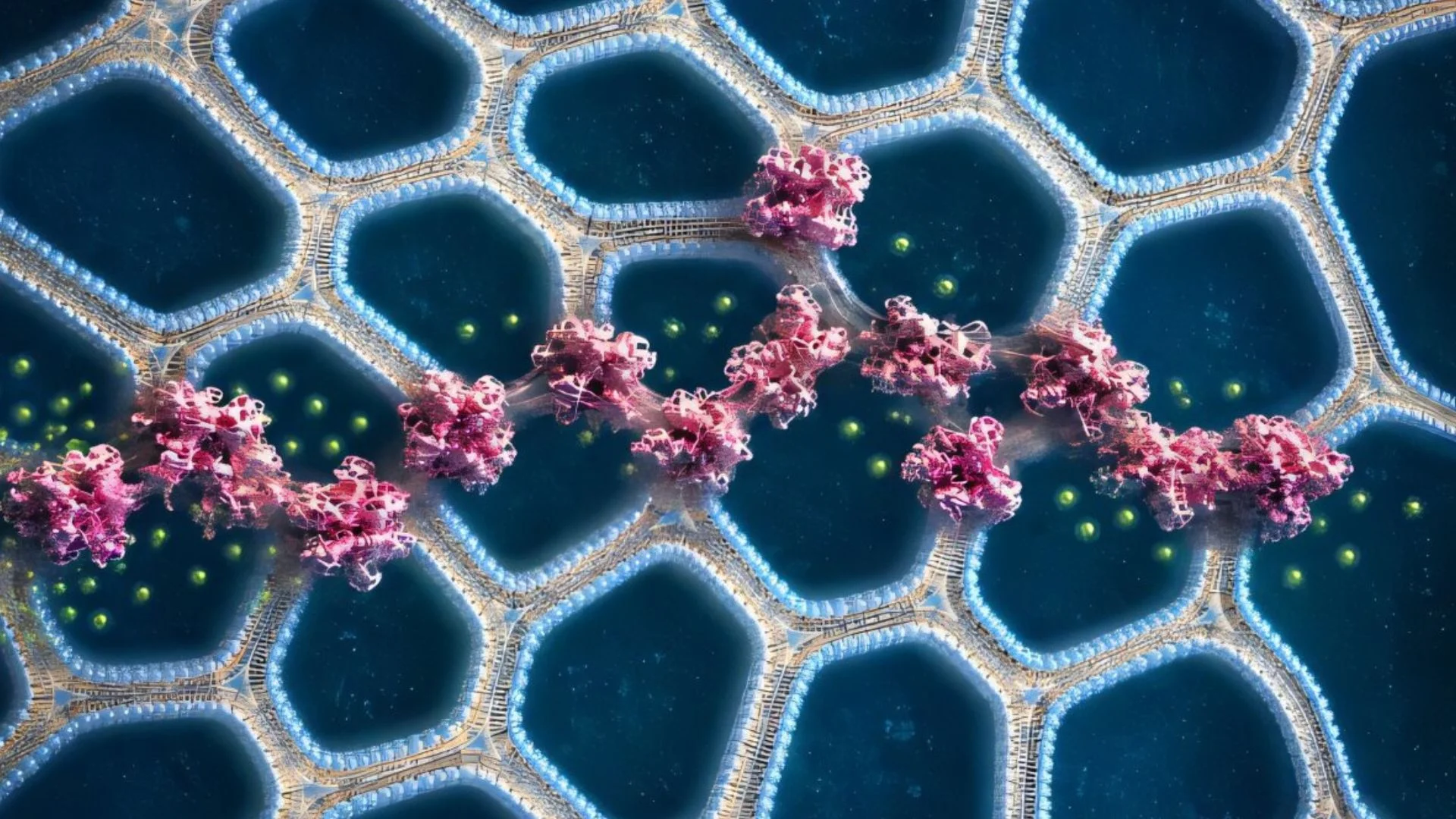
The research team built the material by tightly packing billions of tiny water droplets together. They used simple mixing and centrifuge techniques to complete the process within minutes. Thin membranes formed between the droplets, creating a structure similar to the arrangement of cells in living tissue.
According to Professor Manish Kumar, human tissues naturally separate and transport important molecules and ions. He explained that organs such as the kidneys and intestines selectively absorb what the body needs while leaving unwanted substances behind. The new material follows the same basic principle in a simplified form.
Human Tissue Inspires Innovation
Researchers said the material can be printed using biocompatible substances, making it suitable as a scaffold for growing new tissues or organs. Its flexible design also makes it useful for soft robots that can bend and adapt in ways rigid machines cannot. Such robots may support future work in surgery, disaster response, and hazardous environments.
The team also modified the material by adding proteins that allow it to carry ion signals similar to nerve tissue. This feature may support future efforts to build computing systems inspired by the human brain. It also demonstrates how the material can be customized for different functions.
READ ALSO: Rocket Lab Nabs $266M US Space Force Deal for 18 Hush-Hush Alaska Launches for Missiles
Cleaning Wastewater Efficiently
In another experiment, researchers added a protein that helped the material identify ammonium in wastewater. This allows it to separate ammonium from other dissolved ions found in municipal wastewater and water produced during oil and gas extraction. The approach may improve the recovery of valuable minerals and nutrients while supporting water reuse.
Membrane-based filtration is already used in many industries to separate materials from liquids. By giving the membrane greater selectivity, the new design improves the ability to recover useful resources instead of treating them as waste. This supports growing global efforts to strengthen resource recycling and reduce environmental impact.
The project builds on more than a decade of research led by Kumar and his team. Doctoral researcher Aida Fica helped solve long-standing problems related to slow production and material stability after developing a new manufacturing approach inspired by a scientific conference. The process combines two oils with different properties to create droplets, then compresses them into a stable, tissue-like structure.
Researchers said the technology requires only basic laboratory equipment, making it easier for other research groups to adopt. They also encouraged scientists to test and expand the platform for new applications.