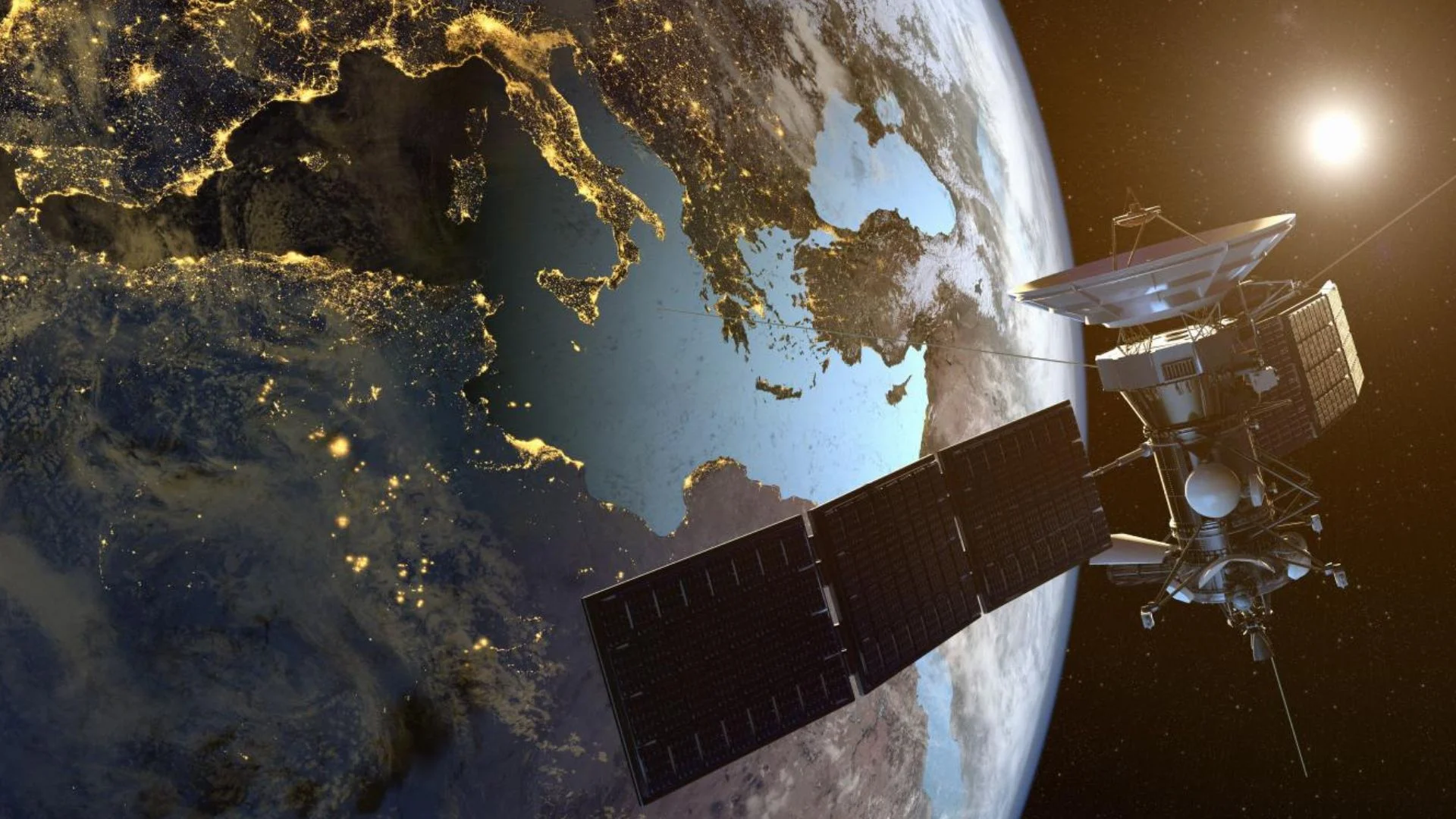
Scientists at the University of Florida are developing advanced space-based sensors to detect faint signs of nuclear activity from orbit, aiming to improve global security and monitoring systems.
The work is supported by major federal agencies, including the Defense Threat Reduction Agency and the National Nuclear Security Administration. Both organizations focus on reducing nuclear threats and improving the ability to track and understand nuclear activities worldwide.
The work, led by Kyle C. Hartig and James Baciak, aims to push the limits of what space-based sensors can detect. They are part of the university’s Nuclear Engineering Program and also work with the UF Astraeus Space Institute.
READ ALSO: Inside Fukushima Reactor: Extreme High Radiation Spike Reveals Hidden Danger After 13 Years
Their goal is to build the next generation of detectors that can spot even the weakest nuclear signals from space. This includes signals from nuclear materials, tests, or other related activities that might otherwise go unnoticed.
“It means UF is helping lead on a difficult and important class of space-security problems at a particularly important moment,” Hartig said. He added that the project places the university at the forefront of efforts to detect and understand nuclear-related signals from orbit.
The research focuses on two main approaches. One project is developing advanced radiation detectors that can monitor nuclear materials in space. These sensors are designed to detect traces of radiation that may emanate from nuclear sources.
The second project looks at optical and X-ray sensing methods. These tools can help scientists detect and study nuclear events, including small or hidden tests that are harder to identify using traditional systems.
Both projects aim to improve nuclear forensics, the science of analyzing nuclear materials to understand their origin and history.
WATCH ALSO: Elon Musk’s Starlink connects 22,000 students across Ghana with high-speed internet from space
Hartig explained that the team is working to detect what he describes as the faintest whispers of nuclear activity. This means building sensors sensitive enough to capture weak signals, even when they are buried in background noise.
Detecting such signals is not easy. Space-based sensors must operate under strict limits. They need to be small, lightweight, and energy-efficient. At the same time, they must survive harsh conditions, including extreme temperatures and constant radiation exposure.
“The problem is not just whether you can detect something,” Hartig said. “The challenge is to detect it confidently and interpret it correctly.”
To solve this, the researchers are taking a broad approach. They are combining knowledge from different fields, including physics, materials science, sensor engineering, and data analysis. This allows them to design systems that not only detect signals but also make sense of them.
READ ALSO: USS Spruance Fires Deck Gun After 38 Years: What Triggered This Rare Strike?
The team is also working with experts from the University of California, Berkeley. This collaboration helps improve both the sensors’ sensitivity and the accuracy of the data they produce.
Beyond the technology itself, the project is also helping train future scientists and engineers. Students involved in the research are gaining hands-on experience in nuclear security and space systems, fields that are expected to grow in importance in the coming years.
The need for such technology is increasing as space becomes more active and more important for global security. Satellites already play a key role in communication, navigation, and Earth observation. Now, they are also being used to monitor nuclear activity.
WATCH ALSO: China’s UBTech has started world’s first mass delivery of humanoid robots
Looking ahead, the researchers believe their work will help build a stronger system for detecting and understanding nuclear events. This includes improving how governments verify international agreements and track potential threats.
“What excites me most is the opportunity to turn fundamental science into capabilities that directly strengthen US national security,” Hartig said.
In the long run, the goal is to make space-based detection systems more reliable, more precise, and more useful. By improving how we monitor activity from orbit, these technologies could support better decisions, stronger security policies, and a safer global environment.