A new audit warns that delays in next-generation spacesuits are clouding the timeline of NASA’s Artemis program to return humans to the Moon.
According to a report by the NASA Office of Inspector General, the much-anticipated missions under the Artemis program can slip by several years.
Instead of landing astronauts on the Moon by 2028, the timeline may stretch to 2031. At the heart of the problem lies one essential piece of gear: the spacesuit.
READ ALSO: US Firm’s RAACM-ER Hits 1,000-Mile Range With Tomahawk-Like Reach at Lower Cost
Spacesuits Not Ready on Time
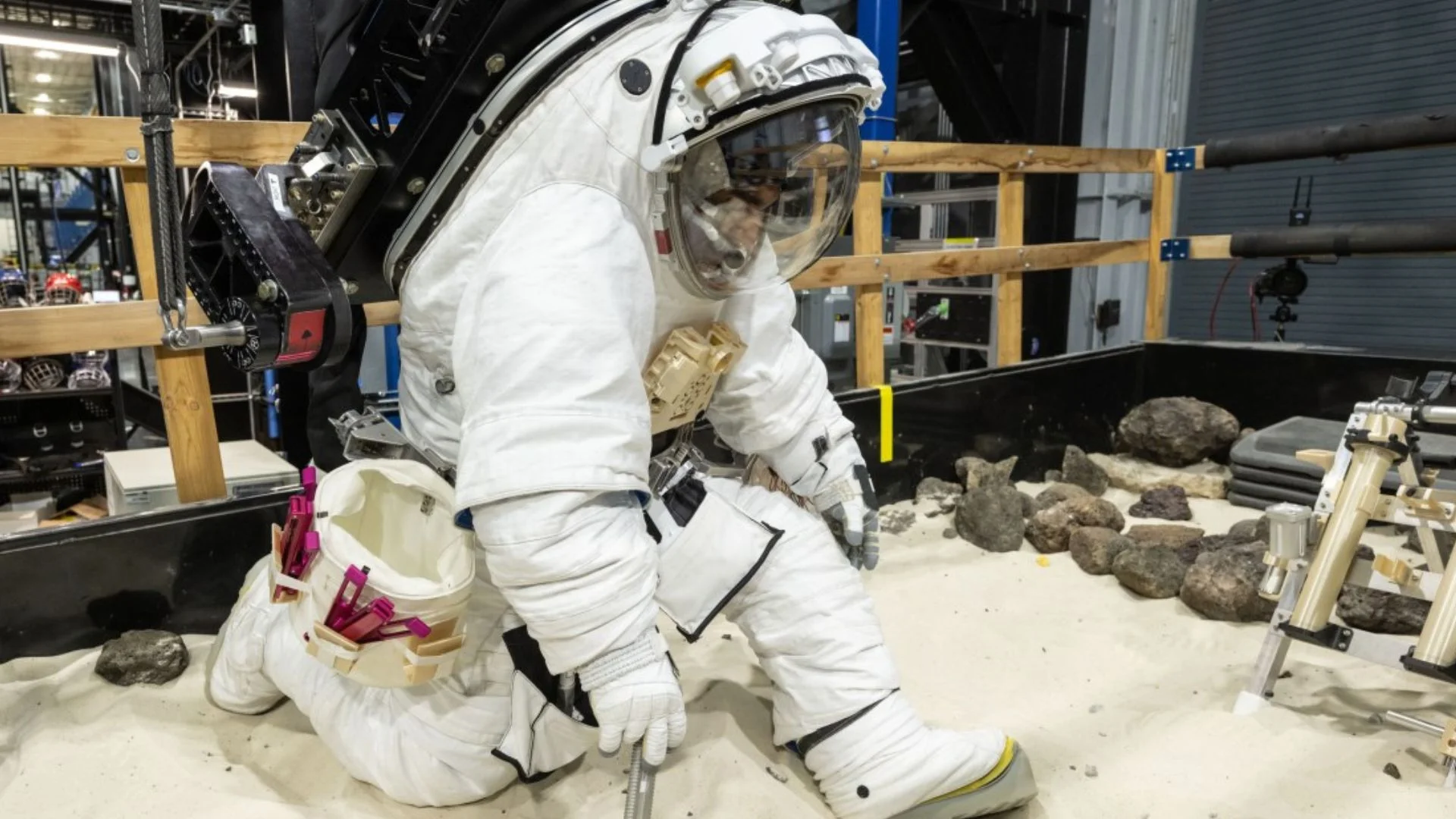
The audit highlights that the new lunar suits, being developed by Axiom Space, are significantly behind schedule. Based on current progress and typical delays seen in similar programs, testing and demonstrations may not happen until 2031.
That creates a major problem for NASA. Without these suits, astronauts simply cannot walk on the Moon. NASA had originally planned to send humans back to the lunar surface by 2028. But that goal now depends heavily on whether the new suits arrive on time and meet strict safety standards. Officials involved in the audit did not hold back.
“We found that the original demonstration schedules were overly optimistic and unrealistic,” said Deanna Lee from the Inspector General’s office in a video statement.
She added that both versions of the suits, those designed for lunar missions and those for the International Space Station, are already at least 18 months behind schedule.
Lee warned that if progress continues at this pace, NASA may have no choice but to revise its entire Artemis timeline.
Why New Spacesuits Are Essential
NASA cannot rely on its old gear. The spacesuits used during the Apollo missions are now more than 50 years old. They were built for short missions and custom-fitted for individual astronauts. They lack the durability and flexibility needed for long-term lunar exploration today.
WATCH ALSO: Chinese robotic company Unitree has unveiled its new humanoid robot H2
The current suits used on the International Space Station, known as Extravehicular Mobility Units (EMUs), are also outdated. Originally designed for the Space Shuttle era, they have not seen a major redesign in over two decades.
These suits have already shown serious issues. Reports mention water leaks inside helmets and problems with temperature control. The audit describes them as carrying significant safety risks.
If new suits are not ready in time, astronauts may have to continue using these older, flawed designs until the ISS retires around 2030.
The situation has become more complicated because NASA now depends on just one company. In 2022, the agency awarded contracts worth more than $3 billion to Axiom Space and Collins Aerospace to develop next-generation suits.
READ ALSO: Liquid Droplet Mops Boost Solar Panel Cleaning to 99.9% While Slashing Water Use 80%
However, Collins Aerospace withdrew from the program in 2024 after failing to meet deadlines. That left Axiom as NASA’s only spacesuit provider.
The audit suggests that NASA’s contracting and acquisition strategy may have contributed to these delays. It notes that planning assumptions were too optimistic and did not fully account for technical challenges.
Axiom Responds
Despite the concerns, Axiom Space says it remains committed to the mission. Jonathan Cirtain, the company’s CEO and president, welcomed the audit and emphasized the company’s focus on safety and performance.
“Our focus remains on delivering a safe, capable spacesuit that enables American astronauts to return to and explore the lunar surface in 2028,” he said.
NASA has also taken steps to support Axiom, including closer collaboration and increased testing efforts. Still, the timeline remains tight.
Bigger Challenges Across Artemis
The spacesuit delay is not the only hurdle facing the Artemis program. The missions also depend on the Human Landing System, which is being developed with contributions from SpaceX and Blue Origin. That system has faced its own delays and safety concerns.
NASA is planning two crewed Moon landings in 2028 under Artemis IV and Artemis V. But with multiple components running behind schedule, the risk of a cascading delay is growing.
Even so, the agency has shown progress. The upcoming Artemis II mission aims to send astronauts around the Moon, proving that deep space travel systems are still on track.
The stakes go beyond schedules and budgets. The delay can affect the global race to return to the Moon. China is actively working toward its own crewed lunar landing and aims to achieve it before 2030.
WATCH ALSO: South Korean company showcases its multi-purpose unmanned ground vehicle for military use
Both the US and China are targeting the Moon’s south pole, a region believed to contain water ice and valuable resources. Establishing a presence there is seen as a key step toward long-term space exploration. If NASA slips to 2031, it risks falling behind.
Despite the concerns raised in the audit, NASA leadership remains optimistic.
Administrator Jared Isaacman expressed confidence that astronauts will still land on the Moon in 2028 wearing Axiom’s suits.
“I am confident that when NASA is ready to land on the Moon in 2028, our astronauts will be wearing Axiom suits,” he wrote on social media.
NASA can open the program to new bidders if needed. Several companies, including SpaceX, are developing spacesuit capabilities that could compete in the future.
For now, however, bringing in new contractors may not solve immediate delays. The agency is focusing on improving testing, identifying supply chain risks, and working more closely with partners to keep the program on track.
The coming years will be crucial. Spacesuits may seem like a small part of a Moon mission, but without them, astronauts cannot take a single step on the lunar surface. And until that problem is solved, the dream of returning humans to the Moon remains just out of reach.