Engineers in Norway have developed a wireless offshore charging system that allows electric vessels to recharge directly at sea.
The technology uses magnetic fields instead of physical plugs, making it suitable for harsh marine environments. The system is part of an effort to support emission-free shipping without requiring vessels to return to port.
The innovation comes from researchers at SINTEF, a Norwegian industrial research organization. It is being tested under the Ocean Charger project, led by shipbuilder VARD and several maritime energy partners. The project aims to build a full-scale offshore charging network powered by renewable energy.
READ ALSO: US Clears $4.01B Patriot Missile Deal to Rebuild Qatar’s Air Defense Shield Fast
Electric and hybrid ships have gained attention as the maritime sector looks to cut emissions. However, the limited charging infrastructure has slowed adoption across long-distance and offshore operations. Most vessels still rely on ports for recharging, which restricts their range and efficiency.
Offshore Charging for Electric Ships
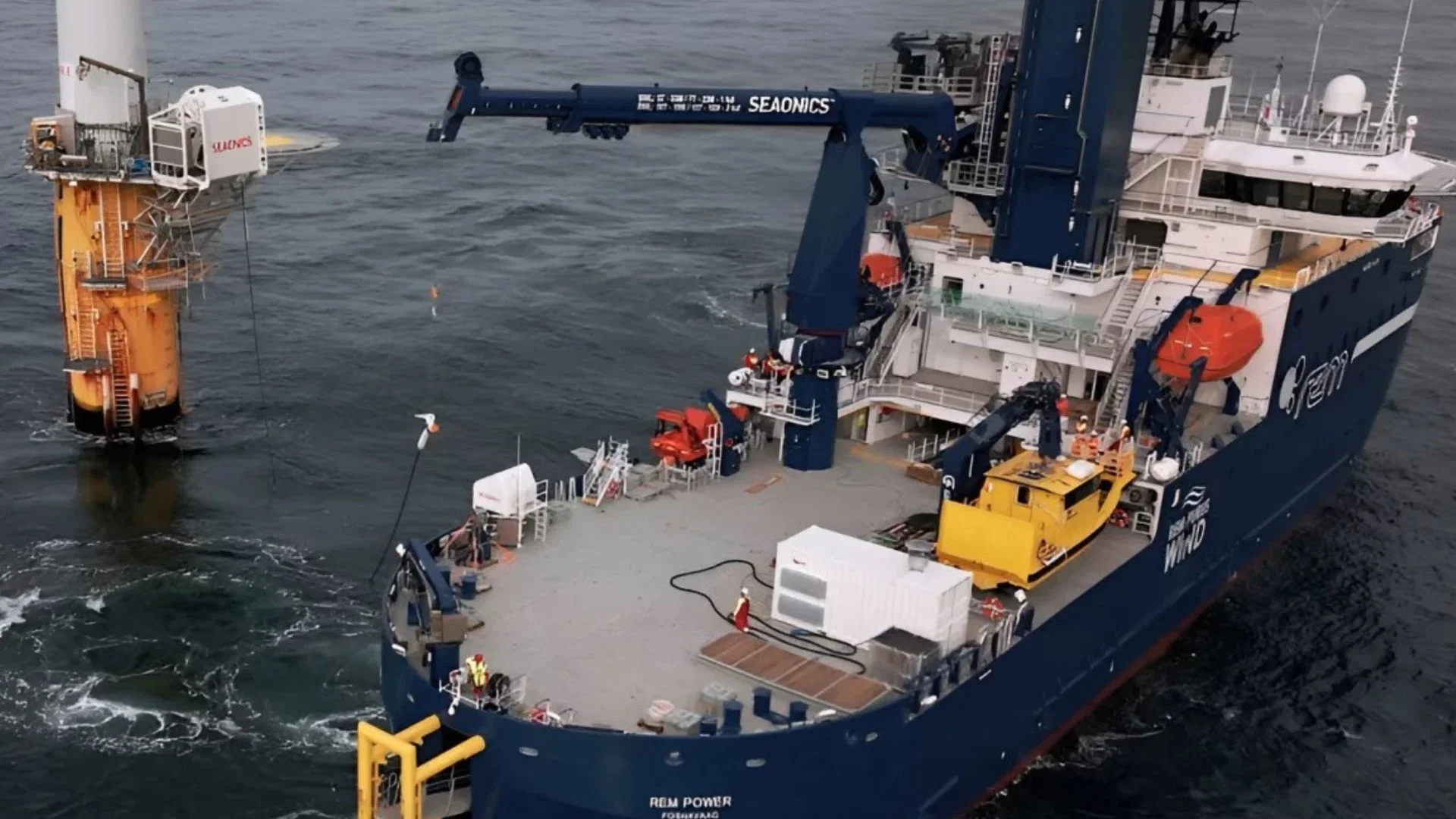
The Ocean Charger project focuses on installing charging stations near offshore wind farms. These stations allow ships to recharge while at sea, rather than returning to shore. This approach helps reduce downtime and supports continuous vessel operations.
Traditional charging systems rely on metal connectors that must remain stable during use. At sea, waves, wind, and currents make maintaining stable connections difficult. Even small movements can damage connectors or interrupt power flow.
WATCH ALSO: Humanoid Robots Are Learning to Work Like Humans in Warehouses
Saltwater creates additional challenges for conventional charging systems. It is highly corrosive and can degrade exposed metal parts over time. This leads to reduced efficiency, overheating risks, and potential equipment failure.
Water exposure also increases the risk of short circuits. Moisture entering electrical connectors can damage insulation and disrupt operations. These limitations make traditional charging systems unsuitable for offshore use.
How Inductive Charging Works at Sea
To solve these issues, engineers developed a contactless charging system based on inductive power transfer. This method uses magnetic fields to transfer energy between two coils without direct contact. It works similarly to wireless charging pads for smartphones, but on a much larger scale.
A transmitting coil in the offshore station generates a magnetic field using alternating current. When a receiving coil on the vessel comes within range, the magnetic field induces an electric current. This process allows energy to transfer safely without physical connectors.
Both coils are sealed in waterproof, corrosion-resistant materials. This protects them from saltwater, algae buildup, and physical wear. The design ensures reliable performance even in rough sea conditions.
READ ALSO: Tech Takes Turn: Stretchable Screens And Robots That Feel Are Moving From Labs Into Life
The system reduces the risk of electrical arcing because there are no exposed contacts. It also allows some movement between the vessel and the charging station without interrupting power transfer. This flexibility is essential in a constantly moving marine environment.
Researchers say the system required advanced engineering beyond simple wireless charging concepts. It includes specialized cables, smart control systems, and components designed for high-power applications. These elements work together to maintain efficiency and minimize energy loss.
Wind-Powered Offshore Energy Network
The offshore charging stations are powered by nearby wind turbines. These turbines generate electricity, which is stored and distributed via an Offshore Substation (OSS). The OSS acts as a central hub for collecting and supplying energy to vessels.
When wind conditions are low, stored energy ensures continuous charging availability. This provides a stable, reliable power supply at sea. The system supports long-term operations without relying on land-based infrastructure.
The project plans to deploy multiple OSS units along coastlines, starting in Norway. These stations could form a network where vessels recharge during operations. Over time, this may change how ships plan routes and manage energy use.
WATCH ALSO: NASA rover discovered ancient microbial life signature on Mars
The system is especially useful for service vessels operating in offshore industries. These include oil and gas support ships, wind farm maintenance vessels, and marine enforcement units. Such vessels often remain at sea for extended periods and require flexible charging options.
The maritime industry has evolved steadily from sail to steam and then to diesel power. Electric propulsion represents the next phase in this transition. Reliable offshore charging infrastructure is a key requirement for this shift.
By removing the need for physical connectors, the new system addresses one of the most complex challenges in marine electrification. It simplifies operations while improving safety and durability. It also aligns with global efforts to reduce shipping emissions.
Researchers and industry partners expect further testing and scaling in the coming years. If widely adopted, the technology could enable cleaner, more efficient maritime operations. Offshore charging networks may become a standard feature of future shipping routes.