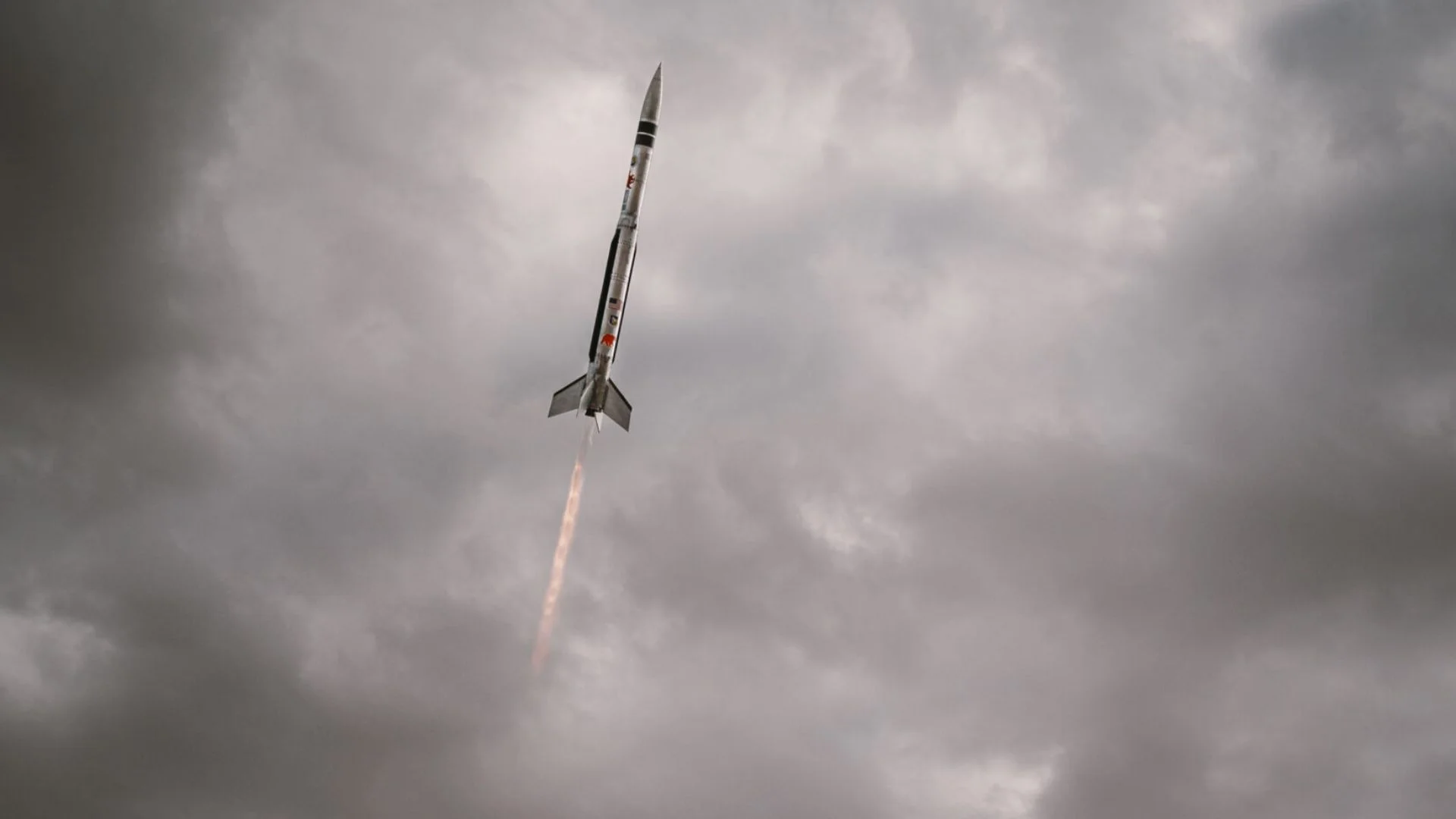
The Air Force Research Laboratory (AFRL) and Ursa Major have completed another successful flight of the Affordable Rapid Missile Demonstrator, marking a fast turnaround in testing and development.
The mission used the Draper liquid rocket engine and took place just 45 days after the previous flight. This quick pace highlights efforts to build faster, more affordable missile systems.
The latest test shows how quickly new missile technologies can move from design to flight. The Affordable Rapid Missile Demonstrator(ARMD), reached flight readiness in just eight months. This timeline is much shorter than traditional missile development programs, which often take years.
READ ALSO: Fossil of 210-Million-Year-Old Crocodile Cousin Reveals Predator Evolution Secrets
ARMD is designed to test and improve high-speed, rocket-powered weapons. It focuses on systems that are affordable, easy to produce, and quick to deploy. The program also supports national defense goals by improving readiness and response times.
The Draper liquid rocket engine plays a key role in this effort. It uses storable liquid propellants that can be kept ready for use for long periods. This makes it practical for military operations where quick launch capability is important.
WATCH ALSO: Humanoid Robots Are Learning to Work Like Humans in Warehouses
During the recent flight, engineers expanded the demonstrator’s mission profile. They tested how the engine performs under different flight conditions. This included evaluating control, stability, and adaptability during critical phases of the flight.
Officials say the test confirmed strong performance from the Draper engine. It showed that the system can operate reliably across a wider range of scenarios. These results help build confidence in the engine’s use for future missile systems.
Dr. Javier Urzay, chief of rocket propulsion at AFRL, highlighted the pace of progress. He said the team is advancing affordable and scalable propulsion systems with focus and discipline. He added that the goal is to develop new capabilities quickly and effectively.
READ ALSO: US Clears $4.01B Patriot Missile Deal to Rebuild Qatar’s Air Defense Shield Fast
Ursa Major, the company working with AFRL, also emphasized the importance of collaboration. CEO Chris Spagnoletti said the program demonstrates how public-private partnerships can accelerate development. He noted that the team can design, build, and test advanced systems more quickly.
The partnership between AFRL and Ursa Major reflects a broader shift in defense development. Traditional programs often involve long timelines and high costs. In contrast, ARMD aims to deliver faster results through flexible, efficient methods.
The Draper engine is key to this approach. Its design supports repeatable production and rapid integration into different systems. This helps reduce delays and makes it easier to scale up manufacturing when needed.
WATCH ALSO: NASA rover discovered ancient microbial life signature on Mars
The recent flight also demonstrated rapid reuse of essential hardware. Completing a follow-on mission in just 45 days shows improved testing efficiency. It suggests that future systems could be deployed and updated more quickly.
Globally, faster missile development has strategic importance. Many countries are working to improve high-speed weapon systems. Programs like ARMD help maintain technological competitiveness in this area.
The focus on affordability also matters. Lower-cost systems enable higher production volumes without significantly increasing budgets. This supports sustained readiness and long-term operational capability.
READ ALSO: REK: S.F.’s Robot Fight Hub, Humanoid Bots Battle, Perform & Are Available to Rent or Buy
AFRL and Ursa Major plan to continue testing the Draper engine. More flights will help refine performance and expand its applications. These efforts may shape the next generation of high-speed, rocket-powered weapons.
The rapid progress seen in ARMD suggests a new model for defense innovation. Faster testing cycles and strong partnerships are changing how systems are developed. If this pace continues, future missile technologies could reach deployment far more quickly than before.