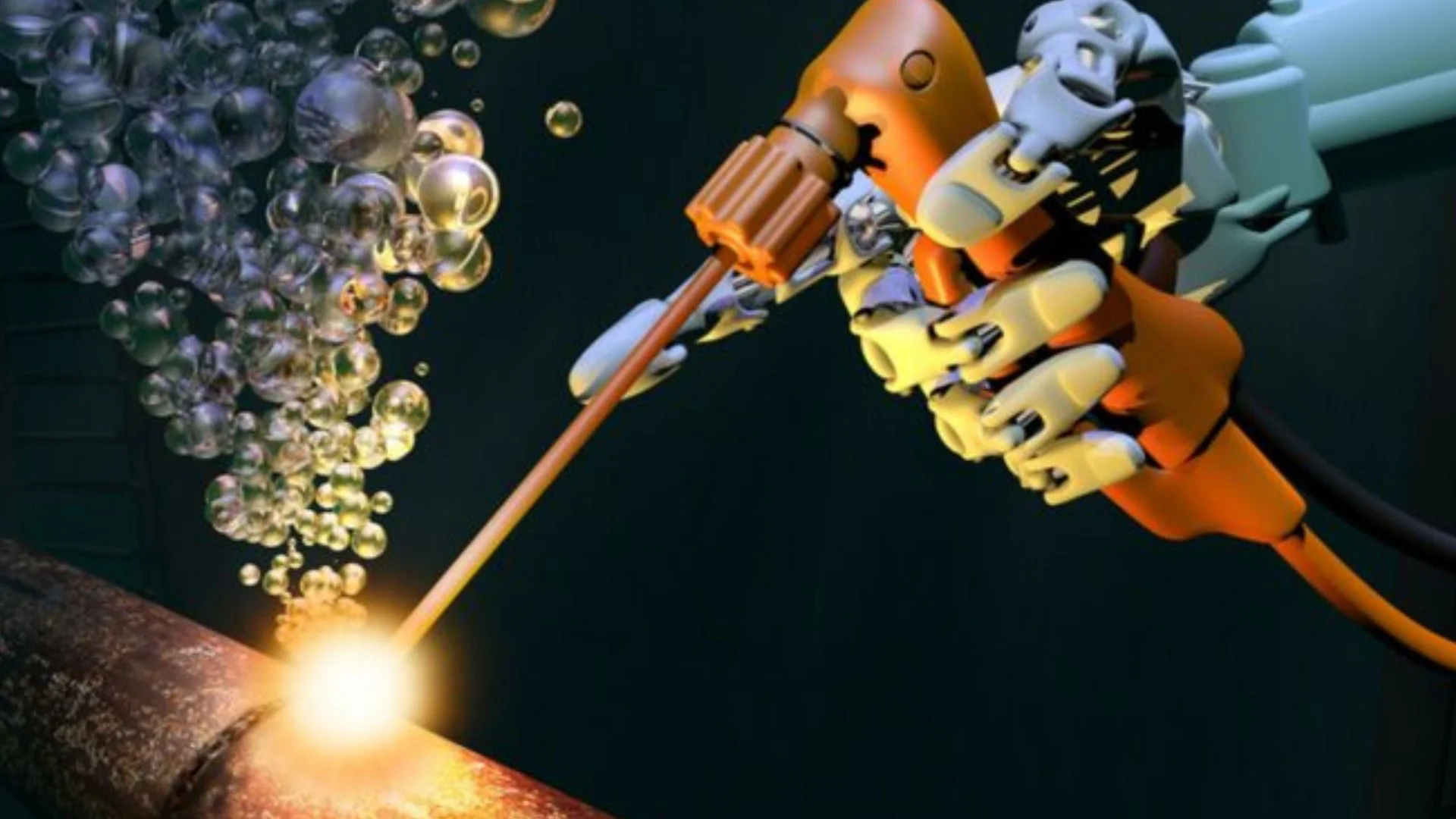
China has officially put its first domestically developed intelligent marine welding robot system into operation.
The advanced system is designed for offshore oil and gas platform construction and aims to improve manufacturing efficiency, precision, and safety. Its deployment marks a major step in the country’s push to modernize marine engineering with smart industrial technologies.
The system entered service at a manufacturing base in Tianjin and is designed for complex offshore oil and gas construction work. It provides new support for smart manufacturing in the country’s marine energy sector.
The robot system was developed by Offshore Oil Engineering Co., a subsidiary of China National Offshore Oil Corp. It is built to handle difficult welding tasks used in offshore platforms, including structural joints, reinforcement rings, and other large steel components. These areas often require high precision and are challenging for manual welding teams.
READ ALSO: Swedish Researchers Use 3D Printing to Turn Yeast Into Sustainable Building Material
Smart Marine Welding Tech Efficiency
The system has a planned service life of 20 years and can handle loads of up to 30 tons. Its software, operating systems, and welding process libraries were developed entirely within China. This allows the equipment to operate independently while meeting the demands of large marine engineering projects.
Engineers completed system integration in August last year and then began testing and evaluation. After nearly ten months of field trials and engineering verification, all major performance targets met the original design requirements. The successful testing cleared the way for full industrial deployment.
READ ALSO: These 2,000-Year-Old Bath Clogs at Roman Fort Reveal Ancient Bathing Habits
According to project leader Chen Xin, the development team introduced more than ten key innovations. These include AI-powered weld seam recognition, 3D laser vision alignment, and intelligent welding path planning. The technologies help the robot identify welding locations, adjust positioning, and complete tasks with minimal human intervention.
The system can start operations through a single command and automatically perform welding work. It also corrects welding paths in real time and ensures proper sealing during the first welding pass. These features improve consistency and reduce the risk of errors during production.
WATCH ALSO: Called Ascentia, the platform is developed by American company Collins Aerospace
Tested on Nearly 1,000 Welding Tasks
During development, engineers conducted almost 1,000 welding experiments across various offshore construction scenarios. The robot successfully processed steel materials up to 70 millimeters thick. Testing showed a first-pass qualification rate of more than 98 percent.
Compared with traditional welding methods, the new system improves overall efficiency by more than 40 percent. Faster production can help reduce project timelines and lower manufacturing costs. Greater automation also helps address labor shortages in highly specialized industrial work.
READ ALSO: New Cryo-EM Tech Breaks Into the Elusive Realm of Tiny Protein Molecules
At the same time, the company introduced an independently developed intelligent grinding robot. The machine uses visual positioning technology and real-time force control to improve surface finishing work. It has already processed more than 500 steel sections and increased grinding efficiency by 15 percent.
Offshore Energy Projects
Offshore oil and gas platforms contain thousands of welded steel components that must withstand harsh marine conditions. Higher welding accuracy helps improve structural reliability and long-term safety. Automated systems also reduce the need for workers to perform difficult tasks in challenging environments.
The launch of these intelligent robots reflects a wider shift toward digital and automated manufacturing in heavy industry. As offshore energy projects become larger and more complex, advanced robotic systems are expected to play an important role in construction and maintenance. Their adoption is set to support faster, smarter, and more efficient marine engineering projects in the years ahead.