Chinese scientists have discovered the world’s oldest verified amber in a coal seam in China’s northwestern Xinjiang region.
The fossilized resin dates back around 385 million years, making it roughly 65 million years older than the previously confirmed oldest amber. The finding offers new evidence about how early land plants protected themselves long before many plant-eating animals appeared.
The research team came from the Chinese Academy of Sciences’ Nanjing Institute of Geology and Palaeontology.
Their findings were published in the peer-reviewed journal Science Advances on July 15. The discovery was made in West Junggar, an ancient geological region formed through the collision and merging of tectonic plates.
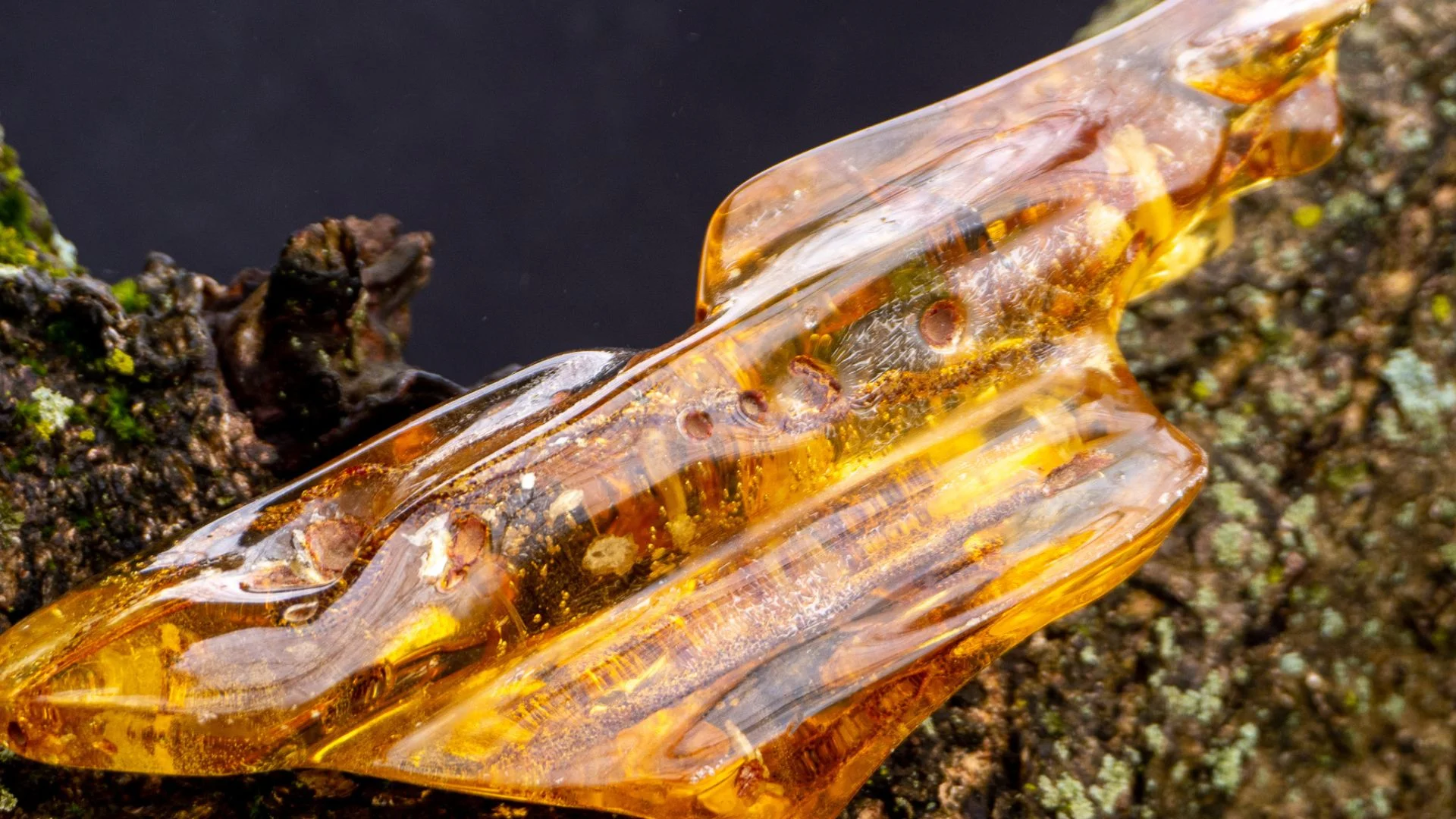
Amber is fossilized tree or plant resin that hardens over millions of years. Unlike ordinary fossils, amber can preserve tiny organisms, plant material and chemical signatures from ancient ecosystems. Scientists use it to understand better life and environmental conditions from Earth’s distant past.
Record Moves Back
Before this discovery, the oldest chemically confirmed amber dated to around 320 million years ago during the Late Carboniferous period. That period also marked the rise of the first herbivores capable of feeding on plants. The newly identified amber shows resin production began much earlier than previously believed.
READ ALSO: ORNL to Lead Nine DOE Genesis Mission Projects Driving AI, Fusion and Future US Science
Researchers travelled to Xinjiang in 2019 to study fossils preserved inside an unusual Middle Devonian coal seam. They did not expect their samples to contain ancient amber. Even after ultraviolet light revealed bright blue fluorescence in parts of the coal, the team remained cautious because fluorescence alone cannot confirm amber.
Lead researcher Luo Cihang said the team’s excitement was quickly followed by careful verification. Finding amber from around 385 million years ago would challenge several long-standing ideas in palaeontology. The researchers therefore carried out detailed chemical testing before confirming the material.
Amber Hides in Coal
The team extracted 241 tiny amber fragments from about 10 kilograms of coal. Most measured between 0.1 and 0.5 millimetres, while the largest reached around 1.5 millimetres. Their colours ranged from pale yellow to dark brown under normal light.
Scientists first classified the particles as resin-like organic material. Advanced chemical analysis later confirmed that the fragments were genuine amber. This process allowed researchers to identify the fossilized resin with confidence rather than relying only on appearance.
The study suggests that some early vascular plants without seeds were already producing resin through complex biological processes. These plants lived during the Middle Devonian period, between roughly 393 million and 383 million years ago. Until now, confirmed amber had only been linked to more advanced seed plants that became widespread later.
Early Plant Protection
The findings also provide new clues about how early plants adapted to life on land. Researchers believe resin mainly helped seal wounds and protect plants from fungal infections and other harmful microorganisms. It may also have repaired damage caused by environmental events such as wildfires.
READ ALSO: China Achieves 6N-Grade Hydrogen Fluoride Production for Advanced Chipmaking
Scientists noted that few animal groups capable of damaging plants existed during this period. This makes defense against insects or grazing animals a less likely reason for the first appearance of resin. Instead, natural injuries and disease appear to have driven the evolution of this protective substance.
The discovery also reshapes understanding of how land plants became more successful over time. Resin likely improved survival by reducing damage and helping plants recover from injury. These advantages may have supported the expansion of terrestrial plant life during the Devonian and Carboniferous periods.
The Xinjiang amber discovery adds an important chapter to Earth’s evolutionary history and expands the timeline of plant development. It also demonstrates how modern analytical methods continue to uncover new information from ancient fossils.