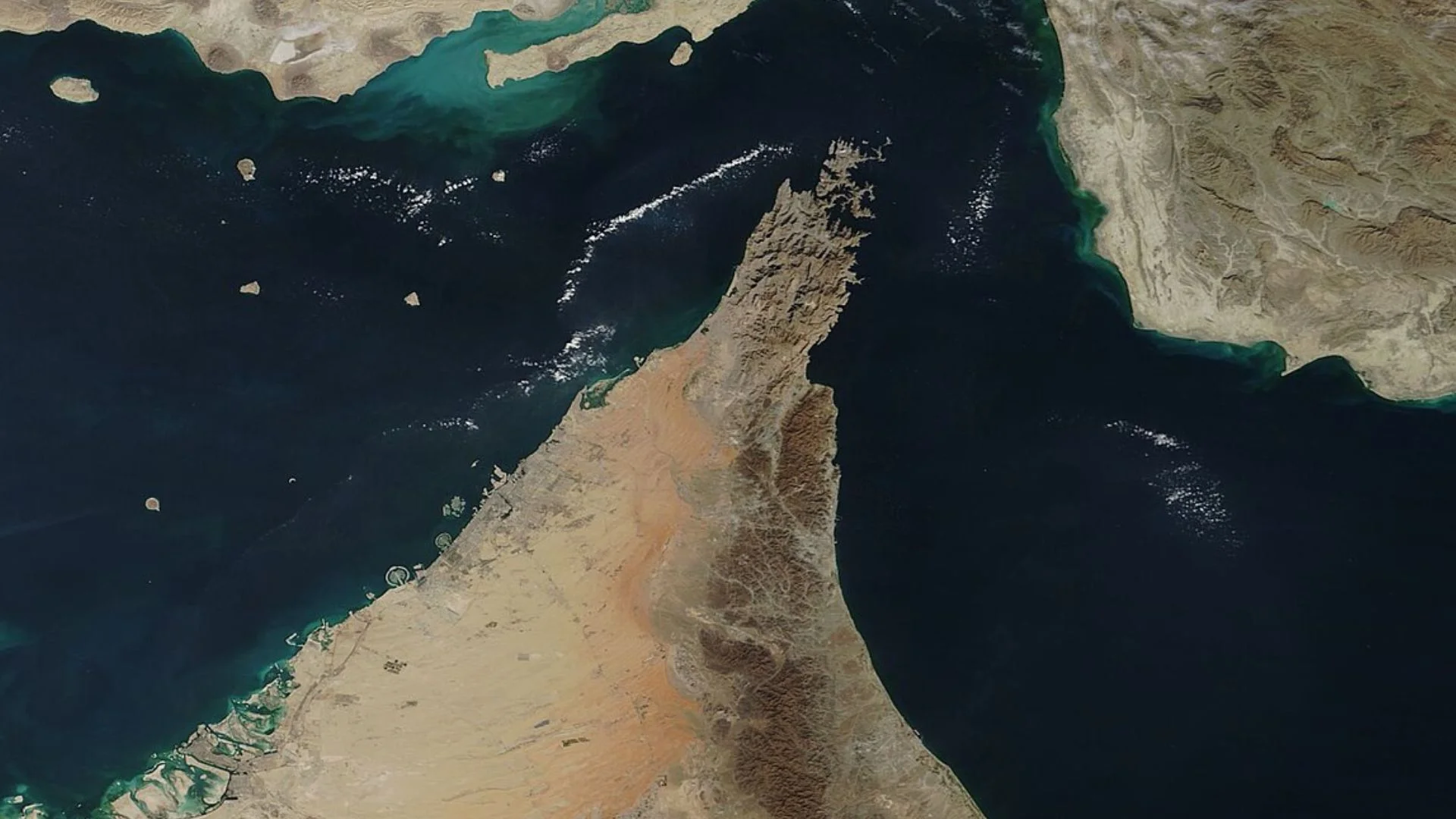
The situation around the Strait of Hormuz has taken a sharp turn, with rising tensions, mixed signals, and growing uncertainty shaping the latest developments between the US and Iran.
At the center of the crisis is a clear warning from Iran’s leadership. Iran’s parliamentary speaker, Mohammad Bagher Ghalibaf, has said that the Strait will not remain open if the US continues its naval blockade of Iranian ports. His statement adds pressure to an already fragile ceasefire and highlights the risk of disruption in one of the world’s most vital oil routes.
On the other side, Donald Trump has maintained a firm stance. He said the blockade will continue until what he calls a 100% complete deal with Iran is reached. At the same time, he described the Strait as open and ready for business, creating a clear contradiction between words and actions.
READ ALSO: China Rocket Engine Seabed Test at 200m Shows Underwater Missile Launch Possible
This contradiction is not limited to Washington. Tehran’s messaging has also shifted. Earlier, Iran’s foreign minister announced that the Strait would be fully open to commercial vessels during the ceasefire period.
However, this statement was later clarified. Iranian officials stressed that ships must follow routes designated and controlled by Iran, suggesting that access may not be entirely unrestricted.
Despite the confusion, real-world activity offers some clarity. Data from the maritime tracking platform MarineTraffic shows that several vessels, including oil tankers and chemical carriers, are currently moving through the Strait. This indicates that while tensions remain high, the waterway is not fully closed.
The uncertainty has already affected global markets. Oil prices fell nearly 10% after Iran signaled that the Strait of Hormuz would remain open during the ceasefire.
WATCH ALSO: Humanoid robot folds towel autonomously after observing human
However, the longer-term impact could be different. Continued instability may push prices higher if shipping risks rise or the Strait faces another partial disruption.
Meanwhile, diplomatic efforts are ongoing but far from settled. President Trump has expressed strong confidence in a quick deal. He suggested that Iran has agreed to everything, including giving up its stockpile of enriched uranium and sending it to the US.
Iran has firmly rejected this claim. Officials in Tehran stated that such issues were never raised in negotiations. Ghalibaf went further, saying Trump made seven claims in one hour, all seven of which were false.
These conflicting narratives reflect a deeper issue: a lack of trust after decades of hostility. While the US president appears to expect a rapid agreement, Iranian leaders view the demands as major concessions that require time, political will, and careful negotiation.
Still, there is a small sign of progress. Talks are reportedly moving toward a memorandum of understanding. While not a final deal, such a document could open the door for more structured negotiations in the coming weeks.
READ ALSO: Harvard, TU Wien Unveil Racetrack Laser Producing Stable Mid‑Infrared Frequency Comb
At the same time, military and security concerns remain active in the background. The US Central Command has confirmed that its naval blockade, which began on 13 April, has already forced 21 ships to turn back toward Iran. This shows that the blockade is not just symbolic but actively shaping maritime movement in the region.
Global leaders are also paying close attention. European powers, including France and the UK, have discussed launching a mission to protect freedom of navigation in the Strait. The proposed operation would be defensive in nature, aimed at ensuring safe passage for international shipping.
From Asia, Xi Jinping has also entered the conversation indirectly. According to Trump, Xi is very happy that the Strait is open or reopening. This is significant because China depends heavily on oil shipments passing through this route. Nearly 38% of its oil imports travel via the Strait, making stability there a major priority for Beijing.
Within the Gulf region, concerns remain equally strong. Former Qatari intelligence official Nawaf Al-Thani emphasized the need for full freedom of navigation. He noted that while the ceasefire is welcome, Gulf nations have not been directly involved in negotiations, even though they are deeply affected by the outcome.
WATCH ALSO: China showcases new 40,000-ton amphibious assault ship Sichuan
Adding to the shifting landscape, Iran has partially reopened its airspace after weeks of closure following US-Israeli strikes that began on 28 February. International flights have resumed, especially over eastern Iran, signaling a cautious return to normal activity.
However, the broader picture remains uncertain. The mix of military pressure, diplomatic talks, and conflicting public statements has created a complex and unstable situation.
However, the Strait of Hormuz remains open but not without conditions, risks, and rising tension. Whether it stays that way depends on what happens next in the delicate and high-stakes negotiations between Washington and Tehran.