Scientists have developed a new method to detect and quantify rare earths in plants without harming them.
This method could help turn certain plants into natural miners, offering a cleaner and more sustainable way to gather materials that power modern technology.
Rare-earth elements are widely used in everyday technologies. They are found in mobile phones, electric vehicle motors, wind turbines, and other advanced systems.
Although these elements exist in many parts of the world, they are rarely found in high concentrations. This makes extraction difficult and often expensive.
READ ALSO: China’s Type 076 ‘Sichuan’ Drone Carrier Begins Historic Sea Trials
At present, countries such as the US rely heavily on imported rare-earth materials. This dependence has increased interest in finding local and more sustainable sources. One possible solution lies in plants.
“Rare-earth metals are essential for many technologies,” says Colleen Doherty, one of the lead researchers. “These elements are not truly rare, but they are not commonly found in concentrated forms in nature.”
Doherty is an associate professor at North Carolina State University. Her research focuses on understanding how plants interact with their environment at a molecular level.
Some plant species can absorb rare-earth elements from soil. These elements are then stored in plant tissues. This process is known as plant-based mining or phytomining. It offers a way to collect metals from low-quality or polluted soils.
WATCH ALSO: Humanoid robot folds towel autonomously after observing human
However, there has been a major limitation. Scientists have not had an easy way to measure how much metal a plant contains without destroying it during testing.
The research team used fluorescence spectroscopy, a technique that studies how substances interact with light. Certain materials absorb light energy and then release it at a different wavelength. By observing this process, scientists can identify the substance and measure its quantity.
Plants, however, naturally emit light signals across many wavelengths. This natural emission makes it difficult to detect signals from rare-earth elements within the plant.
To overcome this issue, the researchers focused on a specific element: dysprosium.
Dysprosium is important for several modern technologies, including electric motors and renewable energy systems. It continues to emit light for a longer time after excitation.
“We selected dysprosium because its light emission lasts longer than the plant’s natural fluorescence,” says Michael Kudenov, co-author of the study. “This helps us clearly identify its signal.”
READ ALSO: China Rocket Engine Seabed Test at 200m Shows Underwater Missile Launch Possible
This delayed emission allows researchers to separate the metal’s signal from the plant’s background light. As a result, they can measure the concentration more accurately.
The researchers also introduced a chemical step to improve detection. They treated the plant tissue with sodium tungstate. This compound reacts with dysprosium, increasing the brightness of the emitted light.
“The reaction makes the signal stronger and easier to measure,” Doherty explains. “Since the effect is predictable, we can still calculate the actual concentration.”
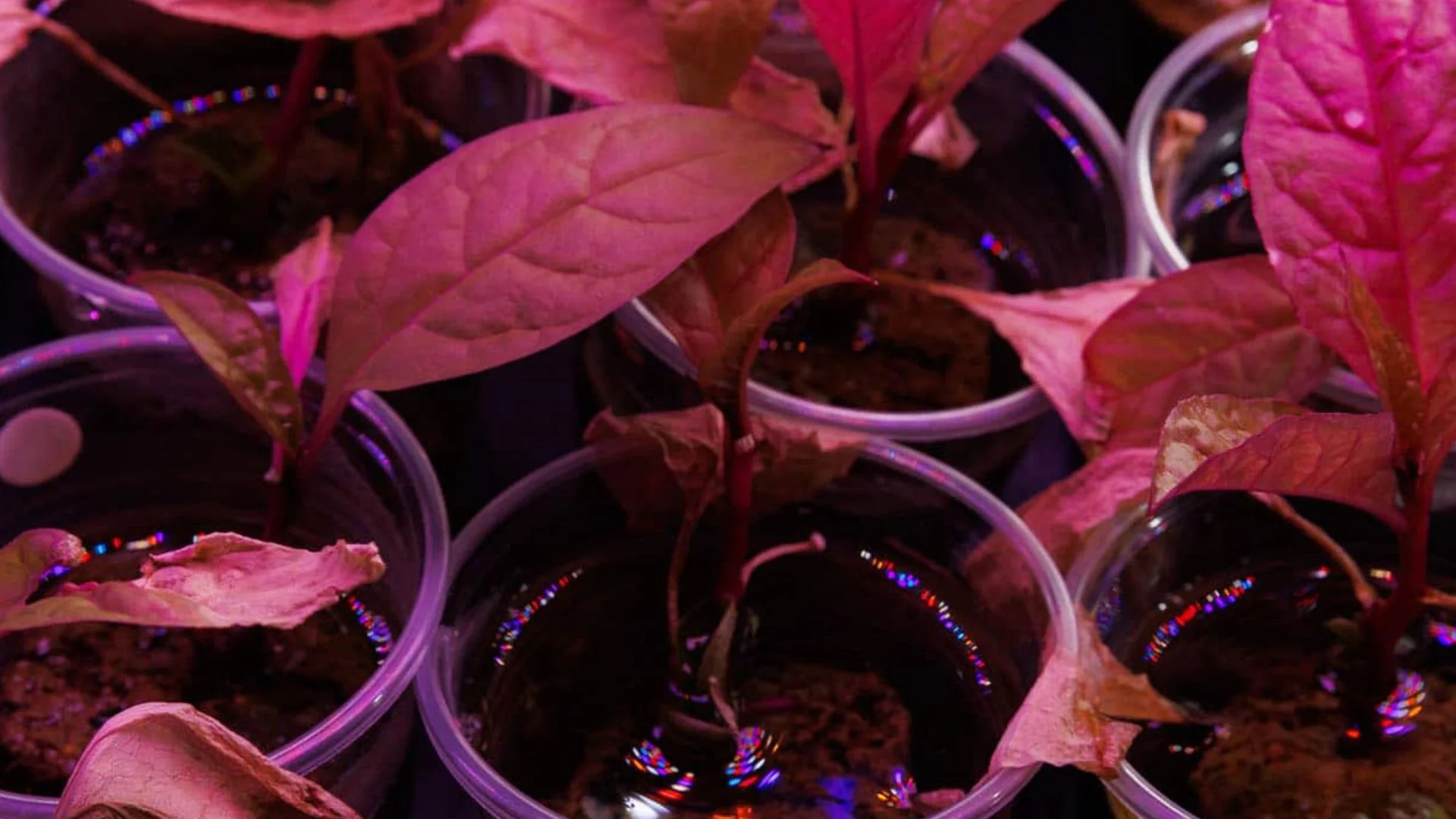
The team tested their method using two species of pokeweed plants. These plants are known for their ability to absorb metals from their surroundings.
The plants were grown in a controlled environment containing dysprosium. After absorption, the researchers exposed them to deep ultraviolet light. They then measured the light emitted by the plant tissues.
The results confirmed that the method works effectively. The scientists were able to detect dysprosium and measure its concentration without harming the plants.
An important advantage of this method is that it allows repeated testing. The same plant can be observed over time to track changes in metal concentration.
WATCH ALSO: China showcases new 40,000-ton amphibious assault ship Sichuan
“This helps us determine the best time to harvest the plant,” Doherty says. “We can identify when the metal content is at its highest.”
The researchers believe that the method can be extended to other rare-earth elements. Early tests suggest that it will work for terbium and europium. With small adjustments, it may also be suitable for erbium and neodymium. These elements are also used in electronics and clean energy technologies.
The study is part of a broader research effort. The goal is to develop new ways to meet the growing demand for rare-earth materials while reducing environmental impact.
Polluted sites such as fly ash ponds and areas affected by acid mine drainage often contain small amounts of rare-earth elements. These locations are difficult to clean and may pose environmental risks.
Plant-based mining offers a combined solution. Plants can help remove contaminants from the soil while collecting valuable metals. This approach may reduce cleanup costs and create additional economic value.
“We believe this method can support both industry and environmental recovery,” Doherty says.
The research received support from the Defense Advanced Research Projects Agency under its Young Investigator Award program. The findings are published in the journal Plant Direct under the title “Detection and Quantification of Dysprosium in Plant Tissues.”
READ ALSO: Harvard, TU Wien Unveil Racetrack Laser Producing Stable Mid‑Infrared Frequency Comb
The study was led by Edmaritz Hernández-Pagán, a doctoral student at NC State. The research team also included Kanjana Laosuntisuk, Cyprian Rajabu, Anisa Guidira, Allison Haynes, Alex Harris, and David Buitrago.
This development represents a step forward in the use of biological systems for resource recovery. Instead of relying only on traditional mining, scientists are exploring natural processes that are less damaging to the environment.
Further research is needed to expand the method to more elements and plant species. However, the current findings show strong potential.
If scaled up, plant-based mining could help stabilize the supply of rare-earth materials. It may also reduce the environmental impact associated with conventional extraction methods.
The study highlights how simple biological processes can offer practical solutions to complex industrial challenges.