China’s state-owned energy and chemical giant Sinopec announced that its research teams have achieved mass production of wet-process T1000-grade carbon fiber.
The work was completed by Sinopec Shanghai Petrochemical Co. and the Shanghai Research Institute of Petrochemical Technology.
The new material is designed for industries that require strong and lightweight components. These include aerospace, advanced manufacturing, embodied intelligence systems, and the rapidly growing low-altitude economy.
The product belongs to the high-performance category of carbon fiber. This material is known for combining low weight with exceptional strength and durability.
Carbon fiber is often called the black gold of modern manufacturing. It plays a critical role in aircraft, spacecraft, wind turbines, transportation equipment, and sporting goods.
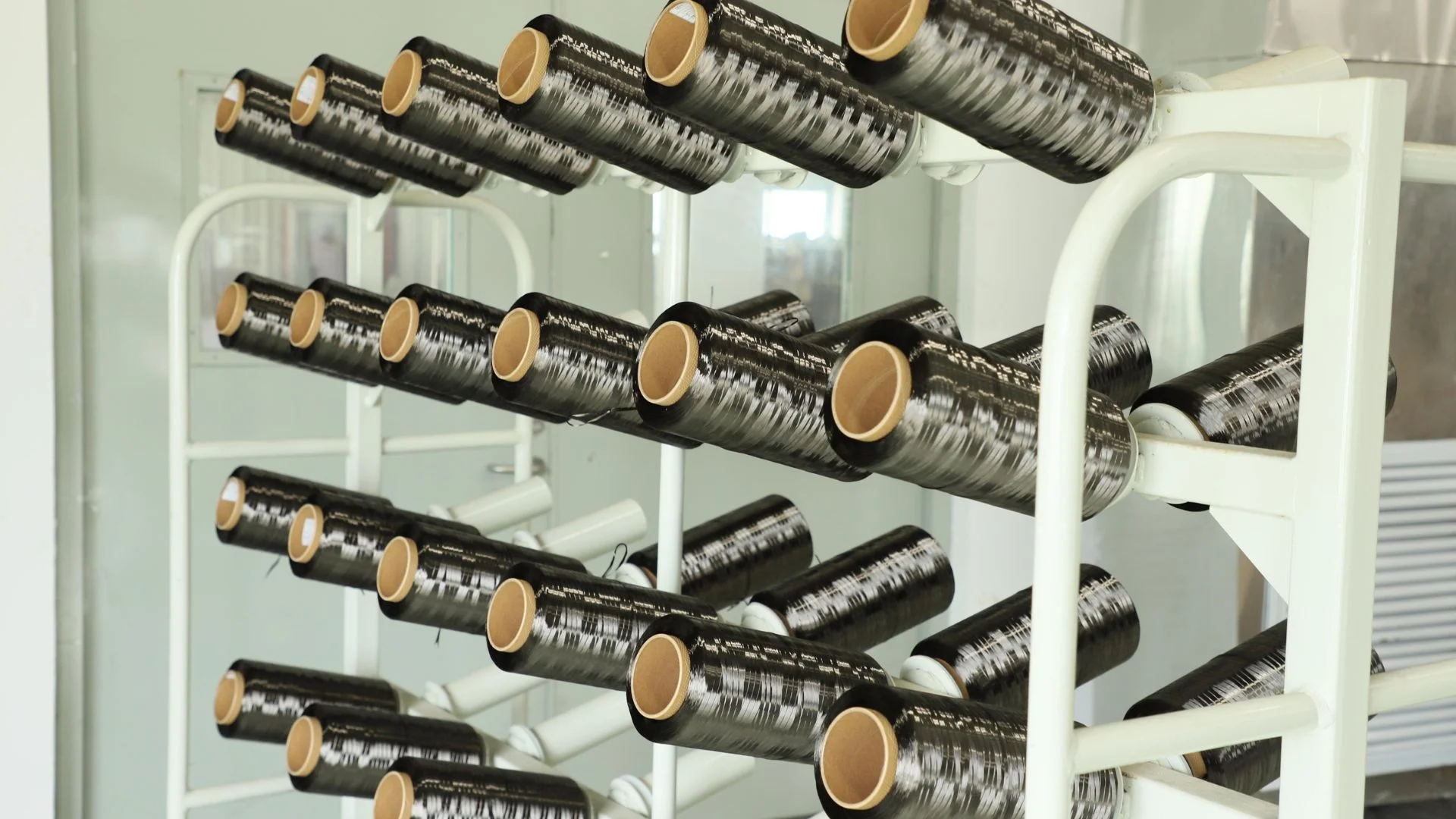
The newly produced fiber is a 12K small-tow carbon fiber. This means each bundle contains 12,000 individual filaments.
READ ALSO: Honda Completes Successful Trial of Reusable Rocket Technology
Each filament is extremely thin, measuring roughly one-tenth the diameter of a human hair. Despite its small size, the material offers very high mechanical strength.
According to Sinopec, the carbon fiber achieves a tensile strength exceeding 6.5 gigapascals. It also delivers a tensile modulus above 300 gigapascals.
Industry reports stated that a single tow of the material is strong enough to pull a medium-sized truck weighing around 10 tons. Such performance makes it suitable for demanding engineering applications where strength and weight are critical factors.
Why T1000 Carbon Fiber Matters
Carbon fiber has become one of the most important materials for modern engineering. It weighs less than one-fourth as much as steel while offering seven to nine times greater strength.
The material also resists corrosion and fatigue. These characteristics help manufacturers build lighter products that last longer and consume less energy.
Carbon fiber products are generally classified by tow size and strength grade. The letter “K” indicates the number of filaments in a bundle, while the letter “T” refers to the strength level of the material.
Small-tow carbon fibers typically contain 24,000 filaments or fewer. They are known for their consistency, precision, and suitability for high-end applications.
READ ALSO: New Begonia Species Found in Guangxi
These fibers are commonly used in aircraft structures, satellites, high-performance vehicles, and specialized industrial equipment. Their uniform quality helps manufacturers meet strict engineering requirements.
Large-tow carbon fibers contain significantly more filaments per bundle. They are easier to produce in large volumes and are often used in sectors such as wind power, energy storage, and infrastructure projects.
Experts say the mass production of T1000-grade small-tow carbon fiber will help reduce equipment weight while improving durability and performance. Lighter materials can increase efficiency and extend the operational range of aircraft and other advanced systems.
Industry analyst Wu Chenhui said stable domestic supplies of advanced materials provide a stronger foundation for technological innovation. He noted that reliable access to key materials supports the development of strategic industries and strengthens long-term competitiveness.
China’s Push for Advanced Materials Gains Speed
The latest achievement comes as China’s carbon fiber industry shifts its focus from production volume to higher performance and broader product coverage. Companies are also working to strengthen domestic supply chains for critical materials.
Sinopec stated that it now has the capability to produce nearly 20 different carbon fiber products. Its portfolio includes both general-purpose and high-performance grades used across multiple industries.
READ ALSO: Rohde & Schwarz first to achieve GCF approval for 5G FR2 RRM standalone mode conformance test cases
In May, the first phase of Sinopec Shanghai Petrochemical’s 30,000-ton large-tow carbon fiber project entered operation. The project includes two production lines, each designed to produce more than 3,000 tons annually.
The facility also established China’s largest single-line production capacity for 48K large-tow carbon fiber. This expansion supports growing demand from the renewable energy and industrial manufacturing sectors.
China has also made progress in even stronger carbon fiber grades. In March, China National Building Material Group introduced the SYT80, a domestically developed T1200-grade ultra-high-strength carbon fiber.
The company reported that the material delivers an engineering tensile strength above 8,000 megapascals. State media described it as the world’s first T1200-grade carbon fiber product to reach mass production.
WATCH ALSO: Lightweight advanced materials are transforming aerospace innovations
Another major milestone came in November 2025. A carbon fiber production base in Datong, Shanxi Province, achieved stable mass production of T1000-grade carbon fiber after completing a 200-ton-per-year production line in just 17 months.
These developments highlight China’s growing capabilities in advanced materials manufacturing. As demand rises across aerospace, robotics, clean energy, and next-generation transportation, high-performance carbon fiber is expected to become an important building block for future industrial growth.
With domestic production expanding across multiple performance grades, China is strengthening its position in one of the world’s most strategic materials sectors. The continued development of advanced carbon fiber technologies is set to support new products, stronger supply chains, and greater competitiveness in global high-tech industries.