Swedish wave energy company CorPower Ocean has reached an important milestone after its C4 wave energy converter became the first device of its kind to receive full certification from DNV.
The approval marks a significant step for the wave energy industry, which has spent decades trying to prove that ocean power can reliably produce electricity at a commercial scale. The certification also strengthens investor confidence as large renewable energy projects often require independent verification before securing funding.
The certification process lasted seven years and covered every major stage of the product’s development. Engineers assessed the buoy’s design, manufacturing process, structural strength, fatigue performance, and ability to survive severe weather at sea. Passing these tests confirms that the system meets internationally recognized safety and engineering standards.
CorPower Ocean co-founder and Chief Executive Officer Patrik Möller said the certification represents an important moment for both the company and the wider industry.
He said the achievement moves wave energy from a promising concept to a technology that investors and project developers can trust. Möller also praised the engineering team for becoming the first to reach this level of certification.
How System Operates
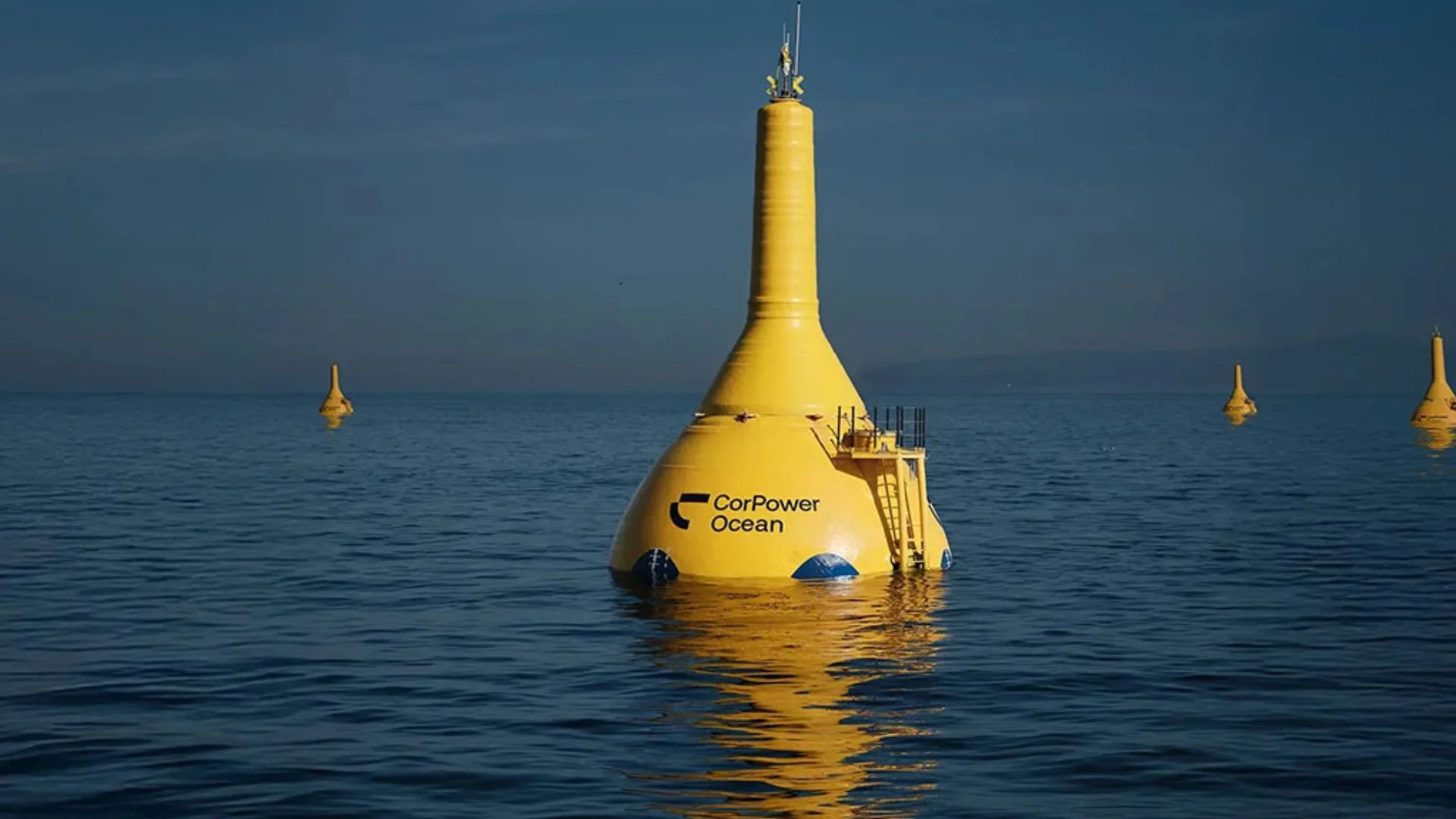
The C4 wave energy converter is a large teardrop-shaped buoy measuring about 9 meters wide and 18 meters tall. It weighs around 100 tonnes and remains connected to the seabed through a tensioned cable that controls its movement. As waves lift the buoy, the cable pulls it back down, creating continuous motion that generates electricity.
READ ALSO: Hidden Space Junk in High-Traffic Orbit Is a ‘Potential Minefield’ for Satellites
Instead of relying on one large moving part, the system uses several smaller wheels linked to a gearbox. This design spreads mechanical stress across multiple components, helping reduce wear over time. The rotating system powers a generator, and the electricity travels to shore through underwater cables.
One of the buoy’s most important features is a technology known as WaveSpring. The company compares it to the way the human heart works because it adjusts its movement to match changing wave conditions. Rather than resisting the waves, the system uses their natural motion to increase energy capture when conditions are favorable.
During smaller waves, the WaveSpring system amplifies the buoy’s movement. A one-meter wave can produce approximately three meters of controlled motion, allowing the system to collect more energy than a conventional floating device. This improves electricity generation even when sea conditions remain relatively calm.
The technology also protects the buoy during rough weather. When powerful storms arrive, the system reduces resistance and allows the buoy to move more freely with the waves instead of fighting against them. This approach lowers stress on the structure and helps prevent damage.
Wave Energy Powers Portugal’s Grid
The certified prototype has been operating off the coast of Aguçadoura in northern Portugal since 2023. It sits about four kilometers offshore in waters roughly 45 meters deep and has completed multiple deployment cycles. During that period, it generated electricity and supplied power to Portugal’s national grid.
The buoy also faced demanding weather conditions in the Atlantic Ocean. According to Portugal’s Hydrographic Institute, it survived waves measuring up to 18.5 meters during Storm Domingos in November 2023 without suffering structural damage. Its successful performance during these extreme conditions played an important role in securing DNV certification.
DNV Project Manager Claudio Bittencourt Ferreira said the certification followed detailed technical cooperation with CorPower Ocean.
He noted that the organization has supported the marine energy sector for more than two decades and understands the engineering challenges these systems face. Ferreira added that the company demonstrated strong commitment throughout the certification process.
Commercial Plans Ahead
CorPower Ocean now plans to deploy its first commercial wave energy arrays in Portugal and Scotland. The company intends to group multiple C4 buoys into larger systems called CorPacks, allowing many devices to generate electricity together. Each installation is expected to deliver hundreds of megawatts of generating capacity, enough to supply electricity to hundreds of thousands of homes.
READ ALSO: Dead Coral Reef Off Benin Found Alive After Decades, Confirming Rare Deep-Sea Ecosystem
Unlike solar panels that stop producing power at night or wind turbines that depend on changing wind speeds, ocean waves remain relatively consistent throughout the day. Waves travel across long distances after forming over large weather systems, creating a more predictable energy source. This steady production can help balance electricity grids and reduce dependence on large-scale energy storage.
Wave energy has attracted interest for decades because oceans contain vast amounts of renewable energy. However, harsh marine environments have made it difficult for equipment to survive long enough to become commercially viable. Independent certification helps address these concerns by proving that the technology meets strict performance and safety requirements.
The company expects its first commercial projects to become operational between 2027 and 2029. Their performance will provide an important test of whether wave farms can operate alongside wind and solar as reliable sources of renewable electricity. However, the projects may accelerate wider investment in ocean energy and expand the role of wave power in the global clean energy transition.