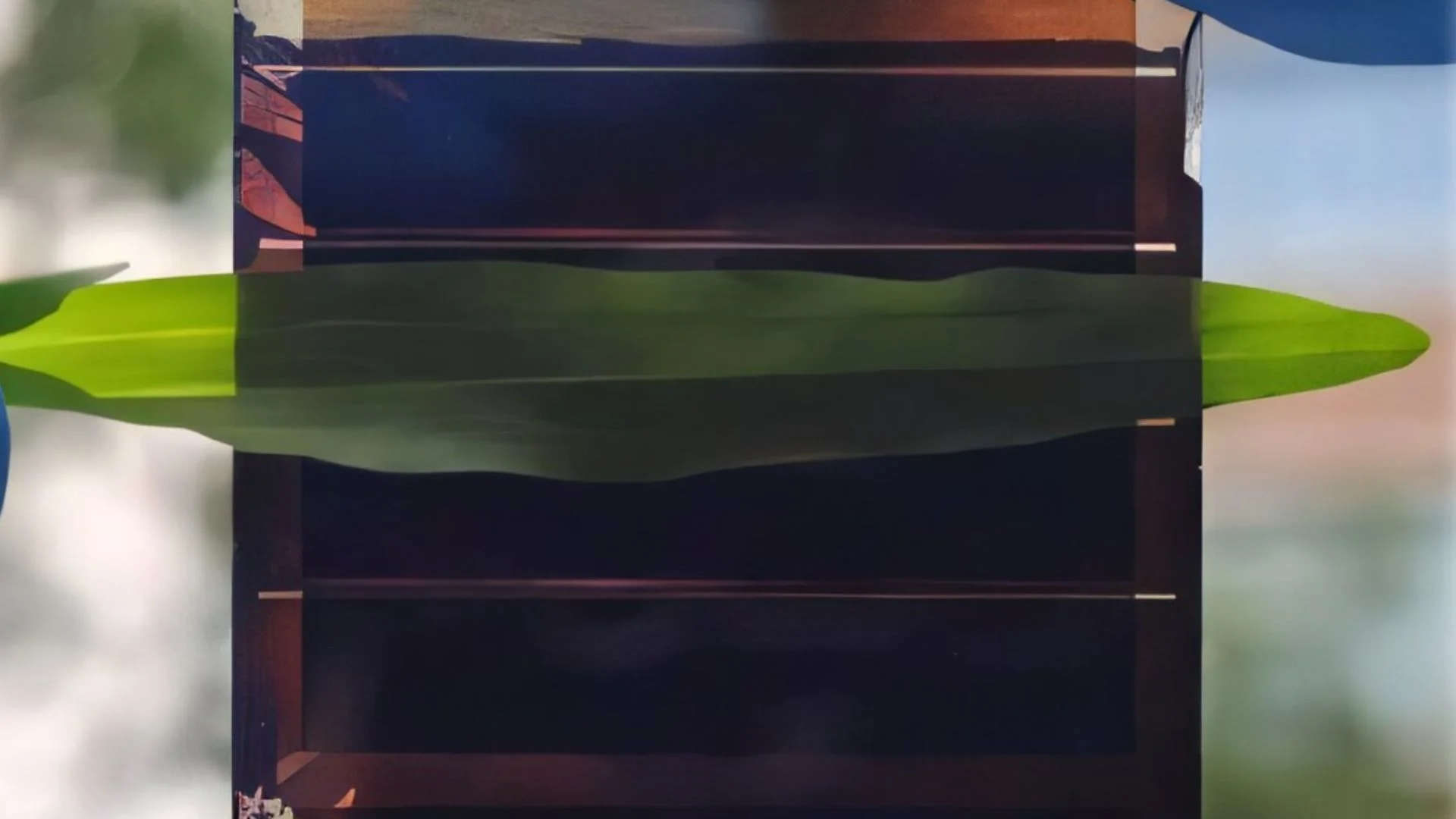
A research team at The Hong Kong Polytechnic University (PolyU) has developed a new generation of perovskite-organic tandem solar cells (POTSCs) that continue to perform efficiently even after prolonged exposure to shading.
The devices retained 97% of their original power conversion efficiency after operating under reverse-bias conditions for 2,000 hours. The findings mark an important advance in improving the durability of thin-film solar technologies.
Solar panels often experience temporary shading from trees, nearby buildings, clouds, birds, or other objects during daily operation. While conventional silicon panels generally tolerate such conditions, many thin-film solar technologies are more vulnerable to reverse-bias stress-induced damage. This challenge has limited the long-term reliability of lightweight and flexible solar modules.
Thin-film solar technologies include cadmium telluride, copper indium gallium selenide, perovskite, and organic solar cells. These technologies are attractive because they are lighter than traditional silicon panels and can be manufactured on flexible materials. Their lower production costs also make them promising for future renewable energy applications.
Reverse Bias Challenge
When part of a solar panel becomes shaded, the affected area can develop negative voltage, also known as reverse bias. This unwanted electrical condition reduces power generation and may permanently damage solar cells over time. Improving resistance to reverse bias has therefore become a major goal for researchers working on thin-film solar technology.
The PolyU research team focused on understanding why organic solar cells become damaged under reverse-bias conditions.
READ ALSO: Tohoku Scientists Create a Super Silk That Stays Strong Even After Getting Wet
They found that microscopic defects called deep trap states play a major role in reducing performance. These defects trap electrical charges that should normally move through the solar cell to generate electricity.
The researchers reduced these defects by limiting isolated acceptor clusters inside the active layer of the organic solar cells. The active layer is the section where electricity is generated through interactions between two different materials. Reducing these defects significantly improved both stability and durability.
The improved organic solar cells achieved an irreversible breakdown voltage exceeding minus 35 volts. This means the cells remain protected from permanent damage as long as reverse voltage stays below that level. The result establishes a much higher level of reverse-bias resistance than earlier organic solar cell designs.
Solar Cells That Endure Shade
The research team also applied these improvements to perovskite-organic tandem solar cells. Tandem solar cells combine two different solar technologies into a single device to capture more sunlight and improve efficiency. In this design, the organic layer also helped protect the sensitive perovskite layer during reverse-bias conditions.
The researchers found that suppressing reverse tunneling played an important role in protecting the devices. Reverse tunneling is a process where electrical current flows in the wrong direction when shading occurs, creating harmful negative voltage. Preventing this effect reduced damage inside the tandem solar cells.
Testing showed the tandem devices retained more than 90% of their initial efficiency even after exposure to an extreme reverse bias of minus 40 volts. Such performance exceeds that reported for existing thin-film solar technologies under similar stress conditions. The results demonstrate strong resistance against one of the industry’s most challenging operating conditions.
Long-term durability tests produced similarly encouraging results. After operating continuously at minus 20 volts for 12 hours, the solar cells still retained 90% of their original efficiency. After continuous operation at minus 4.5 volts for 2,000 hours, they maintained as much as 97% of their starting performance.
Efficiency Keeps Rising
Beyond durability, the new tandem solar cells also delivered strong power conversion efficiency. The latest devices achieved efficiency above 26%, showing that improved stability did not come at the cost of electrical performance. High efficiency and long-term durability are both essential for commercial deployment.
The research builds on an earlier study by the same team published in 2025. In that work, the researchers reported perovskite-organic tandem solar cells with a certified power conversion efficiency of 25.1% and measured efficiency of 25.9%. The earlier design also demonstrated improved stability through bottom-contact modulation.
Professor Li Gang, Chair Professor of Energy Conversion Technology in PolyU’s Department of Electrical and Electronic Engineering, said the research advances understanding of both performance and durability in organic and perovskite solar technologies.
He said the team achieved important progress in improving stability under demanding reverse-bias conditions. He added that the findings provide valuable guidance for designing stronger and longer-lasting solar devices.
The latest study also demonstrated the technology in scalable minimodules rather than only laboratory-scale devices. Larger minimodules offer a better indication of how the technology may perform in practical solar installations. This makes the research more relevant for future commercial manufacturing.
READ ALSO: MIT Develops Smarter 3D-Printed Concrete Design to Cut Material Waste, Emissions
Path Toward Deployment
The study was published in Nature Materials under the title Perovskite–organic tandem solar cells with superior reverse-bias stability.
Dr. Huang Jiaming, a postdoctoral research fellow, and Han Yu, a Ph.D. student at PolyU, served as the first authors of the related studies. Dr. Ren Zhiwei, research assistant professor at the university, was the co-corresponding author of both publications.
Researchers believe the findings provide a clearer understanding of how electrical charges move inside organic solar cells during reverse-bias conditions. This knowledge can help engineers design future solar modules that remain reliable under everyday operating environments. Better durability may also reduce maintenance costs and improve the lifetime of solar installations.
As countries continue expanding renewable energy generation, demand is growing for solar panels that combine high efficiency with long operational life.
Lightweight and flexible thin-film technologies are expected to play an important role in buildings, vehicles, and portable energy systems. Improved resistance to shading damage may help accelerate their adoption in a wider range of real-world applications.