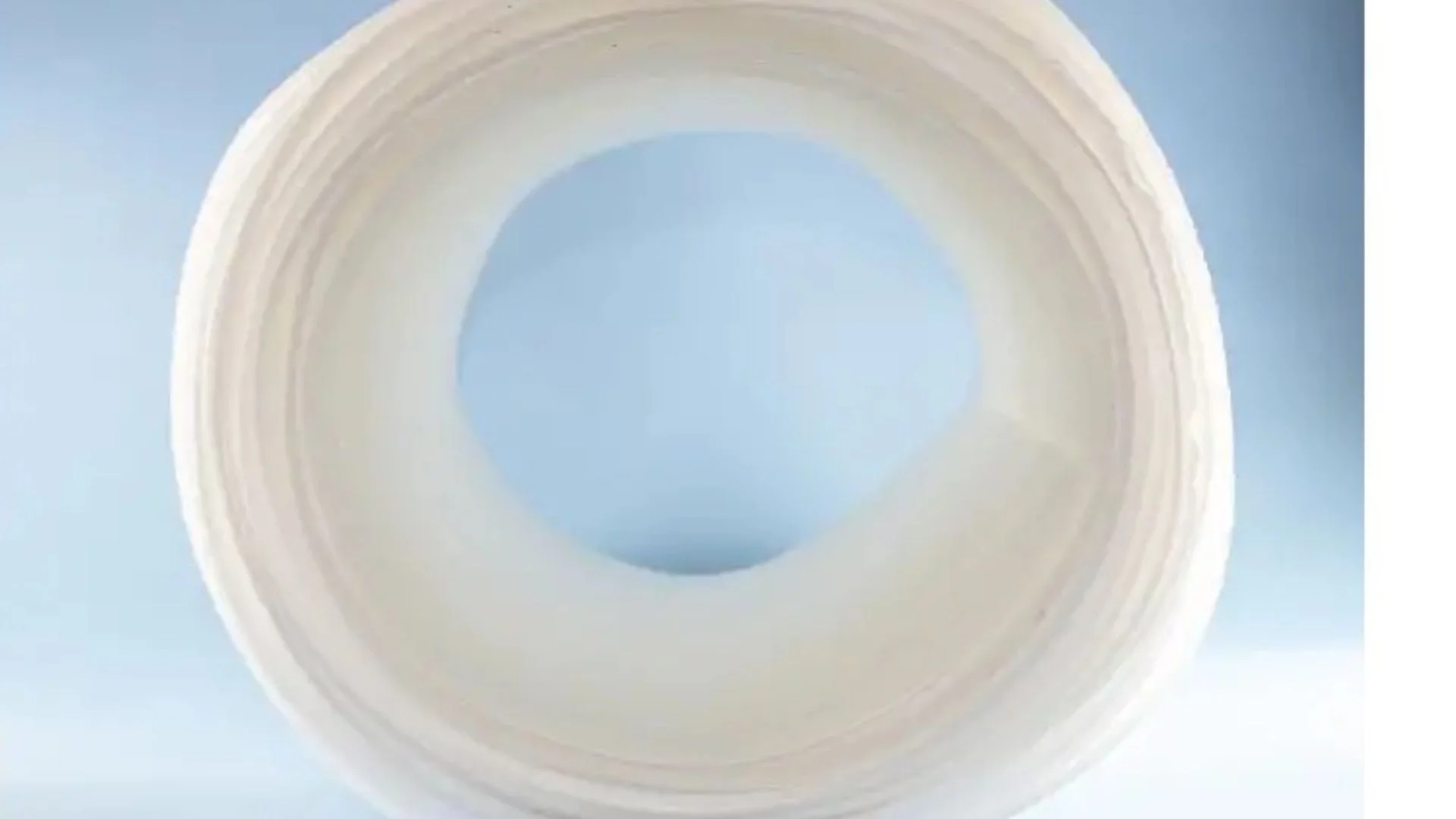
A new kind of foam made from bio-based materials is offering industries a simple way to reduce their environmental impact without changing how they manufacture products.
Developed under the Fraunhofer Cluster of Excellence Circular Plastics Economy CCPE, this innovation could help companies shift away from fossil-based plastics while keeping costs and operations steady.
The material, known as polybutylene succinate (PBS) foam, has been created as part of the xPBS project. It is designed to replace conventional polyethylene (PE) foams that are widely used in packaging, construction, and transport protection. These sectors rely heavily on plastic foams, and growing environmental regulations are pushing companies to find cleaner alternatives.
What makes this new foam appealing is its compatibility with existing production systems. Companies can use it on their current extrusion lines without investing in new machinery. This ‘drop-in’ feature removes a major barrier that often slows down the adoption of sustainable materials.
READ ALSO: Mosquito Reaches Iceland, Signaling a Hidden Ecological Shift Across the Arctic
“Our goal was to develop a material solution that can be used directly in industry,” says Anja Dennard from Fraunhofer Institute for Chemical Technology ICT. She adds that producing PBS foams with properties similar to traditional materials at an industrial scale marks an important step toward real-world use.
The development process involved close collaboration across multiple institutes within the Fraunhofer network. While the Fraunhofer Institute for Chemical Technology ICT led the formulation and scaling of the foam production process, the Fraunhofer Institute for Applied Polymer Research IAP focused on designing and fine-tuning the polymer itself.
This combined effort ensured that the final material performs well not just in laboratory tests but also in real manufacturing environments. The team worked across the entire value chain from raw material development to pilot-scale production to ensure industrial readiness.
The result is a foam that matches the density and processing performance of commonly used low-density polyethylene (LDPE) foams. This makes it suitable for a wide range of uses, including protective packaging and insulation materials.
WATCH ALSO: India recently tested carried out the successful launch of Intermediate Range Agni-Prime Missile
At the same time, PBS offers clear environmental advantages. It is bio-based, meaning it is derived from renewable sources rather than fossil fuels. It is also biodegradable and recyclable because of its thermoplastic nature. This combination helps companies reduce carbon emissions while meeting stricter sustainability rules.
For businesses, this balance between performance and sustainability is critical. Many green alternatives struggle to match the durability or cost-effectiveness of traditional plastics. But the xPBS material aims to remove that trade-off, offering both environmental and practical benefits.
The project has already reached a level of maturity that allows companies to move quickly from testing to full-scale use. This reduces the risks typically associated with adopting new materials. It also gives companies a head start in meeting future regulations related to recyclability and carbon reduction.
Beyond being a technical solution, xPBS is also emerging as a strategic tool. Companies that adopt such materials early can strengthen their position in a market that is increasingly focused on sustainability. As demand for eco-friendly products grows, having a ready-to-use alternative can offer a clear competitive edge.
READ ALSO: China Fires Back-to-Back Rockets in 24 Hours, Scaling Space Internet Power Play
Looking ahead, the research team is expanding the technology into new areas. A follow-up project, xPBS-food, launched in January 2026, focuses on food packaging. This sector has strict safety and performance requirements, making it one of the most challenging areas for new materials.
The new project brings together several institutes, including the Fraunhofer Institute for Structural Durability and System Reliability LBF and the Fraunhofer Institute for Process Engineering and Packaging IVV. Their goal is to develop a food-safe, single-material foam that meets both functional and sensory standards.
If successful, this can open up a major new market for PBS-based foams. Food packaging is one of the largest and fastest-growing sectors of the plastics industry, and sustainable alternatives are in high demand.
WATCH ALSO: Buried Dirt-Powered Source Turns Soil Microbes Into Energy for Smart Sensors
The xPBS project shows that eco-friendly materials are no longer limited to niche applications. With the right approach, they can fit into existing systems and meet industrial needs at scale.
As industries face increasing pressure to reduce their environmental footprint, solutions like PBS foam offer a practical path forward, one that does not require starting from scratch.