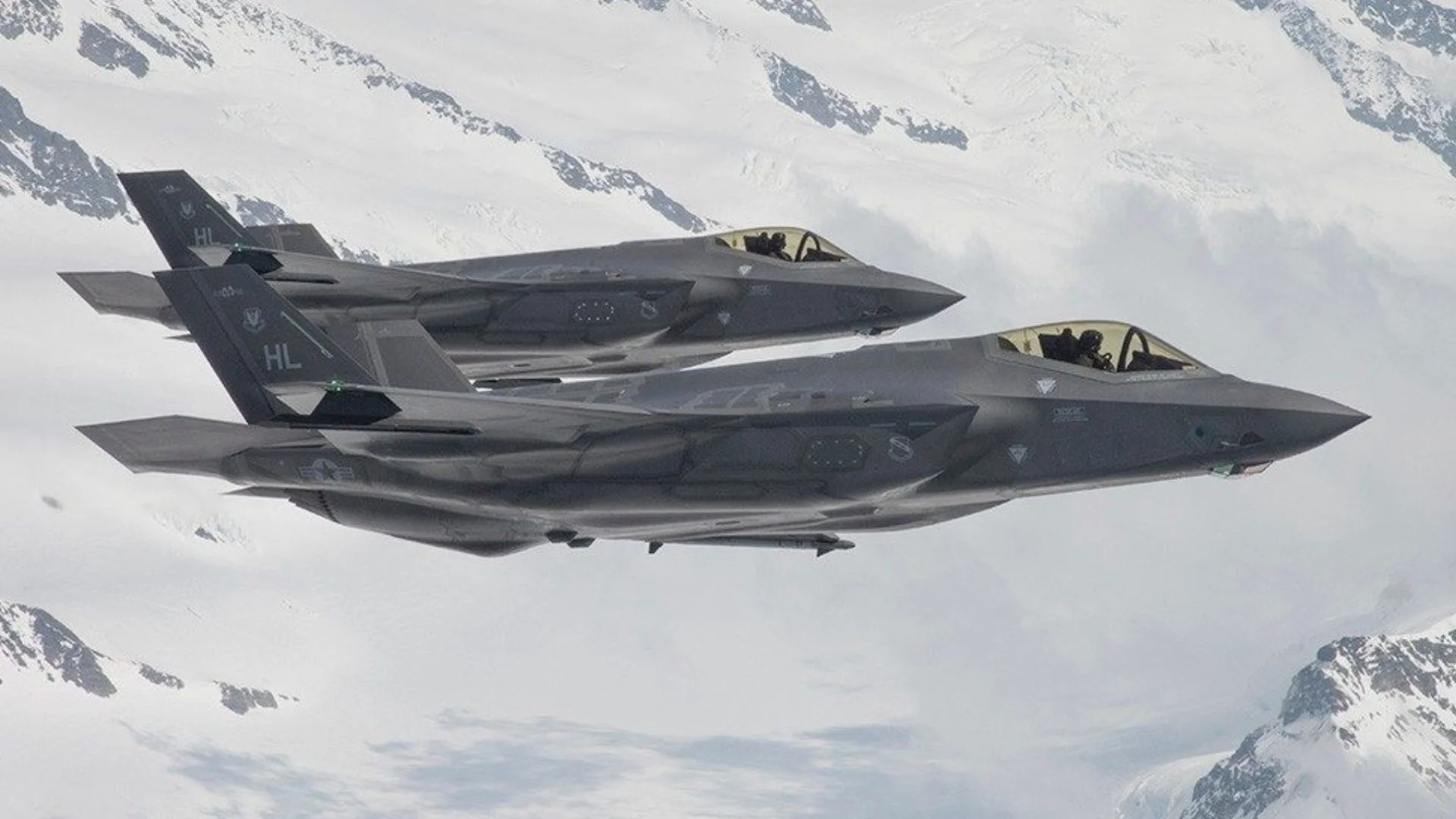
The US Marine Corps is advancing a new air combat strategy centered on using the F-35 Lightning II as a quarterback to command and coordinate an expanding fleet of drones in battle.
This concept is no longer just a theory. Marine officials say real progress is being made, especially with the development of Collaborative Combat Aircraft (CCA). These are uncrewed drones designed to fly alongside manned jets, expanding their reach and capabilities.
F-35 Quarterback Role Drives Drone Integration
The Marine Corps shared updates on this effort during the Sea-Air-Space 2026 exhibition. Officials described how the service is building a system in which F-35 pilots guide drones that serve as force multipliers in complex missions.
Marine Col. Dan Weber said the program is moving forward as planned. “We are meeting our testing goals. It is on track,” he explained. He added that strong funding and partnerships are helping the effort stay stable and focused.
READ ALSO: US Navy’s Long-Stalled 6th-Gen F/A-XX Stealth Fighter Heads Toward August Call
The current drone effort falls under the Marine Air-Ground Task Force (MAGTF) Uncrewed Expeditionary Tactical Aircraft (MUX TACAIR) program. This program is designed to support the Marine Corps’ core mission structure, in which air and ground forces work closely together.
Marine leaders see these drones as more than just support tools. They believe they will play a key role in how the Marines project power in the future.
Col. Thomas Bolen explained the concept clearly. “We want the F-35 to be a quarterback, with CCAs acting as enablers,” he said. “They help deliver sensing, lethality, and all the key elements needed for the mission.”
This approach allows a single F-35 pilot to control multiple drones simultaneously. These drones can perform tasks such as reconnaissance, electronic warfare, and even strike missions, reducing the risk to human pilots.
The Marine Corps is not stopping at drone integration. Officials say this manned-unmanned teaming model is just the first step toward a broader vision that includes next-generation combat aircraft.
Marine Col. Richard Rusnok emphasized the importance of this transition. “Man-unmanned teaming is one of the main things we are developing,” he said. “We are laying the foundation with our first CCA platform.”
WATCH ALSO: Two humanoid robots hold unscripted conversation for hours
That platform is the Kratos XQ-58 Valkyrie, which the Marines are adapting into their own version, the MQ-58. This drone is being developed with support from Kratos Defense & Security Solutions and Northrop Grumman.
Unlike earlier versions, the Marine Corps variant will include landing gear, allowing it to operate more flexibly. At the same time, it will retain the ability to launch with rocket assistance, giving it some independence from traditional runways.
This flexibility is important for Marine operations, which often take place in remote or contested environments where standard airbases may not be available.
The MQ-58 is expected to enter service sometime between 2026 and 2030. However, it is only the beginning. The Marines plan to introduce more advanced drones in future phases, creating a layered and evolving system of uncrewed aircraft.
The Corps is also experimenting with other platforms, including the YFQ-42A Dark Merlin developed by General Atomics. This drone is being used to test autonomy and mission systems, though testing recently paused following an accident.
At the same time, Marine leadership is beginning to consider what comes next for crewed aircraft. Lt. Gen. William Swan said the service has begun exploring the idea of a sixth-generation fighter.
“We need to think about that,” Swan said. “We are not there yet, but we are watching closely.”
READ ALSO: Solid state nuclear battery to offer 100-year longevity with low power consumption
He explained that the Marine Corps will likely follow the lead of the Navy and Air Force. The Air Force is already working on its next-generation fighter, often referred to as the F-47, while the Navy is developing its own program, the F/A-XX.
Swan suggested that any future Marine fighter would likely be similar to the Navy’s design, given the shared focus on carrier-based operations.
While the vision for the future is ambitious, much of it depends on upgrading the current F-35 fleet to the latest standard. The Marine Corps aims to field an all Block 4 version of the F-35, but this process could take up to a decade. These upgrades include major improvements in radar, sensors, and electronic warfare systems.
One of the most important additions is the new AN/APG-85 radar, along with upgrades to targeting and surveillance systems. These enhancements are essential for controlling drones effectively in combat.
However, the Block 4 program has faced delays and rising costs. There are also concerns that some new F-35s may be delivered without fully developed radar systems due to ongoing technical challenges.
Despite these issues, Marine leaders stress that the upgrades are critical. Without them, the full potential of manned-unmanned teaming cannot be realized.
Lt. Gen. Swan acknowledged the challenges with the timeline. “It may take 10 years to fully upgrade our fleet,” he said. “That will affect how quickly we move toward future systems.”
The Marine Corps’ evolving approach reflects a larger shift in modern warfare. Instead of relying only on advanced manned jets, the focus is moving toward integrated systems where humans and machines work together.
WATCH ALSO: China’s military showcases modern battlefield capabilities in new exercise
By using F-35s as command hubs for drone swarms, the Marines aim to increase their flexibility, survivability, and combat power. This approach also helps reduce risks to pilots while expanding mission options.
At the same time, this strategy creates a clear path toward future aircraft. The experience gained from operating drones alongside F-35s will shape the design and role of the next generation of fighters.
As the Navy moves forward with its F/A-XX program, the Marine Corps is watching closely. Its future decisions may depend heavily on the Navy’s choice.
However, the focus remains on building the foundation. With F-35s leading and drones expanding their reach, the Marines are setting the stage for a new era of air combat, one where teamwork between humans and machines defines success.