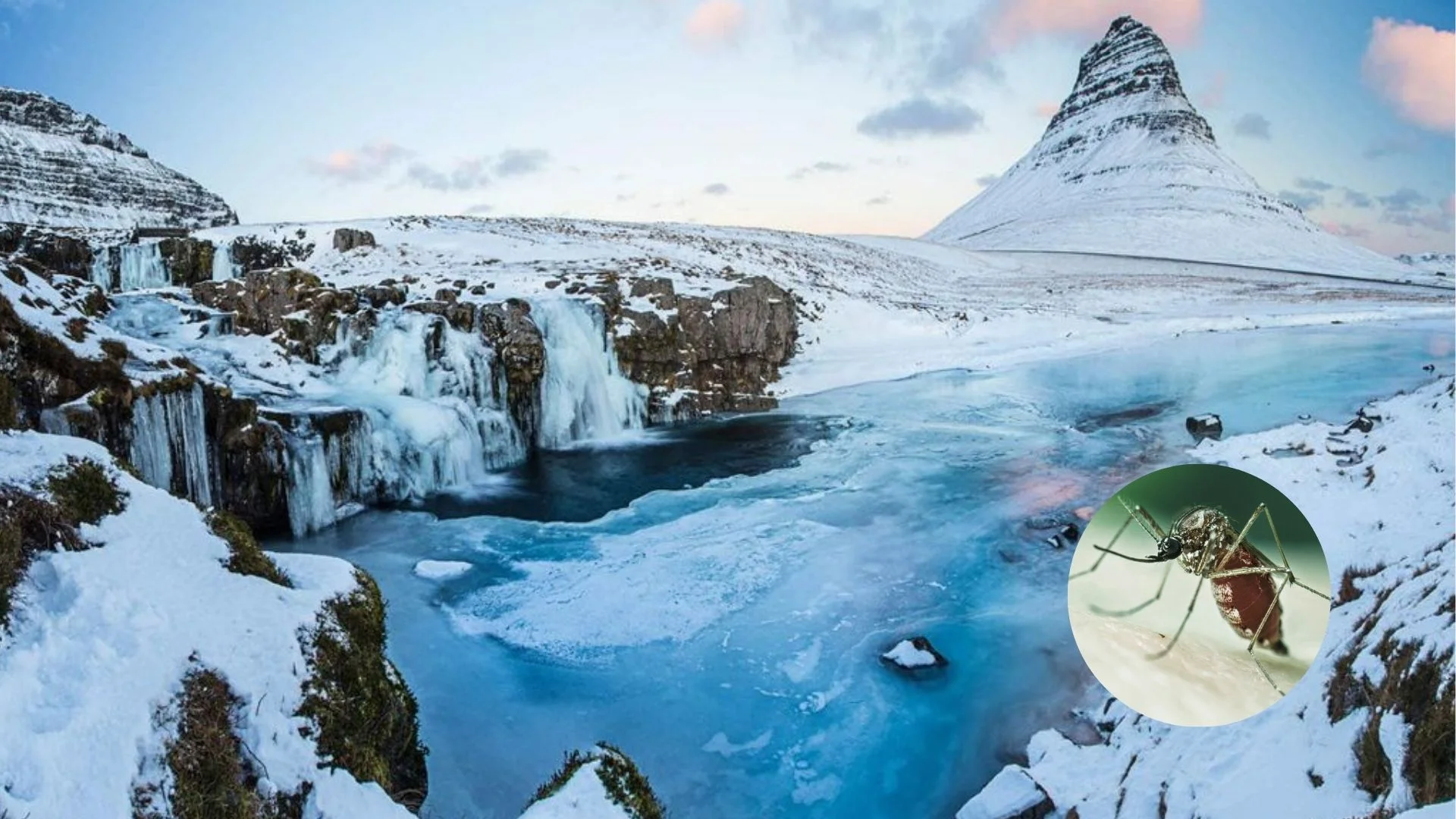
For decades, Iceland stood apart from the rest of the Arctic. It was known as the only Arctic country without mosquitoes. That rare distinction has now ended.
In 2025, scientists confirmed the presence of three mosquitoes in a garden in Kjós, a region just north of Reykjavík. The species identified was Culiseta annulata, marking the first recorded mosquito occurrence on the island.
This may seem like a small event, but experts say it carries a deeper meaning. Researchers see it as a clear signal of environmental change already underway in the Arctic.
In an editorial published in the journal Science, researchers Amanda M. Koltz from the University of Texas at Austin and Lauren Culler from Dartmouth College highlighted the importance of this finding.
READ ALSO: MIT Quantum Sensor Reads Multiple Signals Together: Changing How We Measure Reality
They described the arrival of mosquitoes as more than a minor inconvenience. They warned that it reflects a broader ecological shift driven by rising temperatures and growing human activity in Arctic regions.
Koltz and Culler wrote that mosquitoes are not just a curiosity. They called it a warning sign of what is coming next.
The Arctic is warming faster than most parts of the world. As temperatures rise, conditions become more suitable for species that once could not survive in such cold environments. Mosquitoes, which need stable water and mild conditions to breed, now find new opportunities to expand their range.
The impact of this change goes beyond human discomfort. The arrival of mosquitoes can affect wildlife in serious ways.
For example, reindeer may struggle to cope with swarms. Instead of feeding peacefully, they may spend more energy trying to escape insects. This can reduce their food intake, weaken their health, and lower their reproductive success.
WATCH ALSO: China commissions world’s largest open-sea offshore solar photovoltaic project
The problem does not stop there. Increased insect activity can also harm plant life. While male mosquitoes help in pollination, other insects can damage vegetation. Large outbreaks of herbivorous insects may strip leaves and destroy green cover, affecting entire ecosystems.
Arthropods, which include insects, spiders, and mites, already play a major role in Arctic ecosystems. They act as pollinators, help recycle nutrients, and serve as food for migratory birds. Any shift in their numbers or behavior can have wide effects on the environment.
Despite their importance, scientists still lack a complete system to track these changes across the Arctic. There is no unified monitoring network to observe how insect populations are moving or growing. This creates a serious gap in understanding and response.
READ ALSO: China’s 2nm AI Chip Race Shakes Global Tech With 40% Efficiency Edge
Koltz and Culler stressed the need for a coordinated approach. They called for a pan-Arctic monitoring system that would enable countries to share data in real time. Such a system would help scientists detect changes early and prepare for possible risks.
However, they made it clear that science alone is not enough. They emphasized the value of indigenous knowledge. Local communities have observed environmental changes for generations. Their experience can provide early warnings and deeper insights into shifts happening on the ground.
The researchers believe that combining scientific data with traditional knowledge will create a stronger and more reliable monitoring system.
They concluded with a clear message. The next ecological surprise is not a matter of if, but when. The real challenge lies in detecting it early, understanding its impact, and taking action before it is too late.
The arrival of mosquitoes in Iceland may appear small. But it signals a much larger story unfolding across the Arctic, one that demands attention, awareness, and swift global cooperation.